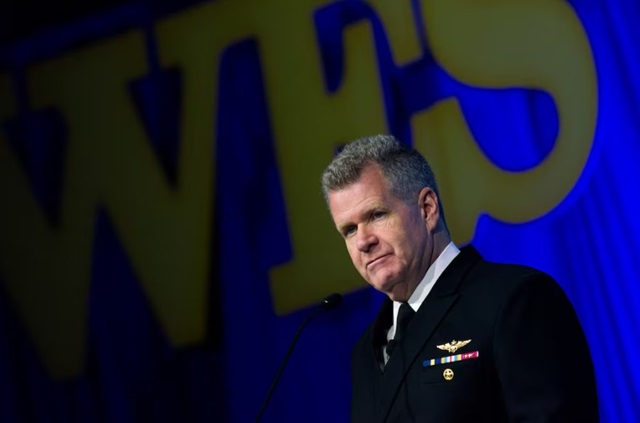
Admiral Samuel Paparo, commander of the United States Indo-Pacific Command, issued a stark warning Monday that China’s recent military maneuvers around Taiwan should be viewed not as routine exercises, but as strategic rehearsals for potential conflict.
“We face a profoundly consequential time in the Indo-Pacific. China is on a dangerous course,” Paparo said in a keynote address at an artificial intelligence conference hosted by the Special Competitive Studies Project, a Washington-based think tank. “Their aggressive manoeuvres around Taiwan are not just exercises. They are rehearsals.”
Though he did not explicitly reference a Chinese invasion of Taiwan, Paparo’s remarks underscore growing concern in Washington that Beijing may be preparing for military action to assert control over the self-governed island, which China claims as its territory.
Escalating Military Pressure
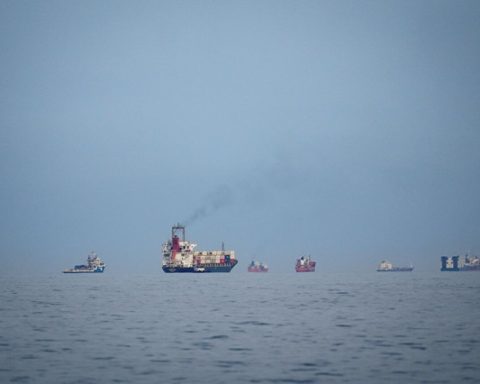
Paparo’s comments come amid a significant uptick in People’s Liberation Army (PLA) activity near Taiwan, including near-daily air and naval incursions across the Taiwan Strait’s median line. These incursions, once rare, have become the norm, with Chinese aircraft carriers such as the Shandong now frequently appearing in Taiwan’s declared response zones.
Beijing continues to frame such drills as routine and defensive. But the U.S. and its allies increasingly interpret them as intimidation tactics—and preparation for a potential future confrontation.
“These actions are increasingly aggressive and provocative,” Paparo said, echoing remarks made by U.S. Defense Secretary Pete Hegseth at the recently concluded Shangri-La Dialogue, where Hegseth warned that China seeks to “fundamentally alter the region’s status quo.”
Triangle of Tensions
While the admiral refrained from naming countries directly, he alluded to what he called an “axis of autocracies” involving China, Russia, and North Korea. He warned that coordinated military activity and technology transfers among these nations represented a deepening challenge to regional and global security.
“This growing transactional symbiosis among autocracies shows through in their shared military operations and technology exchange,” he said.
Paparo, who took over the Indo-Pacific Command in May 2024, has previously described the trio as a “triangle of troublemakers” capable of jointly undermining U.S. influence in the region.
Call for Technological Speed
The admiral also emphasized the importance of American innovation and agility in military technology, citing rapid developments in artificial intelligence, hypersonic weapons, and additive manufacturing. “We need engagement in the speed of combat, not committee,” he said, urging closer collaboration between the Pentagon, scientific community, and industry.
He warned that the U.S. must move decisively to maintain its competitive edge as it confronts “the most technologically capable adversary we’ve faced in decades.”
Beijing Pushes Back
China swiftly rejected Paparo’s assertions. The Chinese Embassy in Washington issued a statement Monday calling his remarks “baseless” and blaming rising cross-strait tensions on “provocations made by the ‘Taiwan independence’ separatists and the disruptions by foreign forces.”
“We urge the U.S. side to stop fanning the flames on the Taiwan question,” said embassy spokesperson Liu Pengyu. “Such behaviours would only backfire.”
Beijing also criticized the absence of dialogue at the Shangri-La Dialogue, where Chinese Defense Minister Dong Jun opted not to attend, leaving a diplomatic void as tensions flare.
Flashpoint: Taiwan
The situation in the Taiwan Strait remains the most dangerous flashpoint in the Indo-Pacific. With Taiwanese President William Lai Ching-te—whom Beijing labels a “destroyer of peace”—taking a firm stance on sovereignty, and with PLA operations increasing in scope and frequency, the risk of miscalculation is growing.
Washington, while officially recognizing the “One China” policy, remains opposed to any forcible change in Taiwan’s status. The U.S. continues to supply arms to Taipei under the Taiwan Relations Act, drawing frequent ire from Beijing.
Admiral Paparo’s remarks, coupled with those from other top U.S. officials, signal that the Biden administration is bracing for prolonged strategic competition with China—with Taiwan at its center.