by Our Correspondent in Washington DC
The world is on edge as President Donald Trump edges closer to authorizing a direct U.S. military strike against Iran using a 30,000-pound “bunker-buster” bomb — the most powerful non-nuclear weapon in America’s arsenal. While the plan has been approved by top military advisers, Trump is holding back the final order as he gauges whether the operation is necessary, effective, and avoidable.
At the core of the debate is Iran’s Fordow nuclear facility — a heavily fortified uranium enrichment site buried deep inside a mountain near Tehran. Israeli leaders say it is the centerpiece of Iran’s nuclear weapons infrastructure, and they lack the firepower to destroy it alone. The U.S., however, does not.
“We’re going to be ready to strike Iran. We’re not convinced yet that we are necessary,” a senior U.S. official said Wednesday. “But the president’s patience is running thin.”
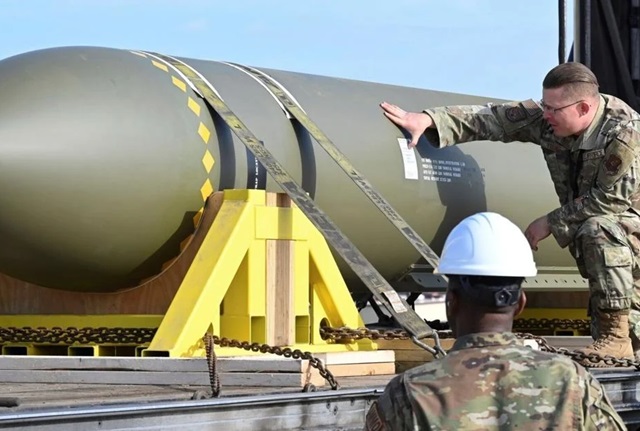
The weapon under consideration is the GBU-57 Massive Ordnance Penetrator (MOP) — a 30,000-pound precision-guided bomb designed specifically to destroy deeply buried bunkers. It has never been used in combat. Only the U.S. military, with its B-2 Spirit stealth bombers, has the capacity to deliver it to a target like Fordow.
Pentagon officials told the president that the MOP would be effective, but Trump has expressed skepticism. “I’ve been asked about it by everybody, but I haven’t made a decision,” he said Wednesday.
According to defense analysts, a successful strike on Fordow may require more than one MOP, dropped in exactly the same spot — a risky, highly technical operation.
With tensions between Israel and Iran boiling over, Israeli Prime Minister Benjamin Netanyahu and senior officials are pushing for decisive action. While they have acknowledged limited capabilities, they’ve also hinted at possible alternatives — including high-risk special forces raids modeled after previous covert operations in Syria.
Still, Israel’s ambassador to the U.S., Yechiel Leiter, was clear: “The entire operation really has to be completed with the elimination of Fordow.”
Israeli intelligence warns that if Fordow survives the war, so will Iran’s nuclear program — potentially accelerating it under the cover of conflict.
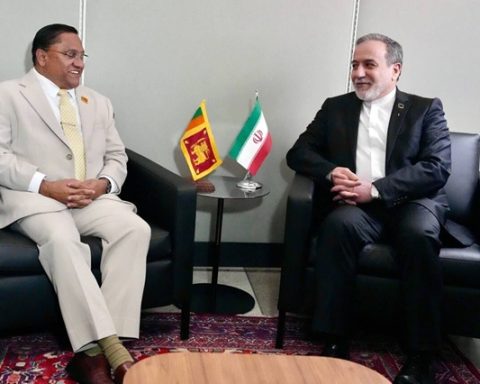
In the background, diplomatic overtures continue. Trump’s envoy, Steve Witkoff, has been in intermittent contact with Iran’s Foreign Minister Abbas Araghchi, though results have been inconsistent.
“We continue to say, ‘Let’s talk.’ Some days we hear back. Some days we don’t,” said a U.S. official. European leaders are also trying to keep talks alive, with a high-level meeting in Geneva planned between EU foreign ministers and Araghchi.
But the clock is ticking. “The president wants to avoid war, but he’s not going to wait forever,” another official warned.
Trump has been holding regular Situation Room meetings with his national security team, reviewing both diplomatic and military scenarios. While he continues to emphasize a preference for avoiding deeper conflict in the Middle East, he has also made it clear that he won’t tolerate a nuclear-armed Iran.
“I may do it. I may not,” he said Wednesday. “But if I do, it will be fast, and it will be final.”
Defense Secretary Pete Hegseth confirmed the Pentagon is ready to act “at a moment’s notice” if the president gives the green light.
An American airstrike on Fordow would mark a dangerous escalation — and likely trigger Iranian retaliation against U.S. forces and allies in the region. It could also plunge the U.S. into a prolonged Middle East conflict, a scenario Trump has long vowed to avoid.
Still, officials say the decision could come at any time — and the use of the 30,000-pound MOP may be a one-time window to strike before Iran reinforces or conceals its facilities.
“This isn’t just about sending a message,” one senior defense source said. “It’s about changing the reality on the ground — permanently.”