President Donald Trump has excluded Defense Secretary Pete Hegseth and Director of National Intelligence Tulsi Gabbard from core decision-making on the Iran-Israel conflict, signaling a major shake-up in the administration’s national security process, according to reports by NBC News and The Washington Post.
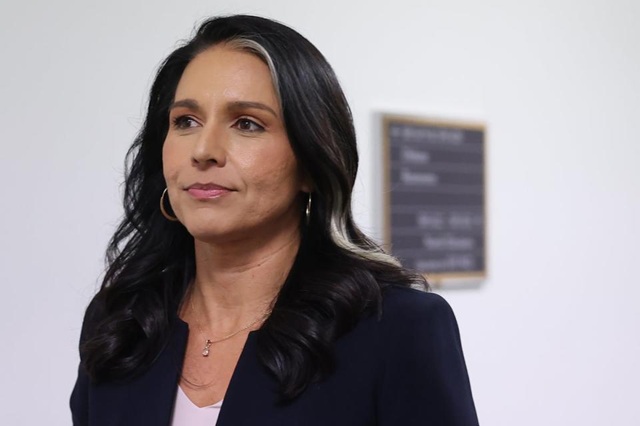
The exclusion of Gabbard, a former Democratic congresswoman and vocal critic of U.S. military interventionism, reportedly stems from her continued pushback—both privately and publicly—against claims that Iran is on the brink of developing a nuclear weapon. Despite Iran’s stockpile of enriched uranium, the U.S. intelligence community has not concluded that Tehran is actively working toward weaponization, a position echoed by Gabbard in congressional testimony earlier this year.
Similarly, Hegseth, a longtime Trump ally and Fox News contributor-turned-defense chief, has been sidelined from operational discussions. According to The Washington Post, two senior four-star generals have taken the lead in coordinating the Pentagon’s response and deployment of military assets to the region.
Instead, Trump has consolidated strategic decision-making within a smaller, tightly controlled “Tier One” group of advisers. The circle reportedly includes Vice President J.D. Vance, Secretary of State Marco Rubio, CIA Director John Ratcliffe, and Vice Chair of the Joint Chiefs of Staff General Dan Caine. The group is now driving U.S. policy on the Middle East crisis, bypassing traditional defense and intelligence leadership.
The White House has denied the reports. Pentagon spokesperson Sean Parnell stated, “Secretary Hegseth speaks with the President multiple times daily and has been with him in the Situation Room this week.” Gabbard also pushed back, telling reporters, “The President and I are on the same page.” However, her absence from key meetings—including a June 8 policy session at Camp David—has fueled speculation about her waning influence.
Trump, speaking earlier this week, dismissed Gabbard’s assessments on Iran’s nuclear status, saying, “I don’t care what she said. Iran is weeks away from the bomb.” His statement contradicts the latest evaluation from Senator Mark Warner, the top Democrat on the Senate Intelligence Committee, who reaffirmed that the intelligence community maintains there is no evidence of active weaponization by Iran.
Gabbard’s growing estrangement from the administration’s inner circle has also reportedly been accelerated by her release of a video warning about the consequences of nuclear war, filmed during a recent visit to Hiroshima. Sources say the video irritated senior Trump advisers and added to tensions.
As Israel intensifies its military operations against Iranian targets—claiming an urgent need to halt nuclear escalation—Trump is expected to decide “within the next two weeks” whether the U.S. will join the campaign, according to White House Press Secretary Karoline Leavitt.
With the stakes rising in the Middle East and diplomatic options narrowing, the sidelining of two of the administration’s most high-profile national security officials reflects deep internal divisions—and a sharp pivot toward a more hawkish, closely held approach to crisis management.