President Donald Trump’s sweeping trade tariffs are sending shockwaves through global supply chains and freezing corporate investment, as companies struggle to make strategic decisions in a climate of deep uncertainty, according to a Financial Times investigation.
While some nations — like the UK and Vietnam — have reached early agreements with the U.S. following Trump’s “liberation day” tariffs announced in April, most major trading partners remain locked in negotiations ahead of a July 9 deadline. Trump’s unpredictability on policy has created a volatile environment that has slowed dealmaking and delayed long-term corporate planning.
The initial effects are stark: U.S. tariff revenue surged to a record $24.2 billion in May, and imports from China fell by 43% year-over-year. Yet despite rising pressure, companies are not rushing to shift production back to the U.S., the Financial Times notes. Relocating manufacturing is an 8–10 year decision, and businesses are reluctant to act without confidence in stable trade policy.
“This is why this crisis is different from the Covid-19 pandemic or the 2008 financial crisis,” said Neil Shearing, chief economist at Capital Economics. “It all comes down to the whims of Donald Trump.”
Amid the chaos, businesses are taking defensive measures. Importers are stockpiling goods in bonded warehouses — which delay tariff payments — and diversifying their sourcing where possible. But capacity constraints, rising warehousing costs, and regulatory challenges have kept many from fully decoupling from Chinese supply chains.
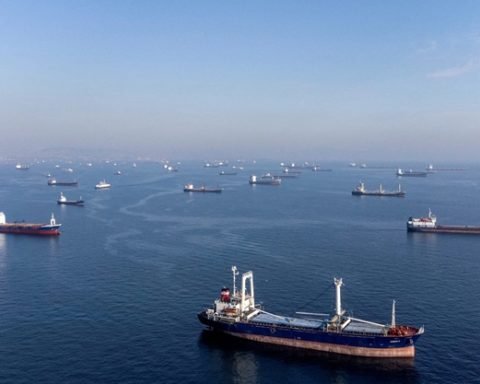
At Europe’s largest port in Rotterdam, congestion is mounting. CEO Boudewijn Siemons warned of rising consumer prices as rerouted trade puts strain on logistics systems. “Ships have two distinct features: they have a propeller and a rudder. They can go wherever you want them to,” he said, reflecting on how quickly — and unpredictably — global trade is being reshaped.
The pharmaceutical industry, among the most exposed to potential new sector-specific tariffs, is on edge. Trump has specifically targeted Ireland — a global hub for drug manufacturing — raising fears that production could eventually be forced back to the U.S. Yet experts argue such a shift would be highly disruptive and costly.
“Even relatively high tariffs may not be enough to force companies to move,” said Lawrence Lynch, an industry analyst at Metatron Consulting. “It’s just too expensive, too complex, and would take years.”
In fact, the most immediate and tangible effect of the tariffs may not be in supply chains, but in dealmaking. Mergers and acquisitions have sharply slowed, with private equity firms reportedly holding $1 trillion in unrealized assets as exits stall. PwC found that 30% of deals were being paused or revised due to tariff-driven uncertainty.
“This isn’t just about trade flows — it’s freezing the capital markets,” said Mats Persson of EY. “What’s chilling the market isn’t factories moving, it’s deals not happening.”
Meanwhile, despite equity markets recovering from the initial shock, economists warn that the long-term consequences could be severe. The U.S. now has an effective average tariff rate of 15.8%, the highest since 1936, according to the Yale Budget Lab. Both the World Bank and the OECD have downgraded global growth forecasts due in part to the policy risks.
Trump’s decision to double steel tariffs in June is also beginning to bite at home. While aimed at protecting U.S. industry, analysts like Wayne Winegarden at the Pacific Research Institute warn that such moves could backfire, raising prices for American manufacturers and consumers. “Trump isn’t wrong that tariffs will hurt other countries,” Winegarden said. “He just forgets the largest impact will be on the U.S.”
Ultimately, the global economy faces a paradox: companies are under pressure to act, yet paralyzed by uncertainty. “There is a significant risk to investment, but at this stage we only see it in investment intentions, not in hard numbers,” said Shearing. “It could crystallise — or it could go away.”