The recent report released by OPEC’s World Oil Outlook 2025 has predicted that by the year 2050, crude oil will replace coal as India’s primary energy source. Clearly, OPEC anticipates that India’s dependence on fossil fuels will remain significant in one form or another. Despite India’s green ambitions, the data suggests a long road ahead in reducing reliance on conventional fuels.
The Government of India has set the ambitious Viksit Bharat target for 2047, aiming to transform India into a developed nation. This vision requires rapid and comprehensive development across various sectors, which will inevitably lead to a steep rise in energy and fuel demand. While the goal is admirable and progress so far has been impressive, with India recognised globally as one of the fastest-growing economies, it also presents a considerable energy challenge that needs to be addressed with urgency and clarity.
During a recent global climate conference, the Prime Minister of India pledged that the country would achieve net-zero emissions by the year 2070. To meet such an ambitious target, India must start reducing fossil fuel usage immediately and eliminate it completely by the target year. However, the trends indicate otherwise. Despite government initiatives promoting solar and wind power, fossil fuel consumption—particularly coal, crude oil, and natural gas—is steadily rising. These fuels are still widely used for power generation, transport, and industrial applications.
In 2024, India’s coal production increased significantly, reaching around 1,047 million tonnes compared to approximately 997 million tonnes in the previous year, marking a 4.99% growth. Additionally, coal imports for the fiscal year 2024–25 stood at around 243.62 million tonnes. Crude oil imports also rose in 2024 by 4.2% to 242.4 million tonnes. With domestic crude oil production stagnant for years, India’s import dependency grew from 88.6% in March 2024 to 89.1% in March 2025. Similarly, LNG imports surged to a record 27 million tonnes in 2024, a 20% year-on-year rise, again due to stagnant domestic production. The use of coal and petroleum-based fuels results in emissions of harmful gases such as sulphur dioxide, nitrous oxide, and carbon dioxide. Methane leaks during the storage and transportation of natural gas also contribute significantly to emissions. The continued growth in fossil fuel use is entirely inconsistent with the commitment to achieve net-zero emissions by 2070.
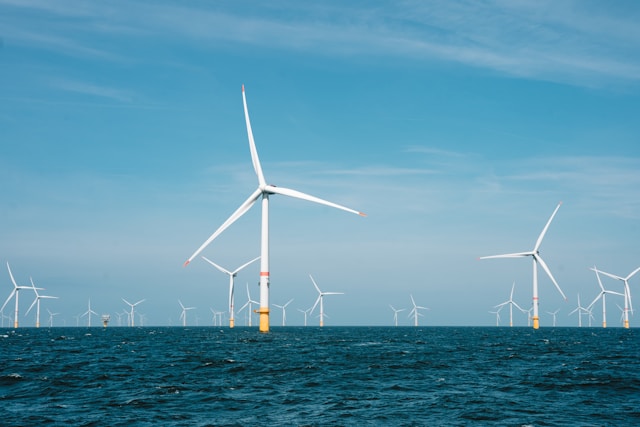
India is investing in renewable energy, battery storage, green hydrogen, and electric vehicle adoption to cut emissions and reduce import dependency on crude oil and natural gas. By June 2025, India’s total installed power capacity reached 476 GW, with non-fossil fuel sources accounting for 50%—a notable achievement driven by solar, wind, hydro, and nuclear power. Renewable power generation is expected to grow further, with 32 GW of additional capacity planned for the year. However, India’s electricity generation remains carbon-intensive, with emissions averaging 713 grams of CO₂ per kWh—well above the global average of 480 grams. Coal still accounts for nearly 70% of power generation. While solar and wind capacities are expanding, their utilisation rates remain low—around 20%—due to various operational and environmental constraints. As a result, renewable sources contribute less than 30% of the actual electricity produced, and the rest comes from fossil fuels. With energy demand growing at 7% annually, this scenario is unlikely to change significantly in the near future.
On the transport front, petrol consumption is increasing at around 6.4% year-on-year, while diesel use is rising at about 2%. The Indian government is pushing for electric vehicle (EV) adoption, but currently, EVs account for less than 8% of all vehicles on Indian roads. Moreover, electric trucks face challenges due to high upfront costs and charging infrastructure limitations, making compressed natural gas (CNG) trucks a more viable option for now. Compounding the issue is the fact that electricity used to charge EVs is mostly generated from fossil fuels—raising doubts about the environmental benefits. This scenario is akin to cutting off the nose to spite the face. The government is also promoting biofuels like ethanol and biodiesel to power vehicles. Ethanol blending has gained traction, with biofuel production increasing by 27% year-on-year. However, challenges remain in securing a consistent ethanol supply and balancing its use without affecting food security or other sectors. India has even resorted to using food grains such as rice for ethanol production. Despite these efforts, biofuels are likely to only meet the rising year-on-year fuel demand and not replace conventional fuels entirely. Therefore, petroleum fuel usage in the transport sector is likely to continue and even increase.
India’s green hydrogen sector is drawing considerable attention through the National Green Hydrogen Mission, which targets 5 million tonnes of production capacity annually by 2030, backed by a financial outlay of ₹19,744 crore. The mission aims to build the necessary ecosystem for production, demand, and infrastructure. However, green hydrogen faces uncertain prospects due to high production costs and difficulties in scaling infrastructure. These challenges have led to a gap between announced plans and actual execution. As things stand, the future of the hydrogen economy remains highly uncertain, and one must reserve judgement for now.
Among alternative strategies, algae biofuel offers a promising avenue. Algae crops contain 20–25% oil and grow rapidly, requiring only sunlight, CO₂, and small amounts of nutrients. India’s tropical climate is ideal for algae cultivation, which can be carried out using wastewater and on wastelands—thus not competing with food crops for land or fresh water. Biofuel derived from algae can be blended with diesel, providing a cleaner alternative. Unfortunately, the government has paid little attention to this opportunity.
Jatropha is another underutilised resource. Once hailed as a potential game-changer for biofuel production, jatropha trees can live for up to 40 years and start yielding seeds—with up to 40% oil content—within three years of planting. Despite initial enthusiasm and support under the 2008 National Biofuel Policy, the programme was abandoned halfway without serious follow-through.
Sugar beet offers a viable alternative to sugarcane for ethanol production. Widely cultivated in Europe and Russia, sugar beet requires half the water and growing time of sugarcane and produces similar molasses yields. While India has gone to the extent of using rice to produce ethanol, it has failed to explore the potential of sugar beet at scale—an oversight that defies logic.
India currently imports over 3 million tonnes of methanol annually, primarily derived from natural gas. In the absence of sufficient domestic gas, this results in large outflows of foreign exchange. Some countries, like Canada, are already producing methanol from municipal solid waste (MSW), as seen with the company Enerkem. Research supports the feasibility of decentralised methanol production from MSW in India. Yet, this too remains an untapped opportunity. Considering the vast amounts of MSW generated in India, converting it into methanol would support both the Clean India campaign and the goal of reducing fossil fuel imports.
Despite the numerous initiatives underway, the government’s current strategies for promoting renewable energy, green hydrogen, and electric vehicles are unlikely to substantially cut fossil fuel consumption or import dependency in the foreseeable future. These steps may marginally curb the rate of increase in emissions and imports, but the ground reality is that both are still rising—and will likely continue to do so—unless India adopts a more bold and diverse approach to alternative energy.
Out-of-the-box thinking is urgently needed. The alternative suggestions detailed in this article have been proposed by experts repeatedly over the past decade. However, the challenge lies in drawing the attention of senior bureaucrats and policymakers—many of whom lack technical expertise—to these practical, science-backed ideas. Until then, India’s transition to a green energy future will remain a story of ambitious promises and underwhelming delivery.