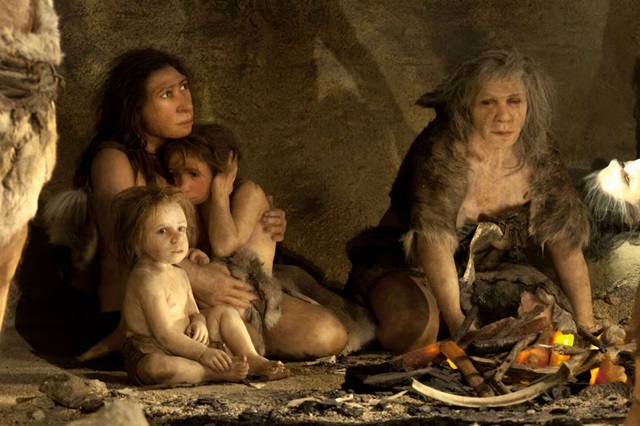
Recent scientific research is shedding new light on the dietary habits of Neanderthals, revealing surprising cultural practices and challenging long-held assumptions about what our ancient relatives ate. A detailed report originally published by El País explores two groundbreaking studies that offer fresh insights into the complexity of Neanderthal food consumption.
One of the studies, featured in the journal Science Advances, proposes a startling explanation for the unusually high nitrogen levels found in Neanderthal bones—levels previously thought to mark them as extreme carnivores. Researchers suggest that Neanderthals regularly consumed rotting meat teeming with larvae and maggots, which could have significantly skewed the isotopic signatures. The larvae feeding on decomposed meat contain higher nitrogen levels than fresh meat, potentially explaining the mysterious biochemical markers in Neanderthal remains.
Ainara Sistiaga, a researcher at the University of Copenhagen, told El País that such findings open new avenues for understanding Neanderthal nutrition beyond conventional perspectives. “Eating rotten meat with maggots might seem unthinkable today, but it could have been a strategic choice, especially in harsh winters, to boost fat and protein intake,” she explained.
Despite the intriguing hypothesis, some experts remain cautious. Manuel Domínguez-Rodrigo, a professor at Spain’s University of Alcalá, described the maggot-eating theory as “highly speculative,” emphasizing the need for more verifiable evidence before rewriting Neanderthal dietary narratives.
Complementing this discovery, a second study published in Frontiers in Environmental Archaeology reveals that different Neanderthal groups in the Levant displayed distinct animal butchering techniques, suggesting cultural diversity in food preparation. Anaëlle Jallon from Hebrew University, a co-author of the study, noted to El País that these groups, despite living in similar environments and sharing resources, passed down unique butchering traditions over generations, indicating the existence of varied “signature dishes” or cooking styles.
Reconstructing the Neanderthal diet remains a challenging task. While meat consumption leaves traces on bones, plant-based foods do not preserve as easily, leading to a historical overemphasis on carnivory. As Sistiaga points out, “Plant remains found in dental tartar offer tantalizing but anecdotal glimpses into their broader diet.”
Other studies have revealed that Neanderthals consumed a range of foods including charred seafood, mushrooms, and possibly honey, highlighting a varied palate. The capacity to cook and optimize flavor may have been a crucial evolutionary driver, ultimately shaping human brain development.
As El País reports, these new findings deepen our understanding of Neanderthal life, suggesting that their dietary habits were far from simplistic and included surprising, even challenging, culinary choices—perhaps starting with a piece of maggot-infested meat.