India’s central bank has opted to keep its key interest rate steady, as escalating trade tensions with the United States — fueled by US President Donald Trump’s tariff threats — cast a shadow over the country’s economic outlook.
The Reserve Bank of India (RBI) announced on Wednesday that it will maintain the benchmark repo rate at 5.5%, following a surprise 50 basis-point cut in June. The move was widely expected by economists, especially amid uncertainty over US trade policy and its growing impact on global markets.
The decision comes just days after President Trump imposed a 25% tariff on Indian exports — significantly higher than tariffs imposed on other regional peers. The tariff hike followed the collapse of trade talks between the two nations, with Trump accusing India of failing to meet the August 1 deadline to finalize a deal.
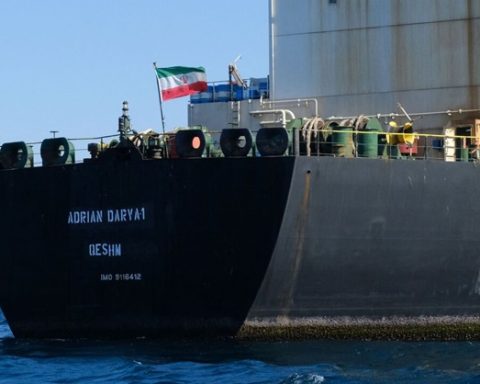
The Financial Times reported that the standoff risks pushing India’s economy into deeper uncertainty, particularly as Trump escalates his rhetoric. Speaking on CNBC’s Squawk Box on Tuesday, the US President said he would “substantially raise tariffs” within 24 hours, citing India’s continued imports of discounted Russian crude.
“They’re buying Russian oil and they’re fueling the war machine,” Trump said, accusing New Delhi of profiting from the war in Ukraine and ignoring human rights implications.
Trump went further, calling India “the highest tariff nation” and stating that although New Delhi had agreed to waive tariffs on US goods, it wasn’t “good enough” given its current energy dealings with Moscow.
RBI Governor Sanjay Malhotra acknowledged the volatile global environment during the policy announcement, saying: “The uncertainties of tariffs are still evolving… and the impact of the 100 basis-point rate cut since February 2025 on the broader economy is still unfolding.”
Despite the turbulence, the RBI retained its GDP growth forecast at 6.5% for the fiscal year ending March 2026, though it warned that prolonged geopolitical tensions and market volatility continue to pose risks.
India’s inflation, meanwhile, has continued to ease, falling to a six-year low of 2.1% in June — a factor that gave the central bank room to pause. Yet, the Indian rupee remains under pressure, trading near record lows. According to people familiar with the matter, the central bank has been actively selling dollars to stabilize the currency.
In the 2024-25 fiscal year, bilateral trade between India and the US totaled $131.8 billion, with India maintaining a surplus of over $41 billion. However, the growing strain on trade relations threatens to reverse these gains.
New Delhi has pushed back against Western criticism of its energy ties with Russia, saying it will “safeguard its national interests and economic security.” Nonetheless, Trump’s recent Truth Social post accused India of prioritizing profit over humanitarian concerns, claiming “they don’t care how many people in Ukraine are being killed by the Russian war machine.”
While Trump has publicly called India a “friend,” his administration’s stance signals a tougher approach that could complicate economic planning for Asia’s third-largest economy.