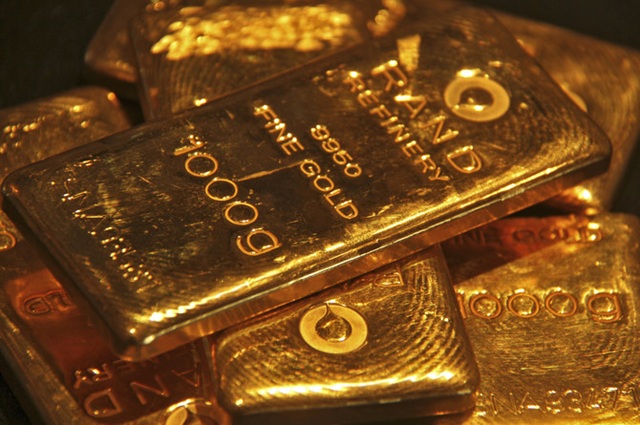
The United States has imposed tariffs on imports of one-kilo gold bars, a move that could disrupt the global bullion market and deal a fresh blow to Switzerland—the world’s largest gold refining hub—according to a ruling letter obtained by the Financial Times.
The US Customs Border Protection (CBP) agency announced on July 31 that one-kilo and 100-ounce gold bars should be classified under a customs code subject to tariffs. This decision sharply contrasts with previous industry expectations that these bars would fall under a different customs code exempt from the tariffs introduced during the Trump administration.
One-kilo gold bars are the most commonly traded size on Comex, the world’s largest gold futures market, and represent a significant portion of Switzerland’s bullion exports to the US. Relations between Washington and Bern have worsened after the US last week implemented a 39 percent tariff on Swiss imports—a major setback given gold’s importance as one of Switzerland’s biggest exports to the US.
Christoph Wild, president of the Swiss Association of Manufacturers and Traders of Precious Metals, described the ruling as “another blow” to Swiss gold trade, warning that the tariff would make it challenging to meet US demand for the precious metal.
Earlier this year, traders accelerated gold shipments into the US ahead of anticipated tariffs, leading to record stockpiles on Comex and temporary shortages in London. At the time, exemptions for certain bullion classifications—including large gold bars—had fueled industry optimism that the tariffs would have a limited impact.
The global bullion trade typically follows a triangular route: large 400 troy ounce bars, preferred in London, move through Switzerland where they are recast into smaller sizes such as the one-kilo bars favored by New York markets. The new tariff classification threatens to disrupt this flow.
Gold prices have surged 27 percent since the end of 2024, briefly touching $3,500 per troy ounce amid inflation fears, government debt concerns, and the weakening of the US dollar as a reserve currency.
Switzerland exported $61.5 billion worth of gold to the US in the 12 months ending June, which under the new 39 percent tariff could face an additional $24 billion in duties. Wild noted that the customs code classifications for gold products are “not always precise,” creating uncertainty for Swiss refineries.
Several Swiss refiners told the Financial Times they had spent months consulting lawyers to understand which gold products might be exempt, with some temporarily reducing or halting shipments to the US due to the confusion.
The ruling letter clarified that one-kilo and 100-ounce bars fall under code 7108.13.5500, making them subject to tariffs, while the exemption applies only to code 7108.12.10.