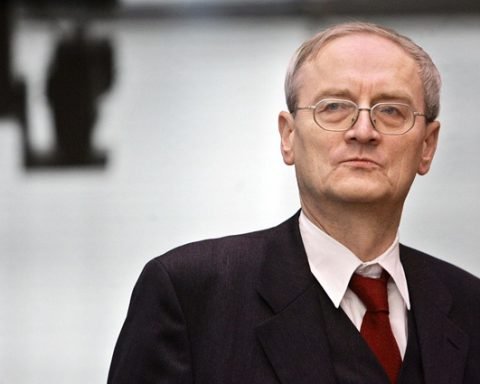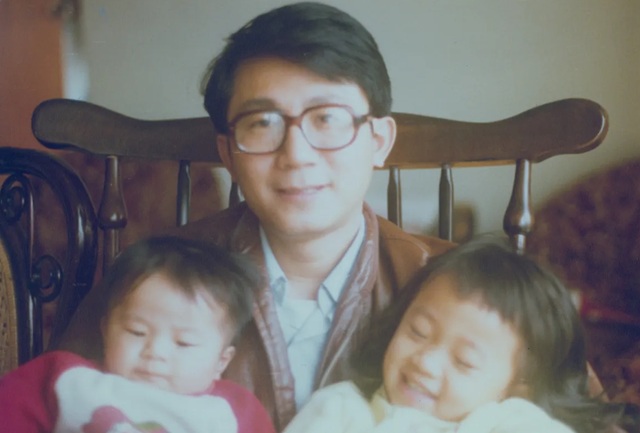
Gray Chang lives a quiet life in Idaho Falls, Idaho, far removed from the geopolitical drama he once helped shape. In his 80s, with a pencil-thin mustache and an easy laugh, he spends much of his time golfing, enjoying retirement after decades of raising a family and working at a nearby laboratory. His modest suburban existence belies a remarkable past — one that saw him play a central role in shutting down Taiwan’s covert nuclear weapons program at the height of Cold War tensions.
As Bloomberg reports, Chang — once known as Colonel Chang Hsien-yi — was among Taiwan’s top nuclear engineers in the 1980s, deeply involved in the island’s secret effort to build an atomic bomb. The program, launched in the 1960s under the so-called “Hsinchu Project,” was designed to give Taiwan a deterrent against China, which had tested its first nuclear weapon in 1964. For years, the United States maintained its own nuclear arsenal on the island, but Taiwan’s leaders believed their own weapons would provide the ultimate security.
The CIA saw things differently. Concerned about the spread of nuclear arms, U.S. intelligence began monitoring Taiwan’s program, eventually recruiting Chang to feed it information. His cooperation allowed Washington to confront Taipei and pressure it to abandon the project. It was a move that would brand him a traitor in some circles, yet today many view him as a hero who prevented a dangerous nuclear standoff in East Asia.
Chang says his decision was ideological rather than financial. In the early years, he believed in Taiwan’s need for a nuclear bomb, but his perspective shifted over time. He came to see the rivalry between Taipei and Beijing as an “internal political struggle” that would be made far more deadly by the introduction of nuclear weapons. “It doesn’t make sense to develop a weapon of mass destruction to kill each other,” he told Bloomberg. By 1984, he had formalized his relationship with the CIA, passing along intelligence that would prove decisive.
In 1988, with U.S. officials ready to shut the program down, the CIA arranged Chang’s extraction. He left a resignation note at his office, skipped a staff meeting, and flew first to Seattle, then to a safe house near Washington, D.C. His wife and three young children, who had been visiting Disneyland in Tokyo, joined him soon after. Using the intelligence he provided, the Americans confronted Taiwan’s leaders, and the program was dismantled.
Taiwanese authorities were furious. Chang was placed on the island’s most-wanted list, his name synonymous with betrayal. For years, the details of his role remained largely hidden, until 1997 when former CIA officer and diplomat James Lilley described the operation as a masterclass in intelligence work. The CIA has never officially acknowledged Chang’s part in the mission, and many records remain classified.
The debate over his legacy persists. Alexander Huang of Taiwan’s opposition Kuomintang party insists that, from a military standpoint, Chang cannot be forgiven. Yet others, including nuclear expert David Albright, argue that his work helped avert “the nightmare scenario of a nuclear-armed mainland China confronting a much smaller, nuclear-armed Taiwan.” Such a standoff, they say, would have jeopardized U.S. support for the island and risked severe international repercussions.
Chang never returned to Taiwan, even after the warrant against him expired. Over time, his homesickness faded, eased by video calls with friends and family. His opposition to nuclear proliferation only hardened, though he never sought to become an activist. In 2003, he even volunteered to inspect Iraq’s weapons programs ahead of the U.S. invasion, but was turned down.
In a world where nuclear tensions are again on the rise — from China’s growing arsenal to renewed debates in Japan and South Korea about developing their own deterrents — Chang’s actions stand out as a rare case of successful non-proliferation. He remains unbothered by those who still call him a traitor, placing more value on a note his son wrote after learning the truth about their sudden move to America: “There is no doubt in my mind that you made the correct decision not only for your family but for Taiwan as well.”