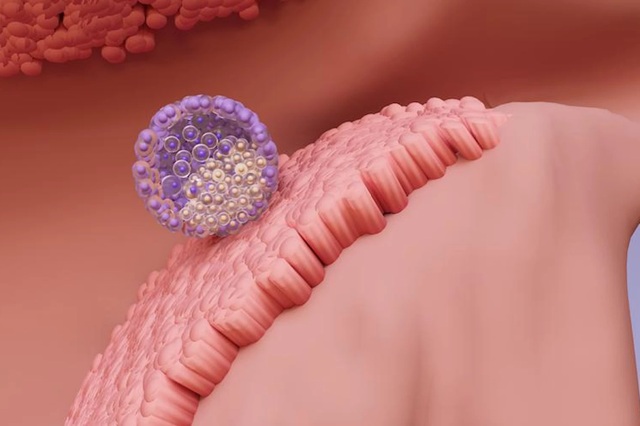
For the first time, scientists have captured real-time footage of a human embryo latching onto a lifelike replica of the uterine lining — a hidden but crucial milestone in early development. The study, published in Science Advances and highlighted by Nature, offers unprecedented insight into how embryos remodel their surroundings to secure a foothold inside the uterus.
“It’s very inaccessible because it’s all happening inside the mother,” said Samuel Ojosnegros, a bioengineer at the Institute for Bioengineering of Catalonia (IBEC) and co-author of the study. “It’s such an important process for human reproduction, but at the same time, we don’t have the technology to study it.”
To mimic the conditions of the womb, researchers engineered a gel rich in collagen and proteins — materials that closely resemble real uterine tissue. They then placed donated human embryos onto the gel and recorded images under a microscope every 20 minutes over 16–24 hours. When stitched together, the stills formed a time-lapse film showing the embryo tugging at and burrowing into its artificial home.
“I thought the microscope had drifted,” said co-author Amélie Godeau, a biomechanics researcher at IBEC. “But it was the embryo pulling itself inside with surprising force.”
Previous studies showed that embryos secrete enzymes to soften the uterine lining, but the new findings suggest a more dynamic process: embryos also apply mechanical force, actively pulling at tissue to nestle deeper inside. Interestingly, mouse embryos behave differently, merely adhering to the surface of the uterus rather than penetrating it.
“This is the first time we’ve seen the mechanics of implantation in such detail,” said Ripla Arora, a uterine biologist at Michigan State University, who was not involved in the work. She added that future studies should explore how the uterus itself responds to the embryo’s efforts — a much harder interaction to model in the lab.
The team hopes their system can eventually shed light on why some healthy embryos fail to implant, a major cause of infertility. “Just by looking one day later at the distribution of forces, we may learn even more about how this implantation is happening,” said Godeau.