Vladimir Putin has demanded that Ukraine withdraw its forces from the Donetsk and Luhansk regions as a condition for ending Russia’s war, telling Donald Trump he would freeze the rest of the frontline if his core territorial demands were met, according to multiple people briefed on the discussions.
The Russian president outlined the demand during a meeting with Trump in Alaska on Friday, four people with direct knowledge of the talks said. The former U.S. president relayed the message to Ukrainian President Volodymyr Zelenskyy and several European leaders the following day, urging them to consider territorial concessions rather than pursue a ceasefire deal with Moscow.
The proposal would hand Moscow full control of a territory it has partially occupied for more than a decade and where Russian troops are currently advancing at their fastest pace since last November. In return, Putin pledged to halt new offensives in southern regions including Kherson and Zaporizhzhia, where Russia already occupies large swathes of land, according to three people familiar with the discussions.
Despite signaling flexibility on some territorial issues, Putin stressed he had not abandoned his core demands to “resolve the root causes” of the conflict, including curbing NATO’s eastward expansion. A former senior Kremlin official said the Russian president was willing to negotiate compromises only if those “root causes” were addressed.
Russia currently controls about 70 percent of Donetsk and nearly all of Luhansk, but key western cities in Donetsk remain under Ukrainian control and are central to Kyiv’s defenses along the eastern front.
People close to Zelenskyy said the Ukrainian leader remains opposed to surrendering Donetsk but could be open to broader talks with Trump in Washington on Monday, or potentially in a trilateral meeting with Putin.
Dmitry Peskov, the Kremlin’s spokesperson, told the Financial Times that Putin’s meeting with Trump had been “very important and substantive,” adding that discussions would continue but declining to disclose details.
Putin hailed the talks as “timely and very useful” upon his return to Moscow, telling top Kremlin officials that he had explained Russia’s view of the crisis directly to Trump.
Trump, who entered the Alaska summit warning of “severe consequences” if Putin did not agree to a ceasefire, left without securing one. Instead, he conveyed Putin’s demands to European leaders, urging them to prioritize a peace agreement over a ceasefire. In a Truth Social post, Trump wrote that European leaders, including German Chancellor Friedrich Merz and French President Emmanuel Macron, agreed “the best way to end the horrific war between Russia and Ukraine is to go directly to a Peace Agreement … and not a mere Ceasefire Agreement.”
The Kremlin has denied reports that Putin and Trump discussed a possible three-way meeting with Zelenskyy.
European leaders, however, voiced alarm at the U.S. president’s openness to territorial concessions. During Trump’s call with allies on Saturday, Macron reportedly warned that Putin “could not be trusted,” citing the failure of the Minsk ceasefire agreements a decade earlier. One European diplomat briefed on the conversation said, “Trump is in a rush to make a deal but Putin is much less so.”
Meanwhile, the so-called Coalition of the Willing — a group of Western and allied nations including France, Germany, the UK, Canada, and Japan — is expected to meet on Sunday to discuss security guarantees for Ukraine in the event of any settlement.
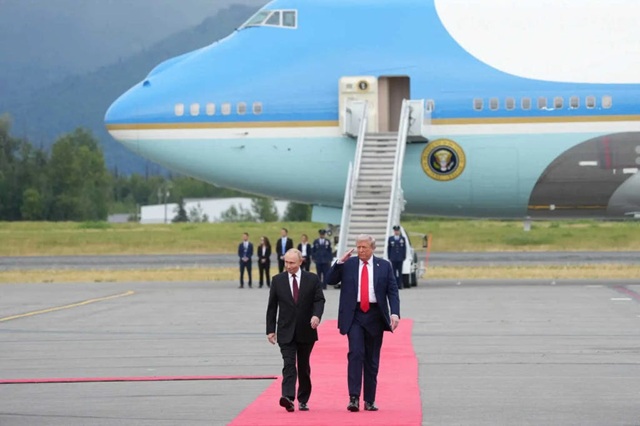
The three-hour Alaska meeting provided Putin, who remains wanted by the International Criminal Court for alleged war crimes, a rare opportunity to break out of international isolation. He was welcomed by Trump on a red carpet and seen joking with him before talks began.
The Russian demand, paired with Trump’s apparent willingness to sidestep a ceasefire, is expected to deepen unease among European leaders wary of conceding Ukrainian territory while Moscow continues its military campaign.