China’s sweeping anti-corruption campaign is exposing a significant change in the politics of ethnic minority regions, as several senior officials from non-Han communities have come under investigation this year.
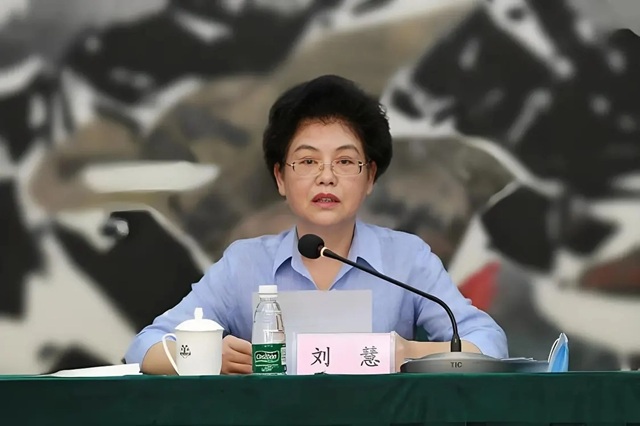
The scrutiny began in January with Qizhala, the ethnic Tibetan former chairman of the Tibet Autonomous Region. In May, Lan Tianli, the ethnic Zhuang chairman of Guangxi Zhuang Autonomous Region, was investigated, followed in July by Liu Hui, the ethnic Hui former chairwoman of the Ningxia Hui Autonomous Region, for alleged corruption.
Such cases are rare. Since the 1980s, only five regional chairs have faced corruption investigations, including Yang Jing of Inner Mongolia and Nur Bekri of Xinjiang, both investigated in 2018. Unlike provinces, autonomous regions are overseen by chairmen or chairwomen who are traditionally drawn from local ethnic minority communities, while the regional party secretaries are overwhelmingly Han.
Observers say the recent investigations indicate that the longstanding leniency afforded to officials in ethnic affairs is disappearing. “The recent shift in Beijing’s willingness to go after top ethnic minority officials is downstream of broader shifts in Chinese politics, toward greater emphasis on political discipline and less on ethnicity as a basis for exceptions,” Aaron Glasserman, a postdoctoral fellow at the University of Pennsylvania, told the South China Morning Post.
Historically, minority officials were often given exemptions from strict scrutiny under policies aimed at leniency toward “backward” regions or special circumstances, known as liangshao yikuan. But the new wave of investigations signals that ethnicity no longer serves as a protective “card” against corruption allegations.
Shan Wei, a senior research fellow at the National University of Singapore, noted that minority officials “are now treated the same as Han officials, reflecting a move towards uniformity and integration without special privileges.” This approach aligns with Beijing’s broader strategy to promote a “community of the Chinese nation,” emphasizing national unity over ethnic distinctions.
The shift has also affected political representation at higher levels. Ethnic minorities historically held about 10-11% of seats on the party’s Central Committee, but that proportion fell to 8.5% in 2022. The purge of Lan Tianli further reduced the number of ethnic minority full members to just eight among 205.
Experts warn that the trend could limit the pool of minority officials with experience in top government roles. Victor Shih, a specialist in Chinese elite politics at the University of California, San Diego, noted that Han Chinese now dominate the National Ethnic Affairs Commission, a departure from the past when officials from minority groups typically led such bodies.
While analysts stress that the crackdown is politically disciplinary rather than an attack on ethnic minorities, the developments signal a fundamental transformation in elite politics. Positions once seen as stepping stones for minority leaders are increasingly controlled by Han officials, highlighting a decline in ethnic minority political representation in China’s top echelons.