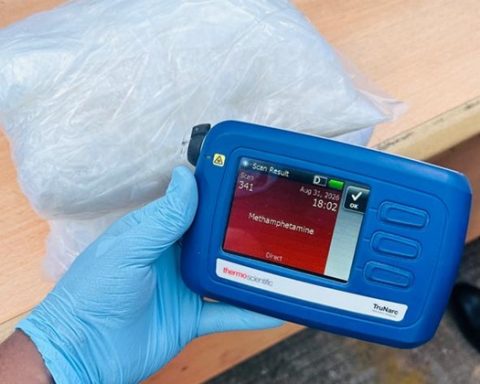
Syria’s new Islamist rulers are mounting an aggressive campaign to dismantle the narco-state once fostered by former president Bashar al-Assad, whose regime turned captagon — an addictive amphetamine-like stimulant — into a multibillion-dollar lifeline during the country’s brutal 14-year civil war.
According to reporting by the Financial Times, production and trafficking of captagon has dropped by as much as 80% since Assad’s fall, as President Ahmed al-Sharaa’s government has moved swiftly to raid labs, arrest traffickers, and seize millions of pills linked to the former regime. “Syria became a major factory for captagon,” Sharaa declared upon taking power. “And today Syria is being cleansed of it, by the grace of Almighty God.”
The Assad family and loyalists, particularly his brother Maher al-Assad and elite army divisions, were deeply tied to the captagon trade, which at its peak generated as much as $5 billion annually. Under Assad, the pills fueled both soldiers on the battlefield and a regional trafficking network stretching from the Gulf to Europe and even Latin America.
But dismantling a narco-state is proving far more difficult than launching the fight against it. While industrial-scale production has slowed, smugglers and producers have adapted, shifting operations to border regions and neighboring Lebanon. Militias tied to Iran and Hizbollah continue to profit from the trade, while traffickers exploit weak governance in areas outside Damascus’s control.
Demand remains strong. Captagon, which can sell for as little as 30 cents in Damascus nightclubs, fetches up to 30 times more in Gulf states like Saudi Arabia and the UAE. “If the last eight months in post-regime Syria have proven anything, it’s that this illicit drug trade is far from over,” Caroline Rose of the New Lines Institute told the FT.
The crackdown has yielded high-profile arrests, including Wassim al-Assad, a cousin of the former president, who was lured back to Syria and detained in June. Yet counter-narcotics units face internal corruption, with some officers accused of tipping off traffickers. Border guards in Sweida and Deir Ezzor have also been accused of accepting bribes to allow smuggling to continue.
For ordinary Syrians, the legacy of Assad’s drug empire lingers. The country has just four addiction treatment centers, and many users, priced out of captagon, have turned to more dangerous substances such as crystal meth. “It is nowhere near enough to treat the extent of the problem in Syria,” said Dr. Ghamdi Faral, who runs an addiction facility in Damascus.