A recent report in Nature warns that reaching net zero greenhouse-gas emissions by 2050 may be impossible without artificial intelligence (AI). As global temperatures in 2024 surpassed 1.5 °C above pre-industrial levels for the first time, experts stress that urgent action is needed across multiple sectors to keep the goal within reach.
AI has the potential to dramatically improve energy efficiency, accelerate innovation, and expand human capacity to tackle climate change. Electricity generation, for instance, will need to nearly double by 2050 as transport, heating, and industries shift from fossil fuels to electric power. Meanwhile, renewable-energy capacity must triple by the end of the decade to meet rising demand without increasing emissions.
Industrial sectors such as steel, cement, and chemicals—which together account for almost a third of global CO₂ emissions—face the difficult task of shifting to near-zero emissions despite limited scalable alternatives. Carbon removal must also scale rapidly, with techniques like enhanced rock weathering needing to expand a thousandfold to neutralize hard-to-abate emissions.
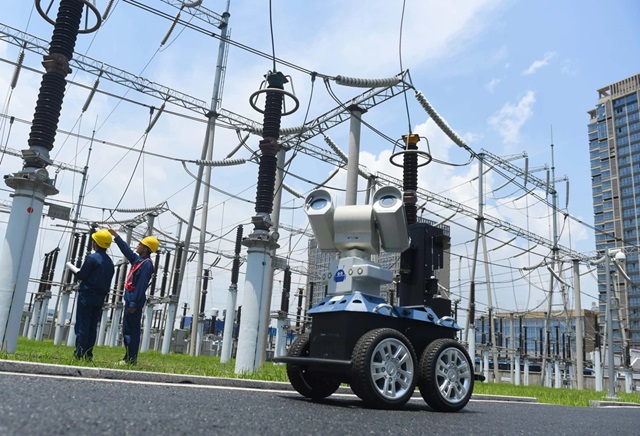
The Nature report emphasizes that while AI is not a silver bullet, without it the complex challenges of energy grids, slow technological innovation, and workforce gaps may be insurmountable. For example, AI-enabled dynamic line ratings can increase power-line transmission capacity by up to 40%, allowing more renewable electricity to flow without building new infrastructure. AI is also speeding up the search for low-carbon materials, such as substitutes for cement clinker, a major source of industrial CO₂.
Despite concerns over AI’s energy and water use, the report notes that data centres account for only about 1.5% of global electricity consumption and 0.5% of CO₂ emissions. Its broader climate impact depends on how the technology is applied: it can either accelerate fossil-fuel extraction or unlock gigaton-scale emission reductions.
The Nature study outlines five key actions to maximize AI’s climate potential:
- Invest in AI for climate – Support mission-driven initiatives targeting energy grids, materials discovery, and carbon removal.
- Build inclusive data and connectivity – Develop large-scale, accessible climate datasets to train AI systems.
- Minimize resource use and expand carbon-free electricity – Improve efficiency in AI hardware, models, and operations, and increase renewable energy supply.
- Govern AI for Earth alignment – Ensure AI development supports decarbonization and biodiversity protection with robust metrics and risk frameworks.
- Upskill the workforce – Provide domain-specific AI training in energy, agriculture, public policy, and other climate-critical sectors.
According to the report, widespread AI deployment in the energy sector alone could cut up to 1.4 gigatonnes of CO₂ annually by 2035—more than double the emissions generated by AI data centres themselves. Across electricity, transport, and food sectors, potential reductions could reach 3.2–5.4 gigatonnes per year.
“Reaching net zero by mid-century requires AI technologies,” the authors write. With smart investment, responsible governance, and workforce training, AI could provide the speed and scale needed for the transition to a sustainable, low-carbon future.