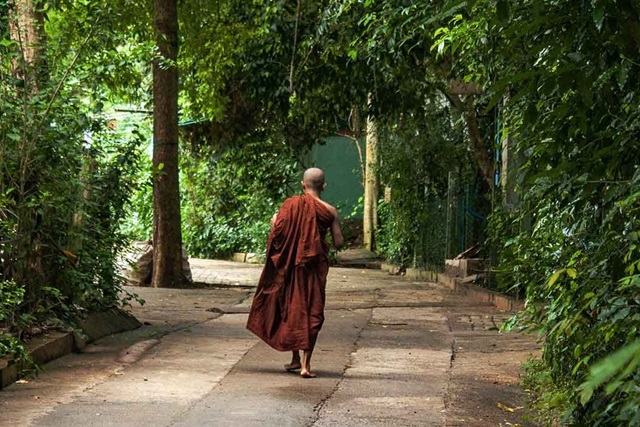
The last night tragedy at the Na Uyana Aranya Senasana in Kurunegala is not merely an unfortunate accident; it is a stark reminder of the perilous neglect and systemic indifference that continue to haunt Sri Lanka. Seven monks, local and foreign, lost their lives when a cable-supported wooden carriage, or “dakku,” collapsed on the steep slopes of the meditation centre. Thirteen monks in total were travelling at the time, many suffering severe injuries, and yet, amid this sorrow, the official response has been conspicuously muted. So far, only former President Ranil Wickremesinghe has publicly expressed condolences, while the current government remains engaged elsewhere, seemingly disconnected from the grief and outrage of the nation. The silence of political leaders in the wake of such a calamitous event is not just insensitive; it is emblematic of a governance culture that often prioritises protocol and appearances over human life and basic accountability.
This incident exposes a pattern of structural vulnerability and lack of oversight that is inexcusable. The Na Uyana Aranya Senasana, while internationally renowned and frequently visited by monks and laypeople alike, relies on infrastructure that is inadequate and unsafe. The very notion that a cable-supported carriage—a system intended to ease the arduous climb up a steep mountain—could fail so catastrophically raises questions about the standards of maintenance, safety checks, and regulatory scrutiny in places that attract both domestic and foreign visitors. It is unacceptable that a spiritual sanctuary, dedicated to meditation and reflection, could become the site of such preventable suffering. The tragic deaths of monks in the prime of their lives underscore the urgent need for rigorous safety protocols and inspections, particularly in locations where human lives are entrusted to rudimentary mechanisms.
Equally disconcerting is the manner in which the broader political establishment has responded—or rather, has failed to respond. The absence of statements or condolences from ministers, the president, and other party leaders suggests a troubling detachment from the human consequences of governance. Leadership is tested not only in moments of policy formulation but also in times of crisis. When citizens, or in this case, revered spiritual figures, suffer fatalities due to infrastructural failure, the immediate and unequivocal demonstration of empathy and accountability is the bare minimum expected of those in power. Yet the deafening silence signals a lack of urgency and a disregard for public expectation, further eroding trust in institutions that are meant to protect and serve.
Beyond political inattention, there is a deeper societal issue at play: the complacency toward public safety standards. Sri Lanka has witnessed numerous preventable accidents over the years, from transportation mishaps to infrastructural collapses. Too often, tragedies are met with short-lived media attention, temporary investigations, and then, an uneasy return to business as usual. This cycle of negligence and forgetfulness not only costs lives but also weakens the social fabric by perpetuating a sense of helplessness and mistrust. The deaths at Na Uyana are a chilling reminder that reverence for religious sites or cultural heritage cannot excuse lax safety practices. Faith and devotion should never be jeopardised by avoidable infrastructural hazards.
Preventing such tragedies in the future requires a multi-faceted approach that blends regulatory oversight, community engagement, and technological intervention. First and foremost, stringent safety standards must be enforced for all public facilities, particularly those that involve mechanised transport or operate in challenging terrains. Regular inspections, certification by independent engineers, and adherence to international safety norms are non-negotiable. Second, training programmes for operators, monks, and local staff who manage these facilities must be implemented, emphasising emergency response protocols and the importance of routine maintenance. Third, the government must take an active role in auditing high-risk sites and ensuring accountability, rather than leaving responsibility solely to local management. The tragic consequences of negligence are too steep a price to pay for half-hearted oversight.
Equally important is cultivating a culture of vigilance and public responsibility. Communities, religious institutions, and civic organisations must be empowered to raise concerns about safety without fear of reprisal. Transparency in reporting accidents, open investigations, and prompt dissemination of lessons learned can transform grief into proactive prevention. In the absence of such a culture, disasters will continue to be treated as inevitable misfortunes rather than preventable calamities. The Na Uyana incident must serve as a national wake-up call: lives should never be gambled in the name of convenience or cost-cutting, no matter how venerable or sacred the site may be.
The loss of seven monks, along with the injuries sustained by six others, is a profound human tragedy that extends beyond statistics. These were individuals who had devoted their lives to spiritual practice, who welcomed pilgrims and foreign visitors, and who embodied a commitment to discipline and compassion. Their deaths should prompt not only mourning but urgent action. Words of condolence, while necessary, are insufficient in the face of systemic failure. The government, religious authorities, and civil society must collectively confront the conditions that allowed this tragedy to occur. Ignorance, negligence, and political indifference cannot continue to be tolerated in a country that prides itself on its rich cultural and religious heritage.
In reflecting on the Na Uyana accident, Sri Lanka is forced to confront uncomfortable truths about governance, public safety, and societal priorities. Tragedies of this nature are avoidable, yet they recur due to a combination of inadequate infrastructure, lax oversight, and apathetic leadership. If meaningful measures are not taken now—if safety protocols are not rigorously enforced, and accountability not genuinely embraced—the country risks repeating this sorrowful pattern. The deaths of these monks should not fade into historical footnotes; they must catalyse a profound reassessment of how lives are protected, valued, and respected in every sphere of public life. Only then can the nation honour their memory not merely in words, but through decisive action that ensures such a calamity is never repeated.