Editor’s Note: The following excerpts are adapted from an article originally published in Israel Hayom, which profiled the incumbent head of the Mossad.
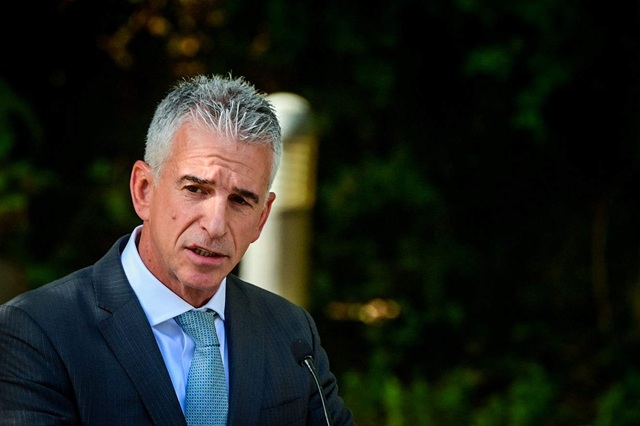
He looks nothing like a spy. David Barnea’s appearance—ordinary, unremarkable, forgettable—is his greatest disguise. For years, few Israelis could name or recognize the man who now leads one of the world’s most feared intelligence agencies. His rise from finance to espionage was neither scripted nor inevitable. Yet Barnea now sits at the helm of the Mossad, overseeing a sprawling and evolving organization that has, under his leadership, conducted some of the most audacious operations in modern intelligence history.
Born in Ashkelon in 1965 to a deeply rooted Zionist family, Barnea’s path to national service was shaped early. His grandfather fled Nazi Germany in 1933. His father served as a Palmach fighter and later a brigadier general in the Israeli Air Force. David, drawn toward leadership from a young age, attended a prestigious military boarding school in Tel Aviv, where his classmates would also become top figures in Israel’s security apparatus. Friends describe him as intelligent, humble, and physically capable—a quiet force who excelled without arrogance.
After serving in elite IDF combat units, Barnea pursued a business education in the United States, returned to Israel, and worked in high finance. But the 1995 assassination of Prime Minister Yitzhak Rabin changed something in him. He left the private sector and joined the Mossad. Over the next two decades, Barnea operated in the shadows: recruiting agents, managing foreign assets, running stations abroad, and eventually climbing to senior leadership positions. He was integral in planning the 2018 theft of Iran’s nuclear archive—a landmark operation that won international praise and an Israeli security prize.
Barnea’s reputation among peers is split. Supporters praise his relentless work ethic, coolness under pressure, and sharp strategic instincts. Critics see a man lacking charisma, risk aversion, and political boldness. Yet few deny his operational success. Appointed Mossad chief in 2020 by Benjamin Netanyahu, he took over at a time of escalating tension with Iran. Cyberattacks, sabotage, and assassinations attributed to Israel increased dramatically in his first year. While some attribute these operations to momentum from his predecessor Yossi Cohen, others say Barnea intensified the tempo and broadened the reach.
He led the Mossad through a period of radical adaptation. In an age of biometric tracking and ubiquitous surveillance, Barnea pushed a shift toward foreign agents, technological innovation, and remote operations. Critics inside the organization called it a coup. Some of Mossad’s most senior and respected officials resigned over these changes, including the heads of the special operations and counterterrorism divisions. Others dismissed the dissent as institutional inertia resisting necessary reform. As one former senior officer put it, Barnea knew where he wanted to take Mossad—and those who couldn’t keep up were left behind.
Despite internal fractures, Mossad has continued to produce dramatic results under his leadership. After the devastating Hamas attack on October 7, 2023, Mossad launched a sweeping counter-campaign. Most notably, Barnea oversaw the now-legendary “pager operation,” which crippled Hezbollah’s command structure by remotely detonating hundreds of compromised communication devices. It marked a symbolic and strategic victory. In the months that followed, Mossad expanded its reach, reportedly carrying out simultaneous operations across Iran, eliminating senior figures in Syria and Lebanon, and destroying arms and financial pipelines. In these missions, Barnea’s restructuring of Mossad—his gamble—appeared vindicated.
Still, controversies linger. Barnea’s Mossad was deeply involved in facilitating the transfer of Qatari funds to Hamas—money that critics argue directly funded the October 7th massacre. While responsibility for Gaza intelligence lay primarily with the Shin Bet, Mossad’s failure to foresee or intercept the attack has been scrutinized. Equally contentious was his handling of internal politics and succession planning. Some accuse him of sidelining rivals, promoting loyalists of questionable merit, and seeking public credit through staged announcements and carefully crafted speeches. Others see his public communication as a necessary evolution, designed to reinforce national morale and deter enemies.
His relationship with Netanyahu is considered unusually smooth for a Mossad chief, but not without tension. Unlike the confrontational dynamic between the prime minister and the heads of other security agencies, Barnea has walked a careful line—offering counsel, not conflict. In some cases, such as the aborted attack on Qatari interests, Barnea’s opposition prevailed, underscoring the trust he commands. Yet others argue that this caution makes him too compliant and question whether he has sufficiently challenged flawed policy directions.
Barnea is now in his fifth year as Mossad chief. He has led the agency through war, innovation, and scandal—reaping achievements and criticism in equal measure. His defenders call him a quiet visionary; his detractors, a grey technocrat. But as Mossad continues its high-stakes campaigns in Iran, Lebanon, Syria, and beyond, the shadow he casts will likely shape Israel’s security for years to come. Whether he exits with Mossad stronger and more agile or fractured and adrift will define his legacy. For now, David Barnea remains the quiet architect behind the loudest operations in Israel’s modern history.