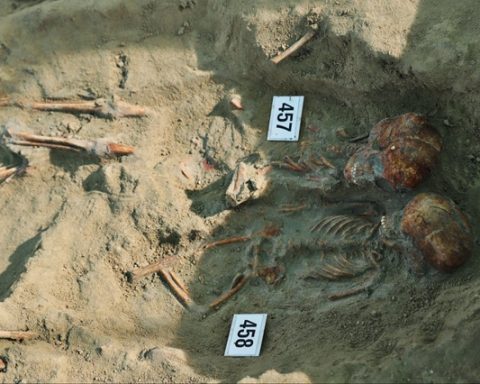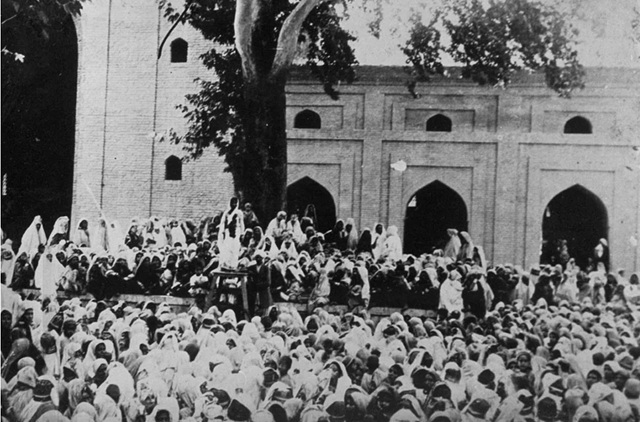
The Jammu Massacre, in which over 250,000 Muslims were slaughtered, remains an indelible scar on the collective memory of Kashmiris. November 6th, 1947 known as Youm-e-Shuhada or Jammu Martyrs’ Day not only commemorates the victims of massacre but also serves as a stark reminder of the continuing human rights abuses (HRAs) suffered by Kashmiris in Indian Illegally Occupied Jammu and Kashmir (IIOJK) under Indian rule.
Genocidal Tragedy
Between October and November 1947, the Kashmir Valley witnessed a state-sponsored genocide, led by the forces of Dogra Maharaja Hari Singh and supported by Hindu extremist groups like the Rashtriya Swayamsevak Sangh (RSS). This massacre resulted in the deaths of an estimated 250,000 Muslims in the Jammu region in a span of just two months, making it one of the worst atrocities in the history of South Asia.
The genocide was part of a broader strategy by the Maharaja’s administration and the RSS to alter the demographic makeup of the region, which had a Muslim majority. The RSS and Hindu militant groups from Punjab were mobilized, in coordination with the Dogra forces, to systematically exterminate Muslims. As a result, over 500,000 Muslims were displaced across the border into Pakistan and Azad Jammu & Kashmir, where they sought refuge from the violence.
While much of the world focuses on events like the Holocaust and the September 11 attacks, the massacre of Kashmiri Muslims has often been overlooked. The scale of the Jammu Massacre dwarfs even the brutalities of the Nazi regime. According to The Times of London, as early as 1948, over 237,000 Muslims were systematically exterminated by the Dogra Maharaja’s forces. The impact of this genocide was not only in terms of the staggering death toll but also in the forced displacement of hundreds of thousands of people.
This genocide, which occurred in just two months, was comparable to some of the most tragic events of the 20th century. The Jewish Holocaust carried out by the Nazis took several years, yet the Jammu Massacre occurred in a fraction of that time, inflicting a death toll of over 250,000. This tragedy remains one of the largest and least acknowledged genocides in modern history.
Role of Indian Government and Maharaja’s Complicity
What made the Jammu Massacre particularly horrific was the involvement of the Dogra Maharaja and the Indian state apparatus. The Maharaja, Hari Singh, whose forces carried out the massacre, played a direct role in inflaming the situation by aligning with extremist Hindu groups like the RSS. A letter from Jawaharlal Nehru to Vallabhbhai Patel in 1949 alludes to the growing Hindu agitation in Jammu, suggesting that the Maharaja’s forces were deliberately stoking violence to change the region’s demographic balance in favor of Hindus.
Mahatma Gandhi, in his December 1947 statement, condemned the killings in Jammu, holding the Maharaja responsible for the violence and highlighting the systematic nature of the massacres. Gandhi also noted the role of the Hindu and Sikh communities in perpetrating these atrocities, further compounding the tragedy.
Notably, the United Nations Commission for India and Pakistan (UNCIP) in 1949 also documented reports of the Maharaja’s orders to exterminate Muslims, corroborating the claims of a state-sponsored campaign of ethnic cleansing.
While the Jammu Massacre remains largely unacknowledged on the international stage, the events of 1947 are foundational to understanding the ongoing human rights violations in IIOJK. Since India’s illegal occupation of Jammu and Kashmir in 1948, Kashmiris have faced relentless state repression. The revocation of Article 370 and 35A by the Indian government in August 2019 marked a new phase in the ongoing efforts to alter the region’s demographic makeup.
India’s actions in IIOJK have been widely criticized for violating international laws, particularly the Geneva Conventions. Article 85(4)(a) of the 1977 Additional Protocol I explicitly prohibits the transfer of an occupying power’s civilian population into the territory it occupies. However, India’s policies in Kashmir, especially since 2019, have mirrored those of colonial powers, seeking to displace the indigenous Muslim population and replace it with non-local settlers. These efforts to alter the demographics of Jammu and Kashmir have sparked fears among the local population that their rights, identity, and very existence are under siege.
India’s actions in Kashmir have led to the militarization of the region, with nearly one million Indian troops stationed in IIOJK, making it the most militarized zone in the world. These forces have been accused of committing widespread crimes against humanity, including extrajudicial killings, arbitrary detentions, torture, and sexual violence. The continued suppression of Kashmiris’ rights and the brutal tactics employed by Indian forces have only worsened the suffering of the local population, who live under constant threat of violence and persecution.
Legacy of Jammu Martyrs’ Day
Every year, Kashmiris around the world observe Youm-e-Shuhada (Jammu Martyrs’ Day) to honor the sacrifices made by the victims of the 1947 massacre. This day serves as a poignant reminder of the atrocities committed by the Dogra Maharaja’s forces and their allies, as well as the ongoing struggle for justice faced by the Kashmiri people.
The Jammu Massacre, and the continued violence in Kashmir, should not be forgotten. It is essential that the international community recognize the historical injustices faced by Kashmiris and hold India accountable for its actions. The Kashmir issue, at its core, is about the right to self-determination and the protection of human rights for the Kashmiri people. The continued silence of the international community only emboldens India’s policy of repression and demographic manipulation in IIOJK.
As we commemorate Youm-e-Shuhada on November 6th, we must not only remember the victims of the 1947 Jammu Massacre but also stand in solidarity with the people of Kashmir who continue to suffer under Indian occupation. The ongoing human rights violations in IIOJK are a continuation of the genocidal policies that began in 1947, and it is incumbent upon the international community to recognize and address these abuses.