As cryptocurrency becomes increasingly mainstream, at least $28 billion linked to illicit activity has flowed into global crypto exchanges over the past two years, according to a joint investigation by The New York Times, the International Consortium of Investigative Journalists (ICIJ), and 36 international media partners.
The funds originated from hackers, scammers, and extortionists spanning North Korea to Minnesota, flowing repeatedly onto the world’s largest exchanges, including Binance and OKX. Notably, Binance participated in a $2 billion deal with President Trump’s crypto company in May, raising concerns about the intersection of mainstream crypto adoption and criminal activity.
“Law enforcement can’t cope with the overwhelming amount of illicit activity in the space,” said Julia Hardy, co-founder of crypto investigations firm zeroShadow. “It can’t go on like this.”
From Dark-Web Beginnings to Mainstream Markets
Digital currencies initially attracted criminals because of their speed, anonymity, and difficulty tracing. Bitcoin became a cornerstone of dark-web marketplaces for narcotics and illegal goods, fueling a legacy of crime that persists despite the professionalization of the industry. Today, crypto exchanges handle billions of legitimate dollars in daily transactions and have publicly pledged to combat illicit activity.
Binance, which pleaded guilty to money-laundering violations in 2023 and agreed to a $4.3 billion U.S. settlement, maintains it is an “extremely unwelcoming place to bad actors.” OKX and Bybit have also implemented enhanced compliance measures.
Despite these efforts, analysis by The Times and ICIJ traced multiple flows of criminal funds:
- Huione Group, a Cambodian conglomerate flagged by the U.S. Treasury, deposited over $400 million into Binance and $220 million into OKX between mid-2024 and 2025. The group facilitated money laundering for North Korean hackers and scammers across Southeast Asia.
- North Korean cybercriminals, including the Lazarus Group, laundered $1.5 billion stolen from the Bybit exchange, with $900 million in Ether eventually moving to Binance accounts.
- Crypto-to-cash desks in Asia and Eastern Europe enabled at least $531 million in illicit withdrawals last year from Binance, OKX, and Bybit, providing nearly anonymous access to physical currency.
The Trump Administration and Crypto Oversight
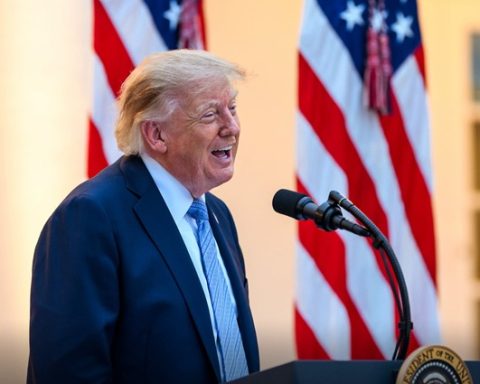
President Trump has made crypto a central pillar of his family business, co-founding World Liberty Financial alongside his sons and forging a high-profile deal with Binance. The administration has also reduced regulatory oversight, including dismantling a crypto enforcement team in April, which experts argue undermined law enforcement’s ability to prosecute illicit activity.
“These exchanges are often the last stop for criminal money before it disappears,” said John Griffin, a crypto expert at the University of Texas, Austin. “They have an incentive to allow this activity to continue because it generates fees.”
Victims and the Human Cost
The investigation also highlighted personal stories, such as a Minnesota man who lost $1.5 million in a “pig-butchering” scam—an investment fraud in which perpetrators cultivate victims over weeks or months. Funds from his account, as well as losses from other victims, were traced to major exchanges, including Binance and OKX, showing how criminal operations exploit legitimate platforms to convert digital assets into cash.
In Alberta, Canada, Carrissa Weber lost $25,000 to a scammer, which eventually flowed into OKX accounts flagged for suspicious activity. Investigators noted that, in some cases, exchanges did not freeze illicit accounts until months later.
Exchanges Respond
Binance emphasized that it maintains “a comprehensive, multilayered compliance program,” while OKX said it had paused interactions with suspicious wallets identified in the Huione report and invested heavily in transaction monitoring. Bybit and HTX claim to enforce zero-tolerance policies toward financial crime.
Yet experts warn that as long as crypto platforms profit from fees on transactions, the risk of facilitating money laundering remains significant.
The Times and ICIJ’s analysis represents one of the first systematic efforts to map the movement of illicit crypto funds across specific exchanges, revealing the scale of the problem in an industry that has rapidly entered the mainstream while grappling with enduring criminal risks.