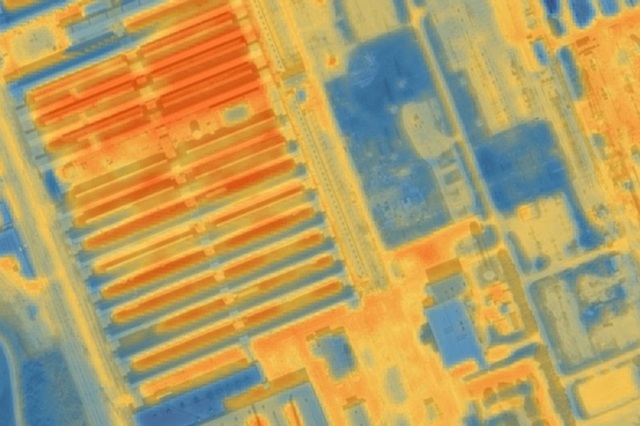
Satellite thermal imagery released this month by UK-based SatVu offers an unprecedented look at the heat output of high-load facilities, highlighting areas where cooling and electrical systems are under strain. The images focus on a Bitcoin-mining campus in Rockdale, Texas, home to Riot Platforms’ facility, the largest in the United States. Estimates suggest the site consumes around 700 megawatts of electricity, equivalent to the power needs of roughly 300,000 homes. The facility has drawn criticism for both its energy use and carbon footprint.
“Today’s data center buildout is moving incredibly quickly, and the world needs better ways to understand what’s actually happening on the ground,” said Thomas Cobti, SatVu’s vice president of business development. He added that thermal imaging provides an objective view of operational activity in real time.
The International Energy Agency reports that data centers consumed approximately 415 terawatt-hours of electricity in 2024, accounting for about 1.5% of global power usage. Rising AI workloads, particularly since the widespread adoption of tools like ChatGPT in late 2022, have accelerated growth in the sector.
Global investment in data center infrastructure is projected to continue climbing, with McKinsey estimating more than $7 trillion will be spent worldwide by 2030. Demand in the U.S. alone is expected to grow 20% to 25% annually over the next several years.
According to a Rest of World report, nearly 9,000 data centers were operational worldwide as of October 2025, with the number expected to triple by 2030. Analysts warn that countries hosting these facilities are struggling to meet soaring power demand, while regulators are raising concerns about electricity consumption, water use for cooling, land requirements, and environmental impact.