More than 30 female aircrew members have participated in Israeli airstrikes on Iranian targets since Saturday, marking a significant operational and symbolic milestone for the country’s military as it continues its campaign known as Operation Roar of the Harrier. The figures were confirmed by the Israel Defense Forces following an inquiry from the Israeli media outlet Ynet, which first reported the scale of women’s involvement.
The disclosure comes amid renewed debate within Israel over the role of women in combat units, an issue that has periodically resurfaced as the military expands opportunities once closed to female personnel. According to the IDF, the participants include pilots, navigators, and technical crew who were embedded across multiple squadrons executing long-range strike missions against sites in Iran.
Military officials described the integration as operationally routine but publicly notable because of the visibility of the current campaign and its strategic distance. The missions require extended flight durations, midair coordination, and sustained readiness under the possibility of escalation, underscoring the demanding conditions under which the aircrews—male and female alike—are operating.
An aircrew member, speaking in an interview cited by the Daily Mail, said the Israeli Air Force now includes more than 70 women serving as pilots and combat pilots. The comment reflects a steady increase in female participation over the last decade, following policy changes that gradually opened elite aviation roles to women based on identical selection criteria.
One of the officers involved, identified only as Captain N., previously spoke to Ynet after taking part in earlier operational activity. A combat pilot flying advanced fighter aircraft, she described the psychological intensity of the long-distance missions. According to her account, communication during the flight remains strictly professional and focused, with little room for conversation unrelated to the objective. Only after returning to safer airspace, she said, do crews allow themselves to process the experience.
“On the way to the target, you are alert, listening to the communications for any changes and knowing what you are doing,” she explained in remarks carried by Ynet. “There is no moment to just talk on the plane. Only when you return to the unthreatened area do you say, ‘What an experience we had here.’”
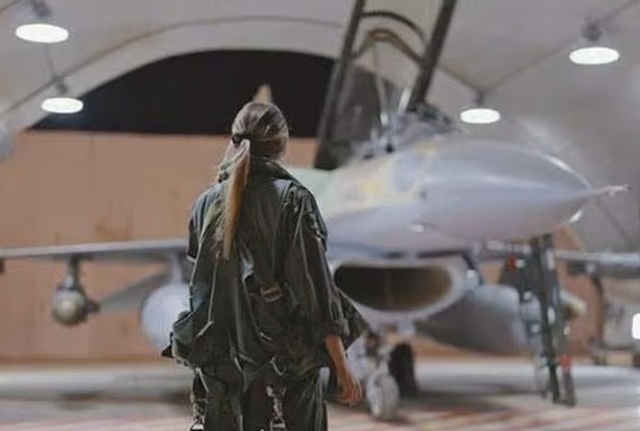
Her description offers a rare window into the human dimension of operations that are often discussed only in terms of strategy and firepower. The flights involve hours of preparation, coordination with intelligence units, and constant monitoring of shifting regional dynamics, particularly as tensions between Israel and Iran continue to shape the broader security environment.
Captain N. also reflected on the tempo of activity within her squadron since the escalation that followed the October 7 attacks, describing a climate of constant readiness. Aircrews, she said, remain on call for extended periods, prepared to deploy with little notice.
“You’re just waiting to be called,” she noted. “You want to defend and attack. That’s what we trained for. It doesn’t matter how much you slept at night, if you slept at all. You fly and do the job.”
Her comments highlight not only the operational burden placed on personnel but also the cultural shift underway within the Israeli Air Force, where gender has increasingly receded as a defining factor in assignments. Instead, commanders emphasize qualification, performance, and mission requirements as the determining criteria.
Defense analysts say the visibility of female aircrew in such a high-profile campaign could influence broader global discussions about gender integration in combat roles. While several Western militaries have opened frontline positions to women over the past two decades, participation in active strike operations—especially those tied to strategic confrontation between states—remains comparatively rare and closely scrutinized.
The IDF has not framed the inclusion of women as a policy milestone, instead presenting it as a reflection of an already integrated system. Yet the confirmation of their numbers has resonated domestically, where legal and political disputes over women’s service in certain combat formations continue to generate controversy.
Beyond the social implications, the operational context remains tense. Israeli officials maintain that the campaign is part of a broader effort to counter perceived threats and deter further escalation. Military planners believe the confrontation with Iran is unlikely to be resolved quickly, requiring sustained vigilance across air, intelligence, and support units.
Captain N. herself suggested that the current phase of operations is only part of a longer continuum. “We did a very good job here and it’s not over yet,” she said. “We are still alert and ready for anything.”
Her remarks capture the prevailing mood within the force: a mixture of professional focus and anticipation of further developments. For many of the women now flying, navigating, and maintaining aircraft in these missions, participation represents neither a symbolic breakthrough nor a headline-grabbing first, but rather the continuation of careers defined by the same expectations placed on all combat personnel.
As modern conflicts increasingly rely on technology, precision, and highly trained specialists, the image of warfare is evolving. The presence of women in these roles—once exceptional, now routine within certain branches—illustrates how military institutions are adapting to both societal change and the technical demands of contemporary operations.
Whether Operation Roar of the Harrier becomes a defining chapter in that transformation may depend less on gender milestones than on how the broader confrontation unfolds. For now, the acknowledgment that dozens of female aircrew are actively engaged in one of the region’s most sensitive military campaigns offers a snapshot of a changing battlefield, where old assumptions about who serves on the front lines are steadily being rewritten.