A Silicon Valley startup has announced what it calls the world’s first successful “multi-behavior brain upload,” after creating a complete digital replica of a fruit fly’s brain capable of controlling a virtual body inside a simulated environment.
The breakthrough, revealed last week by Eon Systems, represents a significant step beyond conventional artificial intelligence. Instead of relying on algorithms that learn through training data, the virtual fly’s behavior emerges directly from a detailed reconstruction of a real biological brain.
According to the company, the digital insect can perform a range of natural actions including walking, grooming, and searching for food without being programmed to do so. These behaviors arise from the activity of a fully simulated neural network that mirrors the original brain neuron by neuron.
“This is not an animation. It is not a reinforcement learning policy mimicking biology,” said Eon co-founder Dr. Alex Wissner-Gross in a social media announcement. “It is a copy of a biological brain, wired neuron-to-neuron from electron microscopy data, running in simulation, making a body move.”
The achievement builds on a major scientific milestone reached in 2024, when an international team of researchers mapped the entire connectome of an adult fruit fly. The map included roughly 140,000 neurons and about 50 million synaptic connections, providing the most complete neural wiring diagram of an animal brain to date.
Earlier research had already demonstrated that a computational model built from this wiring could predict real fruit fly motor behavior with about 95 percent accuracy. However, that earlier system effectively functioned as a brain without a body to control.
Eon Systems says it has now solved that limitation by connecting the digital brain to a physics-based simulation of a fly’s body. The company used Google DeepMind’s MuJoCo physics engine to create a virtual environment where sensory signals flow into the emulated brain and motor commands from the neural network drive the body’s movements.
As the virtual fly interacts with its environment, sensory inputs are processed through the complete connectome and neural signals propagate through the simulated circuits, resulting in physical actions within the digital world. Researchers say the resulting behaviors arise from the brain’s natural circuit dynamics rather than from coded instructions.
Eon CEO Michael Andregg said the system achieves about 91 percent behavioral accuracy using only the connectome’s wiring and simple neuron models, without any hand-tuning or additional machine-learning algorithms.
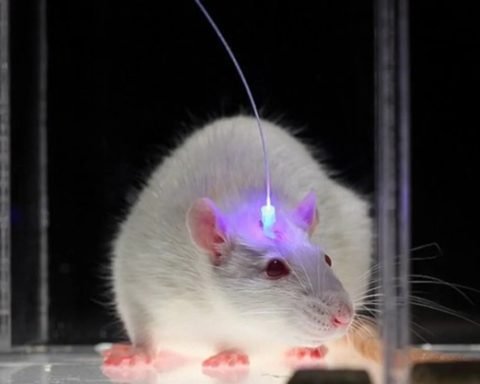
The company is now collecting data for a much larger and more ambitious project: emulating a mouse brain. A mouse brain contains roughly 70 million neurons, more than 500 times the scale of the fruit fly’s neural system.
Looking further ahead, Eon’s researchers say their long-term goal is to attempt a complete human brain upload, an idea that has long been discussed in theoretical neuroscience and science fiction.
Reflecting on the implications of the breakthrough, Wissner-Gross suggested that the boundary between biological mind and machine simulation may be beginning to blur. “The ghost is no longer in the machine,” he said. “The machine is becoming the ghost.”