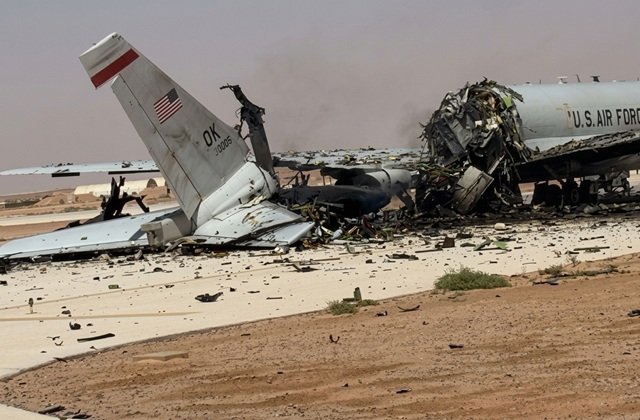
Newly released images circulating online appear to show a U.S. Air Force E-3 Sentry aircraft destroyed in an Iranian missile strike at Prince Sultan Air Base in Saudi Arabia on Friday. Analysts confirm the tail number matches 81-0005, an E-3C deployed to the base in recent weeks, and the damage appears concentrated on the aircraft’s radar dome, a critical component for airborne surveillance and control. The Pentagon has yet to provide official confirmation, but media reports indicate at least 12 U.S. servicemembers were injured and multiple refueler aircraft were damaged.
In response to rising tensions, the U.S. Department of War is reportedly drafting plans for potential ground operations in Iran. Sources speaking anonymously to the Washington Post describe these missions as limited raids by Special Operations forces and conventional troops rather than a full-scale invasion. Objectives could include seizing Kharg Island, a major oil export hub, or targeting coastal areas near the Strait of Hormuz to neutralize weapons threatening commercial and military shipping. President Donald Trump has not approved any such plans, with the White House emphasizing that the Pentagon is preparing options to provide the commander-in-chief with “maximum optionality.”
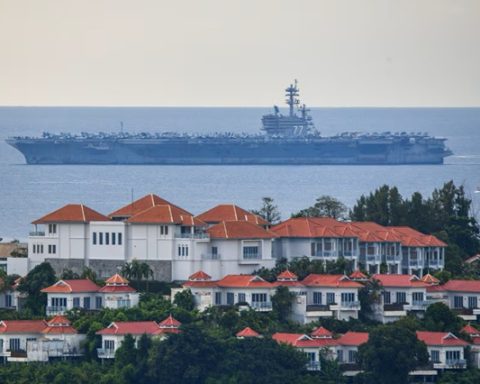
U.S. military reinforcements continue to arrive in the region. The USS Tripoli amphibious assault ship recently joined the USS Abraham Lincoln aircraft carrier, bringing approximately 3,500 sailors and Marines, along with transport and strike aircraft and amphibious assets. Reports indicate a third carrier group, led by the USS George H.W. Bush, may also enter the theater, supported by three guided missile destroyers and ready for major combat operations. Additional amphibious ready groups, including the USS Boxer, USS Comstock, and USS Portland, are moving to the region with F-35B jets, helicopters, and 2,500 Marines.
Iran has escalated its offensive with coordinated missile and drone strikes targeting U.S. and Israeli-linked facilities across the region. Saturday’s attacks included an electronic warfare and radar center in Haifa, fuel storage at Ben Gurion Airport, and industrial facilities in the UAE and Bahrain linked to U.S. military and aerospace sectors. Iran’s Islamic Revolutionary Guard Corps (IRGC) warned these strikes mark a shift from “eye for an eye” retaliation to decisive blows against the military and economic infrastructure of its adversaries.
The conflict has drawn in additional regional actors. Yemen’s Houthis launched attacks on Israeli military sites timed to align with Iran and Hezbollah operations. Iran has threatened strikes on U.S.-Israeli educational facilities unless Washington formally restrains Israel by Monday, March 30. Israeli authorities have issued repeated shelter advisories as defensive systems attempt to intercept incoming missiles.