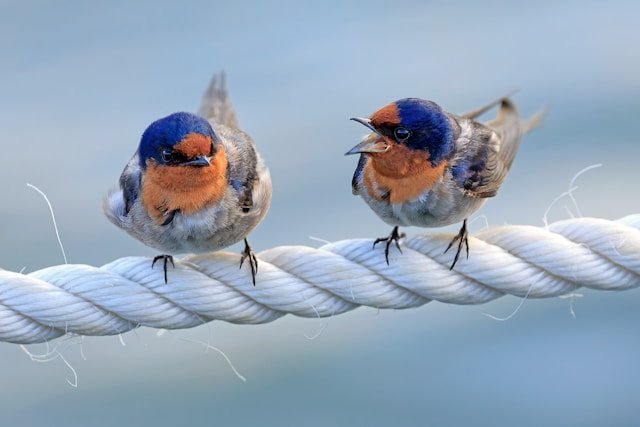
In a world saturated with digital noise and constant human chatter, even a simple moment of silence can be deceptive. As reported by Le Monde, one parent recently discovered this when her seven-year-old mistook a bird’s springtime call for a ringing mobile phone. The confusion, while seemingly trivial, has become emblematic of a broader modern disconnection from the natural soundscape. Experts now argue that learning to identify birdsong is not only a childhood curiosity, but a vital way to restore attention, awareness, and ecological understanding in an increasingly distracted society.
Birdsong specialists say there is no ideal age to begin this learning process. According to Tanguy Loïs, a bioacoustician working with the biodiversity monitoring firm BioPhonia, even very young children can begin distinguishing species if guided properly. He notes that simple, repetitive calls such as the chaffinch’s song are often among the easiest for children to recognise, making them a natural entry point into the world of sound identification. For Loïs, the process is less about formal instruction and more about gradual exposure, repetition, and emotional association.
Experts describe birdsong recognition as a skill similar to learning music or recognising a familiar voice. The brain builds connections through comparison and repetition, gradually turning random sound into meaningful patterns. Loïs explains that once a child begins to identify a few species, the learning accelerates naturally. Each new recognition strengthens memory and sharpens auditory attention, creating what he calls a “virtuous circle” of listening and learning.
Emotion plays a crucial role in this development. Children are more likely to remember a bird call if it is linked to a specific place, moment, or feeling. Ornithologist Maxime Zucca recalls how certain sounds became permanently embedded in his memory through childhood holidays in rural landscapes. For him, the distinctive call of the coal tit remains tied to family experiences in the French countryside, illustrating how sound and memory reinforce one another over time. He says the challenge for most learners is not initial recognition, but long-term retention across seasons when birds are less active.
This seasonal gap in learning has inspired educational tools aimed at children. Together with illustrator Léna Mazilu and developer Yoann Guény, Zucca has helped create children’s books such as Ecoute les oiseaux and Ecoute les oiseaux des villes, designed for readers aged four and up. These books are paired with interactive audio features that allow children to match sounds with animated birds, turning listening into a game of recognition and memory. Mazilu, who runs workshops in schools and libraries, says children often surprise adults with how quickly they identify familiar urban species like blackbirds or woodpeckers, even without formal training.
Audio-naturalist Stanislas Wroza, who works at the French National Museum of Natural History, echoes this observation. He describes how early exposure to nature allowed him to identify birdsong from a young age, eventually building a mental catalogue of hundreds of distinct calls. For Wroza, the key is not memorisation alone but structured observation: listening carefully, categorising sounds by pitch or rhythm, and then linking them to visual identification in the field. Over time, hearing and seeing become integrated, reinforcing memory and understanding.
Educators and researchers emphasise that the benefits of this practice extend far beyond simple recognition. Listening to birds has been linked in multiple studies to improved well-being, reduced stress, and enhanced cognitive focus. In urban environments, where visual stimulation dominates daily life, auditory awareness is often underdeveloped. Specialists argue that reconnecting children with natural soundscapes helps rebalance this sensory hierarchy and strengthens spatial orientation and attention skills.
Lucille Bourgeais, who works with the French League for the Protection of Birds in Paris schools, explains that children are often more receptive to these sounds than adults expect. Through playful associations—such as comparing bird calls to musical instruments or familiar noises—she helps students build mnemonic tools that make identification intuitive. She argues that such exercises not only develop listening skills but also restore a sense of connection to the living environment that many children in cities are losing.
This reconnection is increasingly urgent in the context of global biodiversity decline. Experts warn that as species populations fall, so too does public awareness of their existence. Without familiarity, disappearance becomes harder to notice. According to Wroza, most people underestimate the richness of their immediate soundscape, often identifying only a handful of species when in fact dozens may be present. Learning to listen more carefully, he argues, transforms perception of the environment and reveals a complexity that is otherwise ignored.
Beyond education, there is also a cultural dimension to this practice. In conversations reported by Le Monde, specialists describe birdsong as a form of “superpower” for children—an ability that creates a sense of discovery and independence in understanding the world. Knowing which bird is singing does not simply add knowledge; it changes how children move through space, how they experience silence, and how they relate to nature in everyday life.
For many of the experts interviewed, the act of listening itself becomes the most important lesson. Sitting quietly on a balcony, in a park, or in a garden allows children to engage directly with the soundscape of their surroundings. Over time, what initially sounds like indistinct background noise becomes a structured and meaningful chorus. This transformation, they argue, is essential in an era when attention is increasingly fragmented.