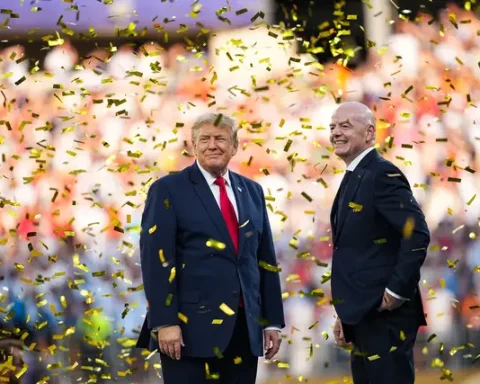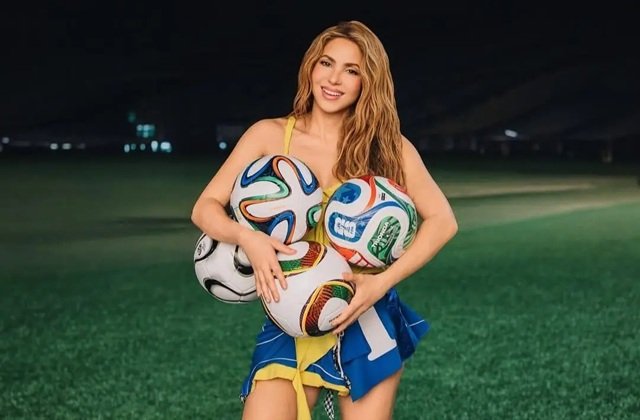
Shakira returned to the global football stage on Thursday with the launch of “Dai Dai,” the official anthem for the 2026 FIFA World Cup, marking what the Colombian singer described as her “most special” tournament yet. Presented alongside Nigerian artist Burna Boy and FIFA president Gianni Infantino, the song debuted as both a celebration of football culture and a platform for a broader humanitarian message tied to education and childhood opportunity.
The release places Shakira once again at the center of football’s biggest cultural moments, extending a relationship with the World Cup that began with “Waka Waka” in South Africa in 2010 and continued with “La La La” during Brazil 2014. Speaking during the unveiling event, the singer reflected on how deeply those previous songs became embedded in global sporting memory, while suggesting that “Dai Dai” carries a different emotional and political weight. According to Shakira, the anthem is intended to remind children around the world that dreams remain attainable, regardless of social or economic barriers.
Unlike previous World Cup songs focused almost exclusively on celebration and spectacle, “Dai Dai” arrives attached to a large-scale philanthropic initiative. Shakira announced that she will donate 100 percent of the song’s profits to FIFA’s Education Fund, an effort aimed at improving access to quality education and sports programs for vulnerable children globally. FIFA hopes the campaign connected to the tournament will raise up to 100 million dollars by the end of the competition.
The 2026 World Cup, which will be jointly hosted by Mexico, the United States, and Canada, is already being framed by FIFA as the largest and most commercially ambitious edition in the tournament’s history. Yet organizers also appear eager to emphasize social legacy alongside commercial expansion. Shakira’s involvement aligns with that strategy, presenting football not only as entertainment but also as a global cultural force capable of mobilizing charitable action.
Musically, “Dai Dai” reflects the increasingly international identity of modern football itself. The track blends English lyrics with multiple languages, while its chorus repeats variations of the same motivational phrase across Spanish, Italian, English, and Japanese. The title itself, derived from the Italian phrase “Dai Dai,” evokes encouragement and forward momentum, echoing chants heard in stadiums across Europe and Latin America.
Spanish plays a central role throughout the song, especially in lines encouraging confidence and resilience. One recurring lyric urges listeners not to forget their own worth and to “play like you know how,” connecting sporting ambition with personal empowerment. The multilingual approach appears carefully designed to mirror the geographic diversity of the upcoming tournament and the global audience FIFA hopes to reach.
The anthem also functions as a tribute to football history. In its lyrics, Shakira references some of the sport’s most iconic figures, including Pelé, Diego Maradona, Paolo Maldini, Romário, David Beckham, Kaká, and Carlos Valderrama, known widely as “El Pibe.” Spain receives a notable mention through Andrés Iniesta, whose decisive goal secured the country’s first World Cup title in 2010. The inclusion of Iniesta alongside legends from Brazil and Argentina underscores Spain’s enduring place in football’s modern mythology and reflects the emotional resonance of that South African tournament, where Shakira’s “Waka Waka” became inseparable from the event itself.
The song also bridges generations by referencing current superstars such as Kylian Mbappé, Cristiano Ronaldo, and Lionel Messi. National teams mentioned in the lyrics include Colombia, Spain, and reigning world champion Argentina. By combining legendary names with active stars, “Dai Dai” positions itself as both a nostalgic celebration and a soundtrack for football’s next era.
For Shakira, the release represents another milestone in a career that has increasingly intertwined with football culture over the past decade and a half. Asked whether she considers herself an ambassador for Latin America within the World Cup universe, the singer responded affirmatively, citing what she described as an undeniable connection to the sport. Her personal and professional history with football has often transcended music, turning her into one of the tournament’s most recognizable cultural figures.
That influence is expected to expand even further during the 2026 competition. FIFA confirmed that Shakira will not only contribute to the official soundtrack of the tournament but will also participate as one of the headline performers during the World Cup final. The announcement is particularly significant because FIFA plans to introduce a halftime show during the final match for the first time in the tournament’s history, borrowing from the spectacle-driven model long associated with the Super Bowl.
Shakira will share that stage with American pop icon Madonna and South Korean group BTS, forming a lineup that reflects FIFA’s effort to appeal simultaneously to Western, Latin American, and Asian audiences. The production is being coordinated through the nonprofit organization Global Citizen, with Coldplay singer Chris Martin reportedly playing a key role in selecting the artists involved.
The decision to stage a halftime performance marks a major cultural shift for FIFA, which traditionally limited musical acts to opening or closing ceremonies outside the match itself. The move highlights the growing overlap between global sport and entertainment industries, particularly as football seeks to strengthen its commercial reach in North America ahead of the expanded 2026 tournament.
The contrast with the previous World Cup in Qatar is striking. During the 2022 final between Argentina and France, musical performances took place before kickoff as part of the closing ceremony rather than during halftime. Artists including Puerto Rican singer Ozuna and French rapper Gims participated, but the match itself remained uninterrupted by entertainment programming.