On Wednesday morning, Anant Ambani, heir to one of the world’s largest fortunes, was on his way to work with his wife when he spotted an injured crow by the road. He told his driver to stop, stepped out past half a dozen armed security guards, and picked up the bird himself. According to his account to The Sunday Times (UK), the crow was taken not to a local vet but to one of the world’s largest wildlife hospitals, part of the sprawling animal rescue centre called Vantara that the 31-year-old has built on his family’s estate in Jamnagar, in India’s Gujarat state.
The Ambani family, among the richest in India, is best known for oil and telecoms interests valued at roughly £175 billion, along with ownership of the London toyshop Hamleys. The family drew global attention last year when Anant married fellow business heir Radhika Merchant in a days-long celebration reported to have cost hundreds of millions of pounds. Yet animal rescue, he told the paper, remains his defining passion. He described frequently stopping his car to chase down injured stray dogs, saying his wife shares the habit and has waited roadside for him more than twenty times while he caught and treated an animal.
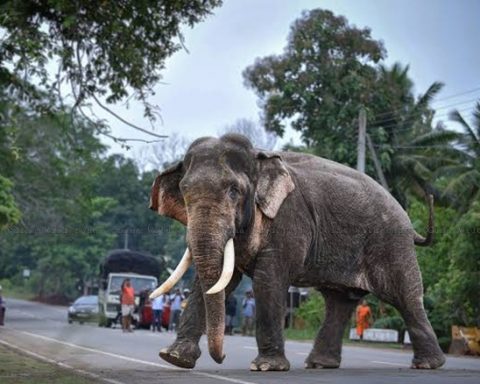
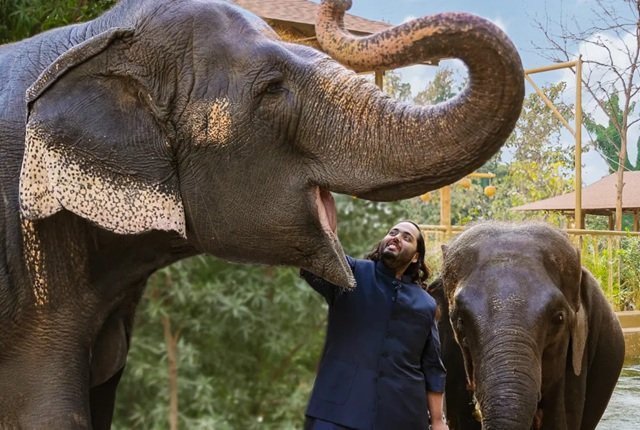
Spanning around seven square miles, roughly a hundred times the size of London Zoo, Vantara stands in sharp contrast to the congestion of Jamnagar beyond its gates. Inside, broad roads and manicured grounds give way to a sophisticated wildlife hospital complex, including a dedicated elephant unit, sheltering hundreds of thousands of rescued animals, among them around 2,000 tigers, lions and other big cats, along with hundreds of bird species. Elephants reportedly receive hydrotherapy and acupuncture, while surgeons carry out complex procedures on big cats. Touring the sanctuary by golf cart, Ambani pointed out individual animals and recounted their histories, including a mandrill rescued from an Indonesian zoo where it had been made to ride a bicycle for visitors.
Vantara has drawn praise from supporters as among the most ambitious privately run wildlife rescue efforts ever attempted, and it carries the backing of India’s political establishment. Prime Minister Narendra Modi inaugurated the sanctuary in March 2025, feeding lion cubs, elephants and giraffes during a widely covered visit. Some conservationists, however, have raised questions about the rationale for assembling such a large collection of rare and endangered species and have voiced concern over how certain animals were sourced and transferred internationally. Ambani rejected these concerns, telling the paper that every animal at Vantara was acquired legally and with its welfare as the priority.
Among the sanctuary’s residents are hippos rescued from a South African hunting lodge, where, according to Ambani, hunters could once pay $10,000 to shoot the entire group; one prospective hunter instead paid the fee and donated the animals to Vantara. Elsewhere on the grounds are chimpanzees rescued from a zoo in Iraq, another group rehomed from a Middle Eastern family no longer able to care for them, and a colony of jackass penguins rescued from a shopping centre in Qatar.
Ambani’s most ambitious current project lies thousands of miles away in Colombia, where the descendants of hippopotamuses once kept by drug lord Pablo Escobar, who originally acquired them from a Dallas zoo, have multiplied well beyond their original numbers. Ambani said a Vantara team is currently in Colombia assessing the population, which he believes may be closer to 300 animals rather than the commonly cited estimate of around 80. He explained that relocation is complicated by the hippos’ status as a local tourist draw generating income through safaris, meaning many Colombians oppose their removal. Rather than attempting to move the entire population to India, Ambani said Vantara is weighing three options: establishing a sanctuary in Colombia itself, transporting a small number to India, or reintroducing others to the wild in Africa. He framed the project as part of a broader ambition for Vantara to function not just as a sanctuary for mistreated animals but as a global reserve for endangered species, capable eventually of reintroducing animals to habitats where they have vanished.
The reporter, who joined a group of American and European lawyers and lobbyists on a visit to the estate, described being welcomed by Gujarati camels at the entrance to a palatial guest complex, with security guards and dogs lining a reflecting pool filled with koi carp. That same complex hosted part of Ambani’s pre-wedding festivities in 2024, when more than 1,000 guests, including Mark Zuckerberg, Bill Gates and Rihanna, alongside leading Bollywood figures, toured the sanctuary before Rihanna performed her first full concert in eight years, for a fee reported to have reached into the millions. Ambani said he wanted the wedding to be distinctly cultural and Indian-focused, expressing gratitude to his parents and to Radhika. The New York Times, as cited in the piece, described the monthlong celebrations as marking the emergence of an unapologetic Indian billionaire class on the world stage. The wedding drew criticism in a country where poverty remains widespread, though Ambani said he chooses to focus only on the positive.
The tour also included a small temple built in memory of Ambani’s late golden retriever, Happy, who died after nine years by his side. Discussing his family’s business legacy, Ambani described his grandfather Dhirubhai, an uneducated former mango seller, as the founder of what became Reliance Industries, later transformed by his father Mukesh into a conglomerate spanning oil, telecoms, retail and renewable energy. As succession planning unfolds, Ambani now leads the group’s energy and renewables division, while his brother Akash chairs Reliance Jio and sister Isha oversees much of its retail business. He pointed to Vantara as the flagship of the family’s philanthropic work, carried out partly under India’s corporate social responsibility rules requiring large firms to direct a share of profits toward approved social causes, and credited his mother Nita with instilling humility in the family despite its wealth.
Ambani also spoke about long-standing health struggles, including childhood asthma worsened by India’s air pollution and a rare inherited condition called monogenic obesity, which he said led to significant weight gain in his youth before he lost a substantial amount of weight following his 21st birthday. He acknowledged pollution remains a concern but said India has made progress on environmental conditions over the past decade. The family’s wealth has also brought security threats, he noted, recalling past warnings against his father and a 2021 bomb scare outside the family’s Mumbai residence, Antilia, a tower reported to have cost around $1 billion to build. Looking ahead, Ambani, who does not yet have children with Radhika, said his priority is preserving cultural and family values for the next generation, citing memories of elephants mistreated for street begging in his youth as the root of his devotion to animal welfare, one that he said still extends to stopping his car for something as small as an injured crow.