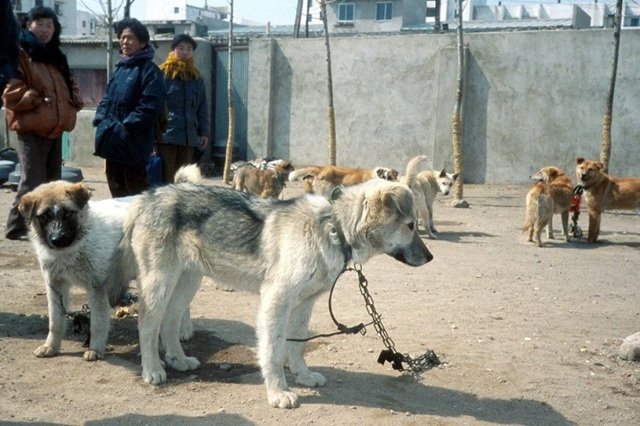
North Korea’s state media has renewed its long-standing promotion of dog meat soup as a traditional remedy for extreme summer heat, encouraging citizens to consume the dish as soaring temperatures affect both North and South Korea. The recommendation comes as prolonged heatwaves, tropical nights and forecasts of even higher temperatures underscore the growing impact of severe weather across the Korean Peninsula, while the two Koreas continue to take sharply different approaches to the consumption of dog meat.
North Korea has once again urged its citizens to eat dog meat soup as part of its official advice for coping with extreme summer temperatures, reviving a decades-old government campaign as intense heat continues to grip the Korean Peninsula.
Rodong Sinmun, the newspaper of the ruling Workers’ Party, published health guidance on Sunday outlining measures to protect against the ongoing heatwave and providing first aid advice for heat-related illnesses. The publication included an interview with a senior doctor at Pyongyang General Hospital, who warned that “cardiovascular diseases, diabetes, and hyperthyroidism can worsen due to heat exhaustion and heatstroke”.
Alongside recommendations to consume cooling foods such as watermelon, mung beans and cucumbers, the newspaper advised people to eat “highly nutritious foods” including dog meat soup, fish porridge and red bean porridge. Dog meat soup, known locally as dangogi guk, or “sweet meat soup”, has long been promoted by the North Korean government as a traditional health tonic believed to help people endure the hottest weeks of summer.
Although officially encouraged, the dish remains expensive for many North Koreans. Ri Chol, a former North Korean diplomat, said dangogi continues to enjoy popularity despite its high cost. “Dangogi is popular in the North, but it is a pricey food,” he said. “It is mostly consumed on hot summer days to help fend off heat exhaustion.”
Pyongyang has actively promoted dog meat consumption for decades as part of its culinary traditions. The government has established speciality restaurants along the Taedong River dedicated to serving the dish, registered regional recipes as elements of cultural heritage and organised annual cooking competitions in the capital to elevate its status. A dog meat cooking contest was also held in Pyongyang in 2020, reinforcing official efforts to portray the dish as both a traditional delicacy and a patriotic way of coping with the summer heat.
North Korea’s continued promotion of dog meat stands in stark contrast to developments in neighbouring South Korea. In 2024, South Korea enacted landmark legislation prohibiting the breeding, slaughter, distribution and sale of dogs for human consumption. The legislation includes a three-year transition period ending in February 2027, after which offenders could face prison sentences of up to three years or fines of as much as 30 million South Korean won (US$22,000).
The renewed health campaign comes as North Korea experiences an extended spell of exceptionally hot weather. Since July 27, Pyongyang has recorded a series of tropical nights, with overnight temperatures remaining above 25 degrees Celsius.
The Korean Central Broadcasting Station reported on Monday that a “sweltering heat advisory” would remain in force until Sunday across most areas south of the country’s central region, as well as parts of the north. Daytime temperatures are forecast to reach between 33 and 35 degrees Celsius, with average relative humidity exceeding 70 per cent.
Authorities have also issued a separate “high temperature advisory” through Saturday covering Pyongyang, North Pyongan Province, parts of Jagang Province and sections of the central and southern regions, where temperatures are expected to range from 35 to 40 degrees Celsius.
Across the border, South Korea is confronting one of its most severe heatwaves in decades. Temperatures have recently exceeded 40 degrees Celsius in parts of the country’s south-east, with the extreme heat now advancing towards the Seoul metropolitan area.
Forecasters say Typhoon Dolphin, which is moving towards Japan, is unlikely to bring cooler conditions. Instead, meteorologists believe the storm will be blocked by two powerful heat domes surrounding the Korean Peninsula, allowing only hot, dry winds to reach South Korea and intensify the heat.
Kim Soo-hyeon, a forecaster at the Korea Meteorological Administration, said persistent easterly winds are expected to keep western parts of the country unusually hot. “As Typhoon Dolphin moves westwards from the waters north of Guam, the easterly winds are expected to persist, so temperatures in western regions are likely to remain high for the time being,” Kim said.