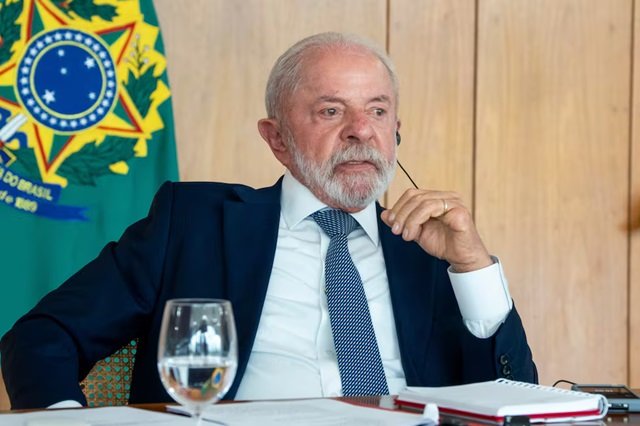
With only weeks remaining before Brazilians head to the polls in October, President Luiz Inácio Lula da Silva is seeking to transform a series of international disputes into a central pillar of his re-election campaign, framing foreign pressure as an attack on Brazil’s sovereignty and linking it directly to his principal political opponents.
The 80-year-old president has found himself at the centre of diplomatic tensions involving US President Donald Trump and Argentine President Javier Milei. The disputes have ranged from sanctions, tariffs and diplomatic disagreements with Washington to public insults and political provocations from neighbouring Argentina. Lula has responded by arguing that the external pressure facing Brazil has been encouraged by domestic political rivals, particularly Flávio Bolsonaro, son of former president Jair Bolsonaro and Lula’s main challenger in the October election.
The most significant tensions have emerged in relations with the United States. This week, the Trump administration denied a visa to Brazil’s ambassador, citing delays by Brazil in accepting Washington’s nominee for ambassador. Lula described the decision as “irresponsible” and “unthinkable” between two countries that have maintained diplomatic relations for more than 200 years. Brazil’s Foreign Ministry, traditionally cautious in its public statements, also adopted unusually strong language, describing the move as extremely serious and attributing it to an inappropriate attempt to interfere in Brazil’s forthcoming presidential election.
The diplomatic dispute followed Brazil’s decision only days earlier to deny visas to two US State Department envoys. Brazilian authorities argued that the officials intended to participate in a strategy of misinformation designed to cast doubt on the reliability of the country’s electoral system. The Brazilian government has also expressed concern over the potential influence of major technology companies and fears that the election campaign could be affected by a large-scale wave of false information on social media, with the growing use of artificial intelligence adding to those concerns.
At the same time, Brazil continues to deal with the consequences of an escalating trade dispute with Washington. The Trump administration imposed a 25% tariff on Brazilian products, arguing that Brazil engages in unfair competition. Among the reasons cited were Brazil’s successful Pix electronic payment system, which Washington argues has reduced the profits of US companies, and Brazil’s efforts to introduce limited regulation of major technology firms. A further 12.5% tariff was later imposed on the grounds that Brazil exports goods produced with forced labour, an allegation rejected by the Brazilian government.
For Lula, each measure taken by the White House has provided an opportunity to reinforce his nationalist message while strengthening ties with Brazil’s business community. He has repeatedly argued that members of the Bolsonaro family bear responsibility for encouraging US action against Brazil. According to the government, Bolsonaro’s sons have spent more than a year lobbying Trump to impose sanctions in an effort to halt the trial of their father over an alleged attempted coup. Eduardo Bolsonaro, another son of the former president, has been living in the United States while pursuing those efforts.
One year earlier, Trump imposed a 50% tariff on Brazilian imports—the highest rate applied to any country—as retaliation for what he described as the “witch hunt” against Jair Bolsonaro, whom he has long regarded as a close political ally. Sanctions were also imposed on the judge leading the case and on Brazilian government officials. Despite those measures, the trial continued, ultimately resulting in Jair Bolsonaro being sentenced to 27 years in prison.
The close relationship between Trump and the Bolsonaro family has become one of Lula’s principal campaign themes. He has frequently described them as “traitors to the homeland”, accusing them of placing personal interests above Brazil’s economy. That nationalist message proved politically effective during last year’s tariff dispute and helped restore Lula’s popularity. Current opinion polls give him a narrow lead over Flávio Bolsonaro, although the race remains highly competitive and is widely expected to produce a close result.
Leonardo Paz Neves, a researcher at the International Intelligence Centre of the Getúlio Vargas Foundation in Rio de Janeiro, said US interference ultimately benefits Lula, particularly if the government succeeds in convincing voters that Flávio Bolsonaro bears responsibility for actions that have harmed Brazil for personal political gain. He argued that Brazil’s size, geopolitical importance and declining dependence on exports to the United States give the country greater confidence in responding to pressure from Washington.
Brazil has also faced diplomatic friction closer to home. Milei recently travelled to São Paulo to support the launch of Flávio Bolsonaro’s presidential campaign and used the occasion to publicly insult Lula, triggering another dispute between the two neighbouring countries. Although Brazil and Argentina remain economically interdependent, bilateral relations have remained largely frozen since Milei took office. Lula’s administration has sought to avoid escalating tensions while keeping institutional channels of communication open.
A separate, less serious disagreement also emerged with Paraguay after President Santiago Peña criticised Lula’s remarks about the War of the Triple Alliance. During an impromptu speech, Lula simplified the origins of the conflict by stating that “one fine day, Paraguay decided to invade Brazil”, prompting concern in Asunción, where the conflict remains an especially sensitive historical issue. Lula and Peña later spoke by telephone, and officials indicated that the dispute was unlikely to deepen. In recent days, however, Lula has increasingly adopted martial language in public speeches, stressing that Brazil’s armed forces must be prepared to ensure that “nobody sticks their nose” into the country’s affairs and arguing that investment in national defence is essential given Brazil’s extensive borders.