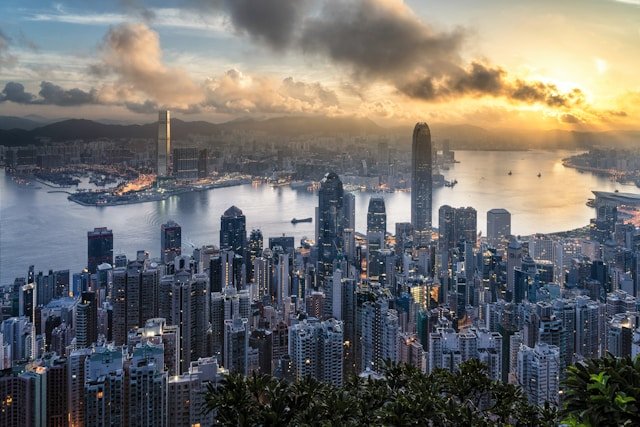
Hong Kong is approaching a potentially important stage in the evolution of its role as a global financial hub, with policymakers and market participants calling for a broader range of financial products, deeper commodity markets, greater technological innovation and a more diverse pool of international talent.
The debate comes as Hong Kong seeks to strengthen its role as the principal offshore centre for China’s renminbi and as Beijing prepares to integrate the city more closely with national development priorities under its 15th five-year plan.
According to South China Morning Post, the process received a symbolic boost on August 3, when senior officials and securities regulators from Hong Kong and mainland China marked the launch of the first offshore Chinese government yuan-denominated bond futures contract. The initiative, accompanied by related cross-border policies, was presented by Beijing as an important upgrade to Hong Kong’s position as China’s largest offshore yuan trade-settlement market.
The launch comes as Chief Executive John Lee Ka-chiu prepares to deliver Hong Kong’s first five-year plan, with the economy, finance and trade expected to form a central part of efforts to reshape the city’s economic direction.
For Hong Kong, the challenge is not simply to preserve its existing position but to strengthen its ability to connect mainland China with international capital markets. Kenny Shui Chi-wai, vice-president of the Our Hong Kong Foundation think tank, described yuan globalisation as an important part of Beijing’s mandate for the city under the national 15th five-year plan.
“Hong Kong connects China with the world – the city’s international financial centre status means a lot to the country,” Shui said.
He argued that Hong Kong’s financial services sector could provide support to mainland companies while also helping local businesses raise capital through initial public offerings. Such activity, he said, would contribute directly to the city’s real economy.
Hong Kong had remained the world’s leading IPO destination until June, when billionaire Elon Musk’s commercial aerospace company SpaceX listed in New York for US$75 billion. Nevertheless, the city remains a major international destination for mainland companies seeking listings, with at least 500 candidates reportedly in the pipeline for the remainder of the year.
The city’s role as an offshore renminbi centre provides an important foundation for these ambitions. Although mainland China maintains a largely closed capital account, more than 70 per cent of global payments in the offshore yuan market pass through Hong Kong. Renminbi deposits in the city have exceeded 1 trillion yuan, making Hong Kong the largest pool outside mainland China, according to official data.
The new five-year Chinese government bond futures contract is intended to give international investors another means of managing interest-rate exposure as their holdings of mainland fixed-income assets increase. Government bond futures allow investors to buy or sell bonds at a predetermined price on a future date, providing a mechanism to hedge against movements in interest rates and bond prices without requiring them to hold the underlying bonds immediately.
Mofiz Chan, chairman of the Hong Kong Securities and Futures Professionals Association, said international investors already held 3.2 trillion yuan of Chinese bonds and that the need to manage interest-rate risks was consequently increasing. He called for Hong Kong to introduce more renminbi-denominated futures, options and over-the-counter derivatives to strengthen the yuan’s pricing power in international markets.
Chan also proposed an “IPO Connect” cross-border scheme linking primary markets and suggested including real estate investment trusts in the existing southbound Stock Connect programme. Such measures, he argued, could allow mainland investors to trade Hong Kong securities more directly using yuan and increase the currency’s role in cross-border investment.
He also called for block-trading mechanisms and action to resolve differences in trading days between mainland and Hong Kong markets. Beyond conventional financial products, he argued that Hong Kong should help support China’s emerging productive forces through instruments such as intellectual property-backed bonds and technology enterprise bonds.
Another potential source of growth lies in Islamic finance. Chan suggested that Hong Kong could tap into the US$6 trillion Islamic finance market by issuing sukuk to fund major domestic projects such as the Northern Metropolis.
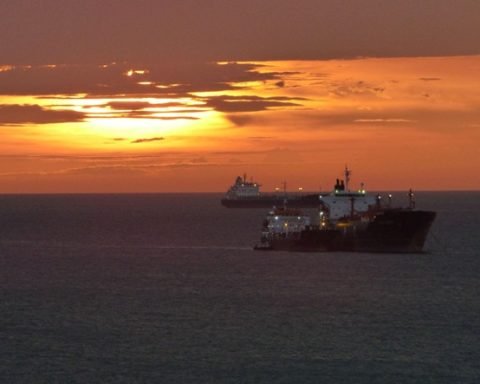
The transformation being discussed extends beyond financial markets. Experts also see physical commodities trading and storage as a potentially important pillar of Hong Kong’s future role. The 15th five-year plan includes the establishment of a physical commodities trading and storage ecosystem, including gold.
Dan Ronald Leung Wai-tsun, chief executive of Esperanza Fintech Group, argued that Hong Kong needed a clearer government position on fintech and a different approach to technological development. He questioned whether the city wanted to remain primarily an adopter of trends developed elsewhere or become a creator of financial technology.
Leung pointed to Hong Kong’s established common law system as a potential advantage for mainland companies seeking to expand internationally. He also argued that the city needed younger leaders capable of bringing new ideas to its fintech sector, particularly as Singapore continues to develop rapidly in the same field.
The physical infrastructure required for commodity trading is another concern. Chan said Hong Kong should use the strengths of its international financial markets to compensate for shortcomings in physical delivery infrastructure, with the aim of establishing the city as a pricing centre for gold in the Asian time zone.
Veteran banker and City University adjunct professor Wilson Chan Fung-cheung stressed that an exchange without storage facilities would leave settlement dependent on net settlement. With physical warehousing in Hong Kong, he argued, the system could eventually encompass commodities including copper, aluminium, zinc and lead, allowing the city to play a greater role in price formation.
Shui said such an ecosystem could strengthen both Hong Kong’s international financial centre and its real economy because commodity markets involve trading, warehousing, processing, refining, logistics, insurance and professional services. He also linked the development to China’s financial security and risk management.
The proposed direction of international expansion is also significant. Wilson Chan argued that helping Chinese companies “go global” under the 15th five-year plan should focus primarily on emerging markets rather than the United States. Southeast Asia, the Middle East and Central Asia, he said, offered faster-growing markets where the renminbi could potentially play a larger role.
Shui similarly called for currencies from Asean countries and the Middle East to be incorporated into Hong Kong’s real-time gross settlement system, which currently covers the Hong Kong dollar, US dollar, euro and yuan. Adding more currencies, he said, could reduce exchange costs and support mainland trade with these markets.
Such ambitions would require changes to Hong Kong’s talent base. Shui argued that the city needed more people with experience in Southeast Asia, the Middle East and Africa, rather than relying heavily on those familiar primarily with China. The concern comes amid arguments from human-resource groups that Hong Kong’s dependence on mainland talent could weaken its international character, with 94.5 per cent of successful applicants under a leading talent scheme coming from across the border.
Other experts have questioned how Hong Kong itself manages its financial reserves. Jun Yu Chan, a partner at Wings Capital Ventures, asked why most of the city’s Exchange Fund, which serves as its reserve for defending the local currency, is invested in US dollar-denominated assets through global asset managers. He argued that allocating more resources to local managers could help generate trading activity and deepen Hong Kong’s stock and bond markets.
He also advocated a more assertive regulatory approach towards emerging sectors such as artificial intelligence and cryptocurrencies, arguing that Hong Kong should develop practical applications rather than simply follow international standards.
The broader discussion therefore centres on whether Hong Kong can strengthen its distinctive role between China and the international financial system. Its established markets, legal framework and offshore renminbi infrastructure provide a foundation, but the proposals outlined by market participants point towards a broader transformation involving currencies, commodities, technology, talent and capital allocation.
For a city whose traditional strength has been its ability to connect China with the global economy, the next phase may depend on how effectively it can build new channels for that connection while developing capabilities that are increasingly distinct from established Western financial models.