There are two constitutional bodies in India, namely the judiciary and the Election Commission, and they have contributed significantly to keeping Indian democracy aloft in both spirit and practice since 1950, when India was declared a democratic republic.
Considering the problems and issues faced by India across multiple fields, with a number of languages being spoken, people following different religions and different types of cultural and traditional practices, apart from tribal populations that have their own unique styles of living, the task before the judiciary and the Election Commission is very complex. With the Indian population steadily increasing and India now becoming the most populous country in the world, both these constitutional bodies have certainly stood the test of time and have met the expectations of the people to a creditable level.
With multiple and differing views on matters and issues among people across India, both these bodies have, on several occasions, had to take hard decisions that may be palatable to some and less so to others. Most of these decisions have been largely applauded, while some have been severely criticised by sections of the public. Though this is inevitable in a democratic country like India, the overall consensus view in the country is that both these institutions have been acting responsibly and with a sense of proportion.
As has been seen all over the world, in the functioning of the judiciary there are bound to be different views among judges, and disagreements between judges are not uncommon. This is the reason why lower-court judgments are sometimes superseded by High Courts, and High Court judgments are occasionally superseded by the apex court. Nevertheless, the final verdicts of the higher courts are based on the views of the majority of judges, and they have been implemented and accepted by the countrymen.
In the same way, there have been instances of differing views among the Election Commissioners, with the consensus view being accepted as the final decision. Such differences of view should not be seen as a matter of conflict. Rather, they lead to informed discussions and constructive deliberation in order to arrive at an appropriate final decision.
Of late, a disturbing trend has been seen, with a section of critics and political parties starting to question the verdicts of the judiciary and the Election Commission and attributing motives to judges as well as Election Commissioners. Such an approach by critics poses the threat of creating suspicion about these two constitutional bodies, which have been vested with power and authority by the Constitution makers, who also ensured that the terms of office of judges and Election Commissioners cannot be terminated without the approval of Parliament.
Obviously, this job-security clause was incorporated in the Constitution by the Constitution makers, who had the wisdom to anticipate that, in the future, some negative forces and those affected by decisions of the judiciary or Election Commission would attempt to undermine their authority by creating doubts about their competence and fairness and, in the process, attempt to destabilise the functioning of these two very important constitutional bodies.
This seems to be what is happening now, with critics demanding the removal of the Chief Election Commissioner. This obviously highlights the fact that the Constitution makers were capable of thinking ahead of their time.
Such recent developments are particularly a matter of serious concern, as weakening the authority of these constitutional bodies by questioning the integrity of the Chief Election Commissioner without any basis would inevitably lead to the destabilisation of Indian democracy itself.
Therefore, such a trend has to be resisted by all discerning thinkers in India who have the capability to take a holistic view of such matters of far-reaching importance.
The ongoing demand for the removal of the Chief Election Commissioner for launching the Special Intensive Revision (SIR) exercise by sections of political parties and critics amounts to a counterproductive step. Such accusations create suspicion about the motives of some critics and a few political parties as to whether they are trying to use the Chief Election Commissioner as a pawn in the political game in order to discredit the institution.
This is particularly so because the judiciary has refused to halt the SIR exercise as demanded by some petitioners, which obviously highlights the fact that the learned judges have considered the SIR exercise relevant and much needed.
With India being a country of a massive population of more than 140 crore, the Election Commission has carried out the SIR exercise in the best manner possible under the given circumstances. The fact is that the massive SIR exercise, involving thousands of people, has been carried out by state government employees under the overall guidance of the Election Commission and not by staff employed by the Election Commission. This is particularly noteworthy, as a few of the states where SIR is being carried out are governed by opposition parties that are now critical of the exercise.
Further, based on observations from different sources during the SIR exercise, the Election Commission has not hesitated to change its procedures from time to time. It has given considerable opportunities to people to participate in the SIR exercise, and those whose names were deleted in the first instance were given an opportunity to present their cases. Where their credentials were proved, the Election Commission immediately made the necessary corrections.
Now, very recently, in the light of criticisms, whether warranted or not, the Election Commission has once again invited persons whose names have been deleted to prove their eligibility, and it has said that, based on verification, it would do the needful.
This should go a long way towards satisfying critics and the countrymen about the fair, responsible and responsive approach of the Election Commission to the issue. Unfortunately, the critics continue to remain critics, creating doubt as to whether they have any political motives.
What is particularly disturbing is that sections of the opposition parties are calling for the removal of the Chief Election Commissioner, questioning his personal honesty and commitment, and some have gone to the extent of using abusive language and verbally attacking the Chief Election Commissioner in person. It is gratifying that the Chief Election Commissioner has conducted himself with enormous dignity in spite of the personal criticisms directed against him.
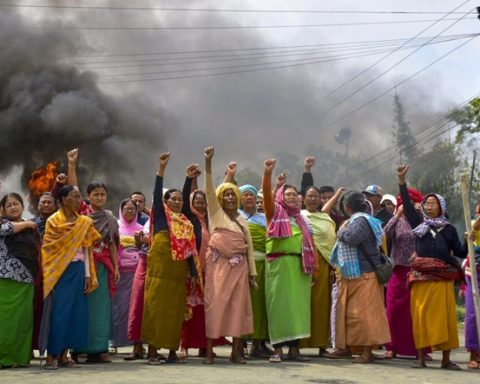
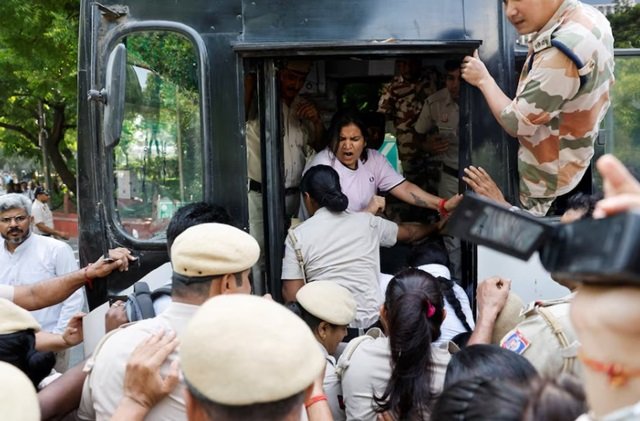
Resorting to street demonstrations and disturbing law and order while demanding that the Chief Election Commissioner should be removed is certainly a negative method, particularly as the matter is now before the apex court.
Obviously, the critics are trying to force the issue in their favour through a hate-filled campaign and unproven allegations.
Citizens of India and the Indian media seem to have unlimited freedom. Obviously, some critics, supported by sections of the media, seem to be utilising this freedom of speech and action to the ultimate level.
The ground reality is that the critics do not have any particular proven data to establish that the SIR exercise has been unfair. The criticisms are only in general terms and are vague and more noisy than meaningful.
Judges and Election Commissioners will come and go from time to time, but these august constitutional bodies have to remain and function for all time to come. Maintaining the respect and authority of these constitutional bodies is vital, and they should not be allowed to be belittled.
Targeting the Chief Election Commissioner in person is similar to the act of “biting off the nose to spite the face”.