The European Parliament has adopted a significantly tougher position on China, calling Beijing a “decisive enabler” of Russia’s war in Ukraine, warning that Chinese industrial policy poses an “existential threat” to the European Union, and urging a continuous European naval presence and joint exercises in and around the Taiwan Strait.
Lawmakers approved the report by a wide margin on Wednesday, with 454 votes in favour, 86 against and 110 abstentions. The document does not directly determine EU policy towards China, but reflects the harder position that has developed in Brussels since the parliament last revised its official China stance in 2023.
Since then, relations between the EU and China have deteriorated despite expectations that the return of US President Donald Trump last year might encourage closer European-Chinese ties. Instead, trade tensions have intensified, concerns have grown over Beijing’s relationship with Moscow as Russia’s war against Ukraine continues, and the European Parliament has been affected by several China-linked espionage scandals. The developments have unfolded alongside efforts to restore more normal institutional relations between Brussels and Beijing.
“We have watched China test the limits of international law. Tomorrow, this parliament can send a clear message: no more dumping, no more spying and fair competition,” Hilde Vautmans, the centrist Belgian lawmaker who led the report, said during a debate on Tuesday evening.
The vote also demonstrated the extent to which Beijing has sought to influence the parliament’s approach. China has devoted substantial lobbying resources to the European Parliament in recent years, with parliamentary disclosures showing a significant level of engagement during the preparation of the report. Vautmans met mainland Chinese delegations six times while drafting the text this year. She also met Taiwanese representatives three times and the World Uygur Congress twice.
Earlier drafts removed the description of China as a “systemic rival”, the designation used by the EU since 2019. Sources said Vautmans removed the term while seeking to accommodate members of the parliament’s Socialist and Democratic group, but it was restored to the final version adopted on Wednesday.
Beijing nevertheless secured changes through two amendments proposed by the socialist grouping. The amendments restored “comprehensive strategic partnership” as the description of EU-China relations, called for avoiding decoupling and bloc confrontation, and stressed the preservation of dialogue and cooperation. They also reduced the emphasis on security and removed reciprocity as a central organising principle. Both amendments passed in roll-call votes on Wednesday afternoon. The Chinese mission to the EU did not respond to a request for comment on its lobbying activity or on the report.
The divisions within the parliament were reflected in the debate. Socialist and left-wing lawmakers broadly argued for continued engagement, while centrist and right-wing groups generally took a more confrontational position. Engin Eroglu, chair of the parliament’s China delegation and a frequent visitor to Beijing, said: “China is a systemic rival … There is only one language that China understands: not the language of diplomacy, but the language of strength.”
Parliament vice-president Javi Lopez, a socialist ally of Spanish Prime Minister Pedro Sanchez, rejected that approach. “Firmness does not mean confrontation … our relations with China cannot be based on a two-bloc bipolar idea of a world, which is dangerous and unproductive,” he told lawmakers during Tuesday’s debate.
The report was adopted a day before crucial EU-China trade talks in Beijing and called for stronger action against Chinese industrial overcapacity. It said such overcapacity “threatens to hollow out the EU’s industrial core” and described Chinese electric vehicle producers as a “big threat” to Europe in both security and economic terms. It also stated that the EU reserved the right to pursue unilateral measures under its economic security strategy where engagement with Chinese authorities proved ineffective or insufficient.
The parliament’s position extends beyond trade. The report accused China of being “a decisive enabler of Russia’s illegal and unprovoked war of aggression against Ukraine”, describing Beijing as the largest provider of dual-use goods to Russia and accusing it of helping Moscow circumvent sanctions. China rejects that characterisation, saying it is neutral in the war and maintains normal trade with Russia.
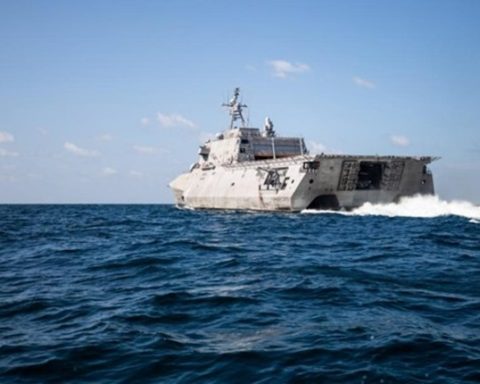
On Taiwan, the report called on the EU to work with member states and other democratic partners in the region on closer security coordination, including “a continuous naval presence and joint exercises” to reinforce regional stability. Beijing regards Taiwan as part of China and has not ruled out the use of force to achieve reunification. EU member states, like most countries, do not recognise Taiwan as an independent state, while the United States opposes any attempt to take the self-governed island by force and remains committed to supplying it with weapons.