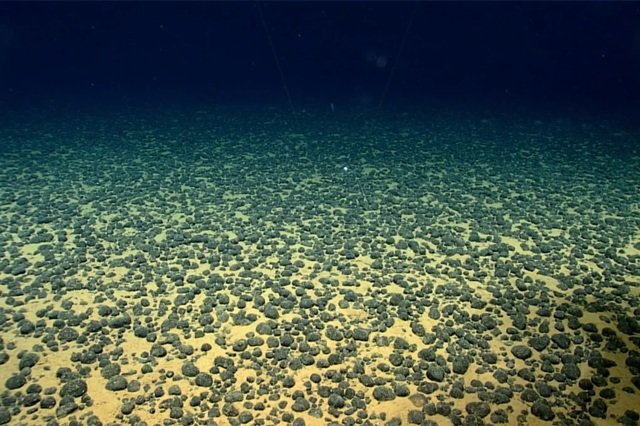
Billions of potato-shaped metallic nodules lie scattered across the Pacific seabed between Mexico and Hawaii, as deep as 6,000 metres below the surface. The Clarion-Clipperton zone is considered a potentially major source of nickel, cobalt and manganese, with some estimates suggesting its reserves could exceed the total known deposits on land. But new research indicates that the region also contains a largely unexplored viral ecosystem that could be affected by future mining.
A Chinese research team identified 11,742 different viruses in sediment samples collected from the zone, with 11,662 — more than 99 per cent — representing previously unknown discoveries. The findings, published in Nature Communications late last month, provide a baseline for assessing the environmental consequences of potential mining operations.
“These findings provide insights into the ecological roles of viruses in the polymetallic nodule province, establishing a vital pre-mining baseline of microbial ecosystem for future environmental impact assessments,” the paper’s first author, Hou Bowen, wrote.
Hou is a joint doctoral student at Chongqing University and the Second Institute of Oceanography, which operates under China’s Ministry of Natural Resources.
The researchers analysed 60 sediment samples collected in 2023 and 2024 by the China Ocean Mineral Resources R&D Association, a Chinese entity holding an exploration contract in the region. Using protein-sharing networks, they compared the viruses with existing data on those found in seawater, deep-sea trenches and hydrothermal environments.
Only about 4 per cent of the protein clusters identified in the Clarion-Clipperton samples were shared with at least one external data set. The result suggests that the zone contains viral lineages and genetic resources that have not previously been documented, reflecting the limited scientific understanding of life in this remote environment.
The region’s conditions may help explain the distinct characteristics of its viruses. The seabed is rich in heavy metals but extremely deficient in available nutrients, creating an unusual environment in which microorganisms have evolved.
Most of the viruses identified belong to the class Caudoviricetes, whose members possess tail-like structures that inject genetic material into bacteria. These viruses occur in a range of environments, including oceans, terrestrial ecosystems and the human gut.
The researchers do not suggest that the discoveries represent a direct threat to human health. The viruses identified are generally bacteria-infecting viruses, rather than pathogens that attack human cells. The more immediate concern, they indicate, is the potential impact of human activity on these poorly understood organisms and the ecosystem in which they live.
Deep-sea mining could disturb the sediments that support microbial communities, potentially disrupting the ecological functions performed by viruses. These include helping break down organic matter and releasing nutrients into the surrounding environment. Changes to these processes could have consequences for the wider seabed ecosystem, although the precise effects remain uncertain.
The discoveries come as international interest in deep-sea mineral resources continues to grow. The International Seabed Authority has issued 17 exploration contracts covering the Clarion-Clipperton zone, five of which are held by China. No commercial mining has yet taken place across the underwater plain.
The study does not establish what the consequences of mining would be, but it provides evidence of how much remains unknown about the region before large-scale disturbance begins. By documenting thousands of previously unrecorded viruses, the researchers have established a reference point against which future environmental changes could be assessed.
The findings suggest that the value of the Clarion-Clipperton zone cannot be measured solely by the metals beneath its seabed. Its biological resources, many of which remain poorly understood, could also be affected if mining proceeds before scientists have established how this deep-ocean ecosystem functions.