Russia and China are providing Iran with military technology, intelligence and other forms of assistance that could increase the costs of the war for the United States, as both powers seek to weaken American strategic dominance without jeopardising their own relations with Washington and its Arab Gulf allies, according to an assessment by the Soufan Center. Their support has reportedly helped Iran target high-value military installations, replenish weapons stocks and maintain capabilities that could threaten US forces and other strategic targets across the region.
The assistance reflects a convergence of interests between Moscow, Beijing and Tehran, although the extent and effectiveness of their contributions remain contested. Both Russia and China view Iran as a partner in challenging what they regard as US global hegemony, and both stand to benefit if Tehran frustrates Washington’s efforts to end the conflict on terms acceptable to the United States. Iran could also transfer advanced Russian and Chinese technology to its partners, including Yemen’s Houthi-led Ansarallah movement, potentially strengthening its capacity to strike targets such as Saudi infrastructure.
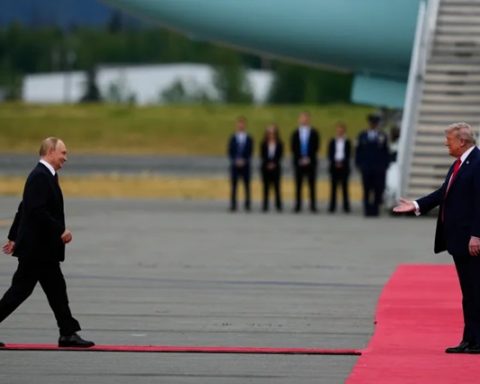
The calculations driving Russian support are closely connected to the war in Ukraine. President Vladimir Putin is seeking to use Moscow’s assistance to Tehran as leverage in negotiations with Washington over sanctions relief and the future of US military support for Kyiv. Russia’s cooperation also repays Iran for supplying Shahed armed drones at critical stages of the Ukraine war. Moscow now manufactures those and other Iranian-designed drones domestically, reducing its reliance on imported systems and helping narrow the technological gap between Russia and Ukraine.
China’s calculations differ in emphasis. Its assistance to Iran could give Beijing leverage in negotiations over US arms supplies to Taiwan, while its relationship with Tehran provides an additional means of challenging American influence. Both governments, however, have reasons to limit their involvement. Their strategic competition with Washington coexists with economic and diplomatic interests that require continued cooperation with the United States, or at least its restraint.
The institutional foundations of their relationships with Iran predate the current war. Moscow and Tehran signed a comprehensive strategic partnership treaty last year, expanding earlier agreements covering trade, military cooperation, science, culture and education. Their relationship also builds on extensive, but ultimately unsuccessful, cooperation between 2011 and 2024 to help Syrian President Bashar al-Assad remain in power. China and Iran signed a 25-year Cooperation Programme in 2021, focused primarily on economic and energy relations, with less emphasis on security.
The risks of closer military cooperation were apparent in the intersection of the Iran and Ukraine conflicts. Last week, US President Donald Trump agreed to ease sanctions to allow Russia to release additional supplies of diesel fuel onto global markets, an effort to curb rising prices. The arrangement illustrates how Washington’s response to the Iran war can affect its dealings with Moscow over a separate conflict.
On Monday, Trump acknowledged the competing pressures facing Russia and China, telling journalists that both countries had “too much to lose” by enabling Tehran. He sought to minimise the extent of their involvement, saying: “If they are providing materiel support to Iran, it’s at a very low level, but I don’t believe they are at all. They have too much to lose, and we would know about it, and know about it very fast.” Both powers also want to avoid damaging their extensive economic ties, and their more limited security cooperation, with Arab Gulf states, all of which are US allies.
Tehran, meanwhile, has increasingly publicised its relationships with Moscow and Beijing as diplomatic prospects have receded. Iranian officials previously downplayed or denied the significance of military cooperation with Russia, but media outlets linked to the Islamic Revolutionary Guard Corps have acknowledged Russian assistance in recent weeks. Iranian leaders have presented that support as evidence that the country is not isolated and retains powerful international partners. They have also highlighted China’s political backing and its condemnation of the US decision to launch the war.
Iran has sought to draw Beijing further into the dispute by arguing that the US blockade of Iranian ports is restricting Chinese oil supplies and increasing the price China pays for the commodity. China was buying almost all of Iran’s crude oil exports before the war. The blockade therefore affects not only Tehran’s ability to trade but also an important element of the economic relationship between the two countries.
Despite their assistance to Iran, Moscow and Beijing have publicly presented themselves as potential mediators. At a September summit of the BRICS bloc of Global South powers in New Delhi, Chinese President Xi Jinping urged leaders to work towards peace in the Middle East and offered China’s cooperation. Xi reiterated the proposal during his summit meetings with Trump in Washington later that month, although no concrete Chinese mediation initiative has been announced.
Putin has also sought a diplomatic role. Meeting Iranian President Masoud Pezeshkian on the sidelines of the Commonwealth of Independent States summit in Turkmenistan last week, the Russian leader offered to do “everything” Russia could to help resolve the conflict. Russian media reported that Putin described Iran as making “real efforts” to end the war and argued that its outbreak was not Iran’s “fault”.
The military consequences of assistance from both countries are more tangible, although analysts disagree about their strategic importance. Russian support has reportedly included timely targeting intelligence that helped Iran attack radar and surveillance installations at US-manned bases in Arab Gulf states. Nicole Grajewski of Sciences Po said the assistance was “instrumental to at least the early stages of [Iran’s] campaign, because it did blind or impair some US capabilities at that time”.
CNN traced orbital data indicating that Russian spy satellites followed specific trajectories to collect information about Prince Sultan Air Base in Saudi Arabia. That intelligence reportedly helped Iran destroy an AWACS radar platform worth $500 million on the tarmac. Experts cited by CNN said such a precise strike would have been “nearly impossible” without the “vital role” of Russian geospatial intelligence.
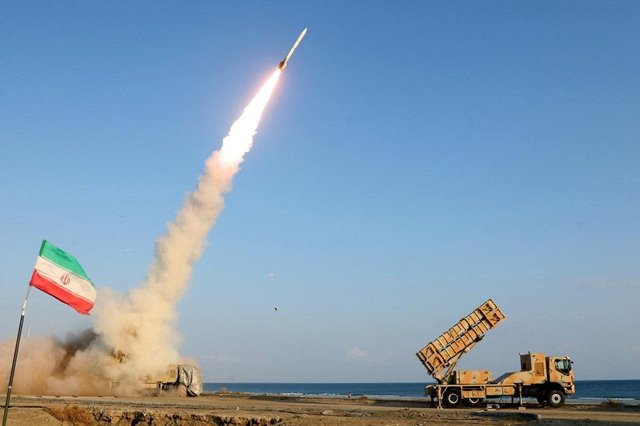
Last week, Bloomberg News quoted a Western official as saying that Russia was supplying missiles to replenish Iran’s stockpile, potentially enabling Tehran to respond forcefully if Trump follows through on threats to intensify attacks after the US midterm elections. The Russian Defence Ministry did not respond to a request for comment, according to Bloomberg. A Financial Times report last month said Russia had shared technology with Iran since 2023 to help develop a supersonic cruise missile capable of “striking US aircraft carriers and other warships”. A successful attack on a US naval vessel, particularly one causing mass American casualties, could trigger a major escalation.
China’s assistance appears less systematic but has also reportedly affected the conflict. The Wall Street Journal reported that Iran obtained high-resolution satellite images from Chinese entities before a July ballistic missile attack on a US base in Jordan that killed three American military personnel. Other reports indicate that China supplied chemicals needed to manufacture solid fuel for ballistic missiles earlier in the war, although those shipments have likely been halted by the US naval blockade.
Reuters reported in July that a Chinese company was preparing to supply Iran with hundreds of portable anti-air missile systems to rebuild its air defences. US officials reportedly discovered the planned delivery and persuaded China not to complete it. Nevertheless, Iran retains substantial capabilities developed with earlier foreign assistance. Sidharth Kaushal of the Royal United Services Institute said last week that Iran’s stockpile of anti-ship cruise missiles remained large, partly because the country had brought much of the production of older Chinese-designed versions in-house.
The Soufan Center’s assessment identifies the central disagreement over the assistance: some analysts believe it is strengthening Iran’s ability to force a US withdrawal and deter future attacks, while others consider it marginal compared with American technological advantages and unlikely to prevent further escalation.