The United Nations’ search for a successor to Secretary-General António Guterres has encountered a fresh obstacle after none of the seven candidates secured the support of all five permanent members of the Security Council in the latest informal ballot. Costa Rican economist Rebeca Grynspan, regarded as the leading contender, faced opposition from two veto-wielding powers, while US media reported that Washington rejected all seven candidates under consideration.
The anonymous nature of the initial voting meant that the identities of the two permanent members opposing Grynspan were not disclosed. Reports that the United States voted against every candidate added to the uncertainty surrounding the selection process. Mike Waltz, the US ambassador to the United Nations, declined to comment on those reports but said countries remained free to put forward alternative candidates. “If countries want to propose further candidates, that is their sovereign right,” he said.
The latest ballot was the sixth informal vote conducted by the Security Council as members attempt to identify a candidate capable of securing the necessary support. For the first time, coloured ballot papers were used to distinguish votes cast by the five permanent members from those submitted by the council’s ten elected members. The change revealed that none of the seven contenders had obtained the backing of all five permanent members, each of which holds the power to veto a recommendation.
The selection process requires agreement within the 15-member Security Council before a candidate can be recommended to the UN General Assembly for appointment by the organisation’s 193 member states. A candidate must receive at least nine votes in the council, and none of the five permanent members — the United States, Russia, China, France and the United Kingdom — may vote against the recommendation. Their veto powers give them a decisive role in determining who can advance to the final stage.
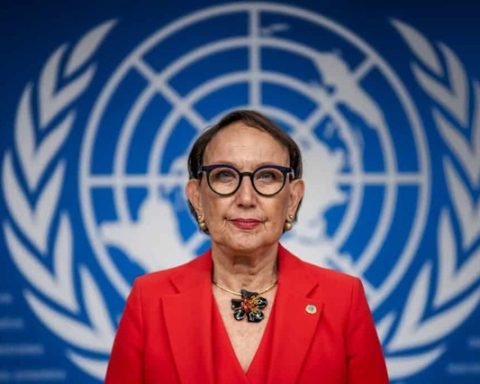
Grynspan remains a central figure in the contest despite the opposition revealed in the latest ballot. The Costa Rican economist is the only candidate to have received at least nine affirmative votes in the informal rounds so far. She is a long-serving UN official, a former vice-president of Costa Rica and, since 2021, head of the UN Conference on Trade and Development, known as UNCTAD.
Her previous international responsibilities include serving as a UN under-secretary-general and holding a senior position at the UN Development Programme. She also played a significant role in the Black Sea Initiative, which established a grain corridor during the war in Ukraine. Her experience across economic development and international diplomacy has helped establish her position among the current contenders, although the latest ballot has demonstrated that sufficient support among council members has not yet translated into agreement among the permanent powers.
Other candidates include Rafael Grossi, head of the International Atomic Energy Agency, and Carolyn Rodrigues Birkett, Guyana’s ambassador to the United Nations. The seven-person field has not yet produced a candidate able to meet all the political requirements of the process. The informal ballots are intended to identify areas of support and opposition before the council moves towards a formal recommendation.
The lack of consensus could create an opening for additional candidates. Among those being discussed as potential contenders are Nikolaj Mladenov, the Bulgarian diplomat serving as high representative of the Board of Peace for the Gaza Strip, and Lana Nusseibeh, a minister of state at the United Arab Emirates’ Ministry of Foreign Affairs. Feridun Sinirlioğlu, secretary-general of the Organisation for Security and Co-operation in Europe, has also been mentioned as a possible candidate. None of these individuals was identified in the source material as having formally entered the race.
The selection is also shaped by longstanding expectations about geographical representation and gender. Under an unwritten convention, the secretary-generalship rotates between different geographical regions. Following Guterres, who is Portuguese, Latin America would be next under that practice. No woman has previously held the position, making Grynspan’s candidacy significant in a contest that could break that historical pattern.
Whether the permanent members will give weight to regional rotation or the prospect of appointing the first female secretary-general remains uncertain. Waltz acknowledged the expectation of geographical balance but stressed that Washington would prioritise the candidate’s perceived suitability for the role. “We understand that there is a desire for regional rotation,” he said. “If the best candidate is a woman, we would of course welcome that. But what we really need, first and foremost, is the best candidate.”
Despite the latest opposition, Grynspan and the other candidates have not been eliminated. A negative vote from a permanent member does not automatically make a candidacy untenable, and contenders can seek to address the objections raised during the informal process. The council’s next steps will depend on whether existing candidates can overcome those reservations or whether member states decide to introduce new names into the selection.