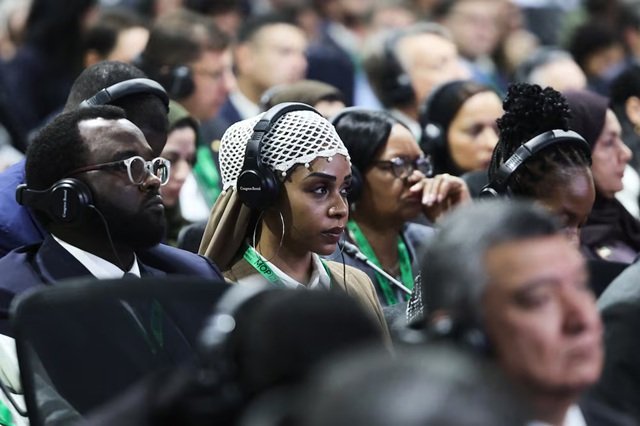
The United Nations biodiversity conference in Armenia ended with a series of limited agreements after overnight negotiations, with governments acknowledging the need to accelerate conservation efforts and address a widening funding gap but failing to establish clear mechanisms to achieve their commitments.
Delegates at the 17th Conference of the Parties to the Convention on Biological Diversity (COP17) concluded negotiations at about 10.30am in Yerevan, following disagreements over several contentious issues. Greenpeace described the outcome as progress, but criticised the agreements as insufficiently ambitious. Several major decisions, including the future management of biodiversity financing and the distribution of benefits from digital genetic information, were postponed until COP18 in Ecuador.
The final session faced the prospect of losing its quorum as delegates began leaving the negotiating hall. A representative of the Democratic Republic of the Congo warned that there would be no quorum within 30 minutes and called for critical agenda items to be deferred. COP17 president and Armenian Environment Minister Hambardzum Matevosyan managed to secure agreement on outstanding issues by asking delegates to indicate their positions with thumbs up or down, allowing negotiations to proceed despite mounting fatigue and disagreements.
Among the disputes was Indonesia’s opposition to determining rules that would give Indigenous peoples a position of influence in biodiversity negotiations. Argentina also attempted unsuccessfully to prevent the inclusion of references to gender in the agreements, continuing a position pursued by the government of President Javier Milei in other United Nations forums.
“Gender is a cross-cutting agenda and Argentina fought to reduce it,” Oscar Soria of The Common Initiative told El País. “But it failed in that attempt.”
Another contentious issue concerned recognition of the Intergovernmental Science-Policy Platform on Biodiversity and Ecosystem Services (IPBES). The final agreement adopted language considered weak by critics, following opposition led by Russia. Switzerland, speaking on behalf of 55 countries, including European Union member states and Colombia, expressed regret that scientific findings had become subject to political disputes. “Science is not negotiable and must be the basis for policymaking,” the delegation said.
COP17 had been expected to produce a roadmap for achieving 23 global biodiversity targets by 2030 and establish ways to finance them. However, the conference ended without providing a clear implementation framework. At its opening, United Nations Secretary-General António Guterres warned that fewer than half of the targets were on track.
Two particularly delayed commitments are the mobilisation of at least $200 billion annually for biodiversity by 2030 and the reduction of subsidies harmful to biodiversity by at least $500 billion over the same period.
Although the final documents recognise the need to accelerate action, close the financing gap and encourage governments to reduce environmentally damaging subsidies, they do not specify where the necessary funding will come from or how it will be secured. Catherine Weller, global policy director at Fauna & Flora, said discussions on reducing and redirecting harmful subsidies had progressed, but the final text could have been considerably stronger.
CBD executive secretary Astrid Schomaker described the conference as an opportunity to build momentum for dialogue on harmful subsidies, potentially paving the way for more binding agreements at COP18. Soria, however, described the outcome as “the COP of diplomatic procrastination”.
The assessment of the Global Biodiversity Framework Fund, established in 2023, was also postponed. The fund has faced criticism over the limited resources it has disbursed and its management by the Global Environment Facility, which includes the United States, the only country apart from the Vatican that is not a party to the Convention on Biological Diversity.
Decisions on collecting and distributing financial benefits generated by companies using publicly available digital genetic sequence information were likewise deferred to COP18.
The Armenian conference also preceded a climate change summit scheduled for the following week in Türkiye, where environmental diplomacy is expected to attract greater international attention.