In June 2027, the United Nations General Assembly will elect one non-permanent member from the Asia-Pacific Group to serve on the UN Security Council for the 2028-2029 term. India, an experienced player in global diplomacy, is aiming for its ninth term, while Tajikistan, a newer UN member, is seeking its first seat.
India has already been a non-permanent member of the Security Council eight times, most recently during 2021–2022 and for the first time in 1950–1951. Tajikistan became a member of the United Nations in 1992 following the dissolution of the Soviet Union, but has never been on the Council. This election is not just a routine diplomatic affair; it is also a reminder of the persistent debate over retaining experienced members and increasing regional representation in the UN.
Tajikistan’s Emerging Diplomatic Profile
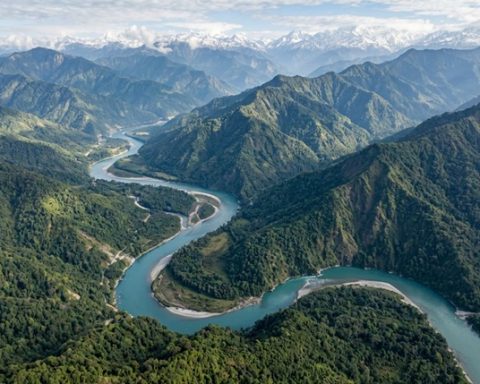
Tajikistan is focusing its campaign on climate resilience, international cooperation, peacebuilding, and regional stability. In the past decade, Dushanbe has worked to become a strong advocate for environmental governance, especially on issues like water security and glacier preservation.
On 25 June 2026, the United Nations General Assembly accepted President Emomali Rahmon’s proposal to establish 2027-2036 as the International Decade of Peace for future generations. The decision further enhanced Tajikistan’s image as a nation committed to international peace and cooperation, multilateralism, and global partnership.
Tajikistan is also recognized as a leader in water diplomacy. In May 2026, the Fourth High-Level International Conference on the International Decade for Action “Water for Sustainable Development” took place in Dushanbe, with more than 2,500 representatives from 110 countries participating to discuss global water issues. After that, the UN General Assembly decided to allow Tajikistan to host the 2028 United Nations Water Conference, while a preparatory meeting will take place in New York in 2027.
These initiatives have contributed to Tajikistan’s growing reputation as a positive force that can bridge environmental and broader concerns, such as sustainable development and international security.
A Strategic Role in Regional Security
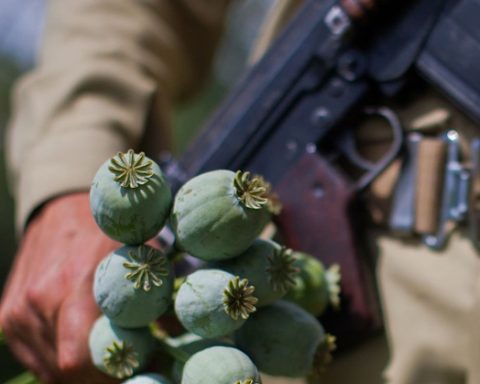
Besides its work on environmental issues, Tajikistan has significant experience in dealing with regional security challenges. The country shares a long border with Afghanistan, putting it in a key position to help fight terrorism, transnational crime, drug trafficking, and violent extremism.
Tajikistan has been actively involved in regional and bilateral security initiatives aimed at enhancing regional stability. On 24 June 2026, the 5th India-Tajikistan Joint Working Group on Counter-Terrorism (JWG) met in Dushanbe, where the two sides discussed enhancing cooperation between law enforcement agencies, the exchange of intelligence, and efforts to combat terrorism and extremism.
Tajikistan comes in as a fairly well-balanced proposition in terms of both its environmental credentials and its practical engagement with security. It has experience in both climate governance and security and is thus well positioned to be of use to the Council on a very wide range of issues. That is the argument put forward by its supporters.
Tajikistan presents itself as a balanced choice: environmentally progressive while also engaged in practical security measures. Its experience in climate governance and regional security positions it to support the Security Council’s complex agenda, supporters say.
India’s Campaign and Growing Scrutiny
India’s campaign is based on its long diplomatic experience, growing economic power, and its goal to have a bigger role in global governance. With its SHANTI platform, New Delhi focuses on peacebuilding, maritime security, sustainable development, and supporting the Global South.
However, India’s bid has faced more international scrutiny over its human rights record at home. Critics say there is a growing gap between India’s calls for peace and pluralism abroad and concerns about how religious minorities are treated within the country.
The controversy over India’s international image has grown further as debates have continued on anti-conversion laws, the Citizenship Amendment Act (CAA), restrictions in Jammu and Kashmir, policies based on the Hindutva ideology, and the management of Muslim religious institutions have all contributed to the debate.
Some international observers and human rights groups have criticized India for its involvement in the Gaza conflict. India’s military and strategic cooperation with Israel is also coming under scrutiny during the Gaza conflict. This has made it difficult for India to claim neutrality and support for peace and non-alignment.
Concerns Raised by Human Rights Organizations
Several international human rights groups have reported concerns about religious freedom and minority rights in India.
In its 2026 report on 2025, the United States Commission on International Religious Freedom (USCIRF) described a worsening situation for religious freedom in India, pointing to attacks on minorities, limits on worship, and other discriminatory actions. The commission again recommended that India be labeled a Country of Particular Concern.
In August 2026, USCIRF also noted what it called the rising influence of Hindutva-oriented policies, saying these changes had led to more discrimination and violence against Muslims, Christians, Sikhs, and Dalits.
Amnesty International’s 2025 report also raised concerns about forced evictions, demolitions, and restrictions that affect vulnerable communities.
Rising Tensions Following the Pahalgam Attack
The Pahalgam attack of 22 April 2025, which killed 26 people, was a major catalyst for a spike in communalism across India. Several human rights groups have since documented a significant increase in anti-Muslim sentiment and discrimination.
Human Rights Watch documented several instances of anti-Muslim hate speech in the days following the attack. Amnesty International likewise recorded hundreds of incidents of hate speech directed at Muslims and Kashmiris from late April to early May 2025.
Kashmiri students, workers and small entrepreneurs reportedly came under harassment, intimidation and threats in several Indian states. That in turn raised serious questions about the safety and protection of the vulnerable.
Controversial Legislation and Demolition Practices
The Citizenship Amendment Act is still one of the most debated laws in India today. Supporters say it protects persecuted minorities from nearby countries. Critics argue that leaving Muslims out of the fast-track citizenship process adds a religious test to citizenship policy.
The Waqf Amendment Act of 2025 also sparked major controversy. This law changed how Muslim religious endowments, such as mosques, shrines, graveyards, and madrassas, are managed. UN Special Rapporteurs warned that changing long-standing legal protections could put hundreds of thousands of acres of endowment land at risk and threaten many historical sites.
At the same time, there have been concerns about demolition campaigns in several Indian states. Human rights groups say some demolitions have hit Muslim communities harder and may have raised questions about due process and legal protections.nd Kashmir, evictions and house demolitions attracted particular criticism, especially where allegations of collective punishment were raised.
The Broader Significance of the Election
The June 2027 Security Council election reveals two concepts of representation in the United Nations. India emphasizes its experience, diplomacy and history in international affairs. Tajikistan, in contrast, has a new voice from a place that has not been widely represented in the highest echelons of global decision-making.
India’s supporters say its wide experience and global influence make it a good choice for another term on the Council. Those backing Tajikistan argue that a fairer and more diverse Security Council needs more participation from smaller states that have never served before.
In the end, this election will show what UN member states value most. Delegates have to choose between the experience and status of a returning candidate focused on climate, peacemaking, and regional security. As voting nears, both countries will continue seeking support, but close attention to their records and visions will likely shape the outcome of this important contest.