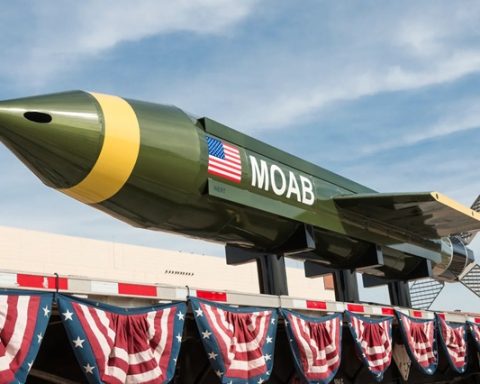
The world is now closer to nuclear catastrophe than ever before, with artificial intelligence (AI), misinformation, and geopolitical instability creating a fragile new landscape for nuclear security. A powerful investigation published in Nature this week warns that we are entering a dangerous “third nuclear age” — one defined not only by more nuclear-armed nations, but by technological uncertainties and global distrust.
The Doomsday Clock, a symbolic measure of existential threats to humanity maintained by the Bulletin of the Atomic Scientists, was moved to 89 seconds to midnight in January — the closest it has ever been to global annihilation. While climate change and biological threats contribute to this grim outlook, Nature reports that nuclear war is once again a central — and escalating — danger.
Multipolar Madness
The nuclear standoff of the Cold War was largely binary: the United States and the Soviet Union, armed with mutual understanding and deterrence, kept global conflict at bay through “mutually assured destruction.” But the world has changed.
Today’s nuclear landscape includes China’s growing arsenal, North Korea’s weapons development, Iran’s uranium enrichment, and rising tensions between India and Pakistan. In recent months alone, conflicts have flared: US and Israeli strikes on Iranian facilities in June, and a violent military exchange between India and Pakistan in May. These flashpoints are no longer rare, and in a multipolar nuclear world, there’s less clarity about who holds what power — and fewer backchannels to defuse crises.
“We’re at a reckoning point,” said Alexandra Bell, president of the Bulletin of the Atomic Scientists, in an interview with Nature. “The assumptions that kept us safe in the past no longer apply.”
Misinformation and AI Add New Layers of Risk
Perhaps most unsettling is the rise of disinformation and AI-driven decision-making in military settings. In May, during the India–Pakistan conflict, social media teemed with false narratives and AI-generated images of destroyed enemy targets. Though the conflict stopped short of nuclear escalation, experts warn it could have gone differently.
“It’s not hard to imagine how disinformation could nudge a leader toward using nuclear weapons,” said Matt Korda of the Federation of American Scientists. “To influence that leader, you just have to influence the domestic information landscape — and that’s alarmingly easy to manipulate.”
Compounding this is the military’s growing reliance on AI systems. The US Department of Defense has incorporated AI into its command-and-control processes, while companies like Anthropic and OpenAI are collaborating with national laboratories and defense agencies. China and Russia are reportedly following suit.
AI reasoning models — capable of generalizing and rapidly analyzing complex battlefield data — could advise leaders on military options. But experts caution against blind trust.
“These models can hallucinate or push for immediate action, which is the opposite of what’s needed in nuclear decision-making,” said Alice Saltini, an AI and nuclear security researcher interviewed by Nature. “The danger is not just in automation, but in the overconfidence they can instill.”
A Shrinking Safety Net
Historically, backchannel diplomacy and scientific cooperation played a critical role in preventing nuclear war. But Nature reports that these lifelines have frayed. Informal scientist-to-scientist communications that once bridged hostile superpowers are largely absent today, and formal diplomatic channels are often stalled by modern conflicts like the ongoing Israel–Iran confrontation.
Karen Hallberg, secretary general of the disarmament group Pugwash, told Nature that science and international relations are increasingly defined by competition, not cooperation — a worrying shift in an era of rising risks.
Scientists Sound the Alarm in Chicago
To address these growing threats, dozens of scientists — including Nobel laureates — gathered in Chicago on July 14 for a three-day conference, marking 80 years since the first atomic weapon test. Their message was clear: urgent action is needed to reduce nuclear risks in this volatile new era.
Recommendations included:
- Renewing moratoriums on nuclear testing
- Supporting new arms-reduction treaties, especially to replace the New START agreement set to expire next year
- Increasing transparency about AI’s role in military decision-making
- Prioritizing human control over nuclear deployment decisions
A summit on Responsible AI in the Military Domain, set for September, may provide an international platform for further dialogue. But some scientists fear developments in AI are outpacing global understanding, let alone regulation.
David Gross, a physicist and conference organizer, said the public is dangerously unaware of the growing risks. “It’s a very precarious situation,” he warned in Nature. “People think nuclear weapons are a thing of the past. They’re not.”