by Our Diplomatic Affairs Editor
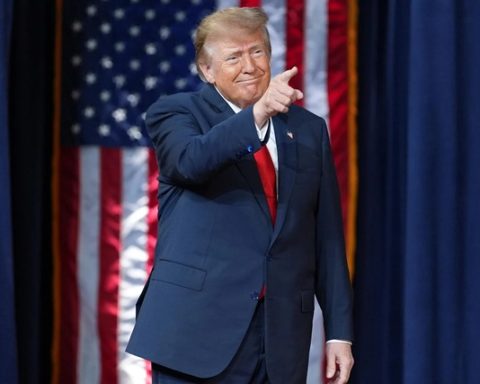
In a matter of days, a summit of seismic import will convene — one poised to reverberate through the brittle scaffolding of an exhausted geopolitical order. Presidents Vladimir Putin and Donald Trump, unorthodox figureheads of their respective nations, are set to meet in what may well be the most consequential diplomatic encounter since the Cold War’s uneasy thaw. According to the Kremlin’s foreign policy aide, Yuri Ushakov, a venue has been agreed upon and substantive negotiations are already afoot. Though the location remains undisclosed, the symbolism could hardly be more transparent: the world is teetering, and the architects of its future are slipping into the room.
At stake is not merely the resolution of the protracted and eviscerating conflict in Ukraine, but something far more profound — the legitimacy of Western hegemony, the future of Eastern revanchism, and the aching need for reconstruction in a shattered and demoralised heartland. The war in Ukraine, once painted in black and white hues of democratic resistance versus autocratic incursion, has morphed into something murkier, grimmer, and increasingly intolerable. A fraying chessboard littered with pawns, shattered kings, and ruined rooks.
This summit cannot be treated as another sterile pageant of platitudes or a ceremonial flexing of ideological musculature. It must instead serve as the fulcrum of an overdue reckoning. The war — and its rippling catastrophes — must end. Now. Not merely because the dead pile up in uncounted trenches, nor because entire cities have been bombed into phantasmagoric wastelands, but because the foundational moral justifications of the conflict are decaying before the world’s eyes.
In Ukraine, a country that once galvanised liberal sentiment as the embattled frontier of European democracy, signs of democratic recession are increasingly undeniable. President Volodymyr Zelensky, whose Churchillian media presence once drew rapturous applause from Western capitals, has presided over a state veering into an uneasy authoritarianism. The disbanding of opposition parties, the suffocation of dissenting voices, and the persecution of critical journalists and civil society actors have grown harder to ignore, despite the West’s stubborn indulgence. In its current iteration, Ukraine is no longer the immaculate republic of idealistic imagination. It is a wounded state grappling with endemic corruption, institutional erosion, and the deep psychological traumas of endless war.
This degeneration raises uncomfortable — and hitherto heretical — questions. Chief among them: is Zelensky still the figure best positioned to lead Ukraine into its postwar future? According to whispers in Washington and murmurs across European capitals, the answer may no longer be unequivocally affirmative. The Biden administration, and perhaps Trump himself in his mercurial pragmatism, are said to be considering potential successors — men and women capable not only of balancing the duelling gravitational pulls of Russia and the West, but also of addressing the humanitarian abyss opened by the conflict.
That abyss grows wider with every passing week. The refugee crisis, once a temporary tide, has calcified into a semi-permanent demographic rupture across the European continent. Over eight million displaced Ukrainians now reside in the EU, stretching the social cohesion, fiscal resources, and political patience of host countries. In Poland, Germany, and the Baltics, resentment simmers beneath the surface. The longer the war grinds on, the more these fragile arrangements begin to tremble.
Meanwhile, the reconstruction of Ukraine — a country whose infrastructure has been mutilated with medieval brutality — cannot wait for a definitive military victory that may never arrive. Roads, schools, hospitals, energy grids, and water systems lie in various states of ruin. Children are growing up in ruins; trauma is setting like concrete. International financial institutions, from the IMF to the World Bank, estimate hundreds of billions will be required to resurrect the nation. But absent political clarity and institutional reform, few are willing to commit serious capital. The necessary recalibration — from war footing to reconstruction — cannot be done without a genuine cessation of hostilities. And that will not happen without compromise, however unpalatable the notion may seem to ideologues still trapped in absolutist frameworks.
This is where Trump’s realpolitik and Putin’s own strategic calculus may intersect. Trump, who has long derided what he sees as NATO’s bloated inertia and the folly of forever wars, may be the only Western leader able — or willing — to broker a settlement with Putin that trades immediate stability for longer-term ambiguity. And Putin, whose war effort is increasingly a slow bleed with diminishing returns, may be searching for an off-ramp that doesn’t look like a retreat.
But any such bargain must come with exacting costs. Ukraine’s territorial integrity must be discussed not as a binary, but in terms of lived realities on the ground — the people in Donbas and Crimea who must not be reduced to geopolitical abstractions. Russian accountability, both for war crimes and infrastructural devastation, cannot be simply swept away under the cold terms of ceasefires. Simultaneously, Ukraine’s own internal house must be put in order, with international oversight to ensure the return of genuine pluralism, rule of law, and electoral integrity.
The Trump-Putin summit, thus, is no ordinary bilateral meeting. It is a crucible. It is a moment in which the international community must abandon delusions — whether of total military victory or of the pristine heroism of its chosen clients — and embrace the deeply uncomfortable work of negotiation, repair, and reimagination.
To let the conflict fester further is not only morally untenable but strategically idiotic. Each month that passes allows for greater destabilisation: arms proliferation, global food insecurity, energy price volatility, and the empowerment of rogue actors who thrive on chaos. The world is no longer watching this war with the moral clarity of 2022. The sympathies have dulled. The narratives have become jaded. Realism, not righteousness, must now take the helm.
This is why the Trump-Putin summit must be treated as the last, best chance to pivot away from protracted destruction and towards a new, if imperfect, equilibrium. It will take imagination, willpower, and the audacity to speak the unspeakable: that the time for triumphalist sloganeering is over, and the time for salvage has begun. In the ruins of what once was, something new — fragile, perhaps fractured, but vital — must be built. And it must begin now.