the 2024 Lok Sabha election results have culminated in a hung parliament, with no single party managing to secure a majority. The Bharatiya Janata Party (BJP), led by incumbent Prime Minister Narendra Modi, emerged as the largest party with 240 seats, while the Indian National Congress (INC) trailed significantly with 99 seats. The majority mark to form a government is set at 272 seats out of 543.
Detailed Results and Key Highlights
The Election Commission of India declared the final results on June 4, 2024, after votes were counted in 542 out of 543 parliamentary constituencies. One notable development was BJP’s uncontested victory in Gujarat’s Surat constituency, where Mukesh Dalal won unopposed. The last seat to declare its result was Beed in Maharashtra, where Bajrang Manohar Sonwane of the Nationalist Congress Party (Sharad Pawar) narrowly defeated BJP’s Pankaja Munde by 6,553 votes.
Party-Wise Breakdown of Seats
- Bharatiya Janata Party (BJP): 240
- Indian National Congress (INC): 99
- Samajwadi Party (SP): 37
- All India Trinamool Congress (AITC): 29
- Dravida Munnetra Kazhagam (DMK): 22
- Telugu Desam Party (TDP): 16
- Janata Dal (United) (JD(U)): 12
- Shiv Sena (Uddhav Balasaheb Thackeray) (SHSUBT): 9
- Nationalist Congress Party (Sharad Pawar) (NCPSP): 8
- Shiv Sena (SHS): 7
- Lok Janshakti Party (Ram Vilas) (LJPRV): 5
- Yuvajana Sramika Rythu Congress Party (YSRCP): 4
- Rashtriya Janata Dal (RJD): 4
- Communist Party of India (Marxist) (CPI(M)): 4
- Indian Union Muslim League (IUML): 3
- Aam Aadmi Party (AAAP): 3
- Jharkhand Mukti Morcha (JMM): 3
- Janasena Party (JnP): 2
- Communist Party of India (Marxist-Leninist) (Liberation) (CPI(ML)(L)): 2
- Janata Dal (Secular) (JD(S)): 2
- Viduthalai Chiruthaigal Katchi (VCK): 2
- Communist Party of India (CPI): 2
- Rashtriya Lok Dal (RLD): 2
- Jammu & Kashmir National Conference (JKN): 2
- United People’s Party, Liberal (UPPL): 1
- Asom Gana Parishad (AGP): 1
- Hindustani Awam Morcha (Secular) (HAMS): 1
- Kerala Congress (KEC): 1
- Revolutionary Socialist Party (RSP): 1
- Nationalist Congress Party (NCP): 1
- Voice of the People Party (VOTPP): 1
- Zoram People’s Movement (ZPM): 1
- Shiromani Akali Dal (SAD): 1
- Rashtriya Loktantrik Party (RLTP): 1
- Bharat Adivasi Party (BHRTADVSIP): 1
- Sikkim Krantikari Morcha (SKM): 1
- Marumalarchi Dravida Munnetra Kazhagam (MDMK): 1
- Aazad Samaj Party (Kanshi Ram) (ASPKR): 1
- Apna Dal (Soneylal) (ADAL): 1
- AJSU Party (AJSUP): 1
- All India Majlis-E-Ittehadul Muslimeen (AIMIM): 1
- Independent (IND): 7
Alliance Totals and Implications
- National Democratic Alliance (NDA): 291 seats
- INDIA Alliance: 234 seats
Modi Claims NDA Victory
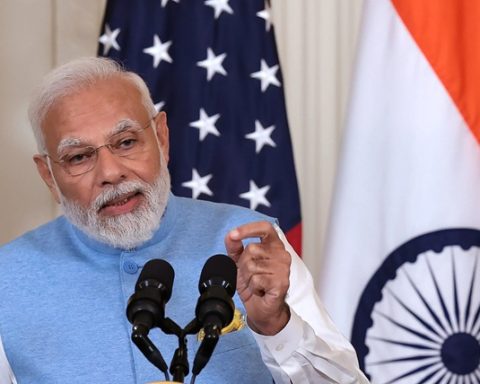
Despite the BJP’s fall short of the majority, Prime Minister Narendra Modi expressed confidence and gratitude towards NDA supporters, asserting the alliance’s right to form the next government. Modi highlighted that with the support of key allies like N. Chandrababu Naidu’s TDP and Nitish Kumar’s JD(U), the NDA alliance has surpassed the halfway mark, totaling 291 seats.
“Thank you to the people of India for reposing faith in the NDA. We are committed to continuing our development agenda,” Modi stated, emphasizing that the NDA is poised to lead India for a third consecutive term.
INDIA Alliance Gains Ground
The INDIA alliance, a coalition formed in June 2023, made significant inroads, particularly in states like Maharashtra and Uttar Pradesh, challenging the BJP’s dominance. Congress leader Rahul Gandhi viewed the election outcome as a mandate against the current regime.
“The people have clearly voiced their desire for change. They do not want Narendra Modi and Amit Shah to continue governing the country,” Gandhi said during a press conference in New Delhi. He asserted that the INDIA alliance would play a critical role in shaping the nation’s future, possibly staking its claim to form the next government.
Looking Ahead: Coalition Politics
With neither alliance securing an outright majority, India is set to witness intricate coalition negotiations in the coming weeks. The political landscape will be shaped by strategic alliances, policy compromises, and power-sharing arrangements as parties navigate the complexities of forming a stable government.
The Lok Sabha Election 2024 has underscored the evolving dynamics of Indian politics, where coalition governments are increasingly becoming the norm, reflecting the diverse and multifaceted political landscape of the country.