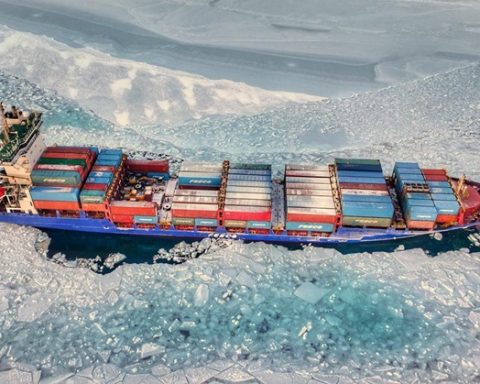
An ambitious move by U.S. investment giant BlackRock to acquire a portfolio of strategic global ports has encountered stiff resistance from Beijing, laying bare a deeper struggle over control of 21st-century maritime infrastructure. At the heart of the dispute is a bid to purchase over 40 ports currently owned by Hong Kong-based conglomerate CK Hutchison. But China’s refusal to greenlight the deal without the inclusion of its own state-run shipping behemoth, COSCO, has brought the deal to a standstill—and highlighted Beijing’s sweeping dominance in global port logistics.
According to a recent Wall Street Journal investigation, China’s reach into global maritime infrastructure is far more extensive than previously acknowledged. A detailed map published by the outlet shows Chinese companies holding between 25% and 100% ownership stakes in a vast network of ports spanning Europe, Southeast Asia, North Africa, the Middle East, and Latin America. This network is not merely commercial—it is geopolitical, forming a key pillar of Beijing’s strategy to shape the global flow of goods and exert influence far beyond its borders.
In Europe alone, the footprint of Chinese port ownership is staggering. Through companies like COSCO and CK Hutchison, Chinese entities have carved out a presence from the Mediterranean shores of Greece and Italy to the industrial heartlands of Germany, the UK, and the Benelux region, reaching as far north as the Baltic Sea. Ports such as Piraeus in Greece—now majority-owned by COSCO—serve as both logistical hubs and symbols of China’s growing soft power in Western-dominated arenas.
In developing regions, the trend is even more transformative. Beijing has helped build entirely new ports, often linked to China’s Belt and Road Initiative, creating integrated trade corridors that combine seaports with rail and road networks. These projects have provided much-needed infrastructure for emerging economies, but they have also raised alarms in Western capitals over long-term debt dependency and strategic leverage.
BlackRock’s current impasse stems from a reported threat by Beijing to block the asset sale unless COSCO is allowed to participate. The proposed deal, which also involves Swiss shipping giant MSC, aimed to secure a critical share in the global supply chain by taking control of CK Hutchison’s port operations. Yet Beijing’s intervention signals that China views these assets not simply as commercial investments, but as components of national strategic interest that should not fall into Western hands without its involvement.
This confrontation underscores the shifting balance of power in global trade infrastructure. While Western firms like BlackRock may have the capital and interest to expand into maritime logistics, they now find themselves navigating a chessboard where China already controls many of the key pieces. The message from Beijing is clear: maritime infrastructure, especially in developing and strategically located countries, is now part of China’s global sphere of influence—and any Western attempt to redraw that map will be met with resistance.
As the global economy becomes increasingly dependent on secure, efficient trade routes, the question of who owns the ports that keep goods moving will grow more critical. BlackRock’s stalled bid is not just a failed acquisition—it’s a wake-up call to the West that China’s maritime power is not only real, but formidable.