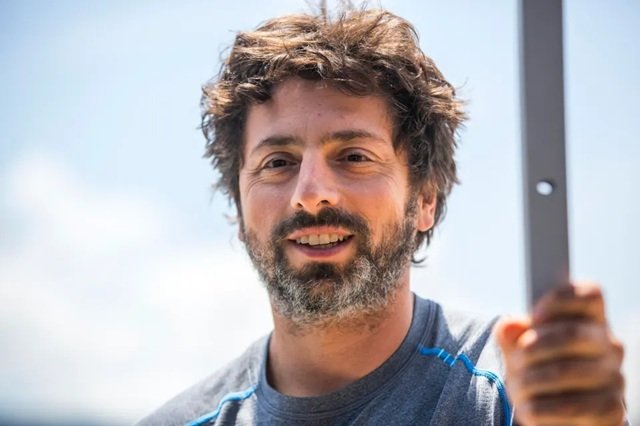
Google co-founder Sergey Brin has in recent months urged key artificial intelligence staff to focus intensely on the company’s Gemini model as parent company Alphabet seeks to close a widening gap with rivals, according to two people familiar with his remarks who spoke to Reuters.
Brin addressed hundreds of employees at a Google DeepMind town hall in April as Anthropic advanced with its Claude Mythos model, urging the AI laboratory to accelerate its work, one of the people told Reuters. Although Brin no longer holds an executive position, his status as Google’s co-founder has given him influence over the company’s AI priorities and resource allocation.
Gemini briefly overtook competing models last November, but subsequent updates from Anthropic and OpenAI again left Google playing catch-up. By August, Google had delayed its next flagship Gemini version by two months after internal testing showed that its performance continued to lag behind rivals in areas including coding, according to people familiar with the matter.
The difficulties have coincided with a major restructuring of Google DeepMind. On August 5, Google announced that Demis Hassabis would step aside as head of the AI division, with his deputy, Koray Kavukcuoglu, taking over. Hassabis became chair, with fewer management responsibilities, while the two original technical co-leads of Gemini left the company to establish a startup.
The changes have raised questions about the future independence of DeepMind, which Google acquired in 2014. According to seven people familiar with Gemini’s development efforts, the restructuring and Alphabet’s broader commercial strategy are closely connected to the company’s effort to achieve leadership in AI models.
During an all-hands meeting on August 6, employees were told that some teams would move from DeepMind into Google’s corporate structure, according to two sources. Hassabis and Kavukcuoglu sought to reassure staff that the laboratory’s day-to-day work would remain largely unchanged, with Kavukcuoglu retaining responsibility for Gemini.
The restructuring nevertheless exposed concerns among employees about DeepMind’s autonomy. The laboratory had historically pursued a broad range of AI research, while Gemini has become increasingly central to Alphabet’s commercial ambitions.
Kavukcuoglu’s influence had already been growing. In 2025, Google CEO Sundar Pichai appointed him, then DeepMind’s chief technology officer, to the additional role of Google’s chief AI architect, giving him responsibility for embedding Gemini across the company’s products. Four people familiar with the matter told Reuters that some DeepMind leaders subsequently found their influence reduced as Kavukcuoglu became increasingly central to Gemini’s direction. One source said he had Brin’s backing.
Brin has also been pushing particular areas of AI research, including recursive self-improvement, according to one source familiar with his efforts. The concept refers to systems capable of improving their capabilities without direct human intervention. Brin has told key staff that Google needs to catch up with the leading AI models, the source said.
Google’s renewed push comes amid structural challenges that have contributed to its difficulties. Sources cited computing constraints, disagreements among Gemini’s multiple project leaders and the allocation of resources as factors that affected development in areas such as coding. Google’s bureaucracy was also described as contributing to slower model releases than those of more agile competitors.
The leadership changes have also shifted influence towards Google’s headquarters in Mountain View, California. Kavukcuoglu moved there from London last year and now has final authority over major decisions at DeepMind, according to a Google spokesperson who spoke to Reuters.
Several prominent figures have departed as part of the restructuring, including Gemini’s original technical co-leads Jeff Dean and Oriol Vinyals. Some teams that previously reported to those leaders had considerable freedom to pursue research outside direct Gemini development, according to three sources.
Google declined to answer Reuters’ questions about Brin’s involvement, the structural changes at DeepMind and concerns among staff. The company also declined to make Brin available for an interview.
The reshuffle leaves Google attempting to balance DeepMind’s long-term research ambitions with the commercial pressure to make Gemini competitive at the frontier of rapidly advancing AI models.