


by Durga Velayudham
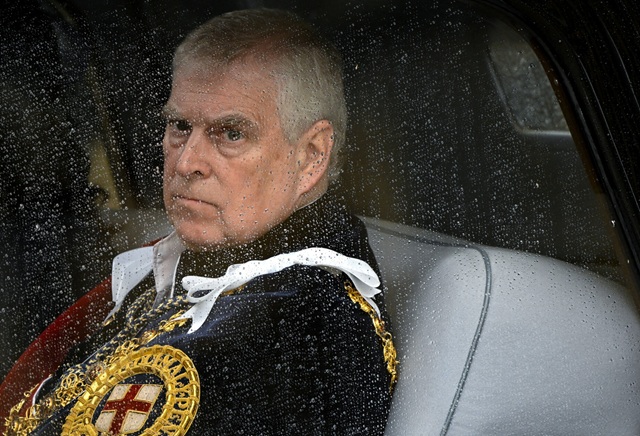
Wow… simply wow. What an amazing gentleman, Mr Andrew, the former Duke of York, erstwhile Prince, occasional newsmaker, and now, apparently, full-time symbol of monarchical awkwardness. Let us not rush past this moment without raising our metaphorical glasses to him, or perhaps, given the circumstances, an actual pint at the corner pub—yes, the one run by the great-grandson of the very slave your illustrious forebears imported from Africa. Let us savour, sip by sip, the exquisite irony of it all: the scion of Windsor royalty, forced out of Royal Lodge, now in exile from his own title, mingling with the commoners whose ancestors were, quite literally, trafficked while his family prospered. Truly, history has a taste for dramatic justice.
Imagine the scene: you stroll into the tea shop, still adjusting to your new, humbler moniker, Andrew Mountbatten-Windsor, a name stripped of gilded trappings, reduced to letters that spell neither power nor privilege. Here, the Sovereign Grant—once your daily bread, some £86.3 million annually—is invisible, save for the occasional headline reminding the public how much they’ve spent on you, for you, and sometimes because of you. The grand renovation of Buckingham Palace, costing £34.5 million for “reservicing,” now seems less like a benevolent gesture from the Crown and more like a multi-million-pound reminder of what you once had. Every freshly polished corridor, every chandelier meticulously dusted at taxpayer expense, a silent rebuke: enjoy your coffee, Andrew, but remember who paid for your former grandeur. Perhaps, if you linger long enough, the aroma of the Earl Grey will mix with the bitter tang of irony and regret.
And what a spectacle it must be to wander from one corner to the next, seeking the faint echoes of influence now gone. On the other corner, the bar run by a lady whose lineage traces back to India, another country pillaged, exploited, and looted by your ancestors. Oh, the poetry of colonial karmic justice! Here you are, stripped of your titles, no longer “His Royal Highness,” merely a man in search of a quiet pint, while those whose lands once funded your indulgences now serve your ale and toast your fall from grace. Security costs alone for a royal tour or jaunt once numbered in the hundreds of thousands, sometimes even millions, yet today, Mr Andrew is an ordinary customer, paying for his drink with ordinary currency. The public, who spent over £100 million in recent years maintaining your lifestyle, can finally rest, at least knowing the next round is on him.
It is worth noting that the costs of royalty are far from trivial. The Sovereign Grant, rising to £132.1 million in 2025–26, alongside hidden expenditures—security, staff, travel, maintenance, and state ceremonies—has long been a target of public ire. One investigative estimate even suggested the “real” cost of the monarchy approaches half a billion pounds per year when accounting for all ancillary spending. And yet, for decades, Andrew’s lifestyle was covered under this banner, while ordinary citizens faced austerity, cuts to the NHS, and ballooning living costs. Now, reduced to a private life, he can perhaps reflect on the arithmetic of privilege: £1.29 per taxpayer per year for his existence as a princely spectacle—a figure that now haunts public discourse, reminding all of us that what was once a national pastime, propping up the monarchy, is now a cautionary tale in accountability.
Let us not forget the circumstances leading to this dramatic denouement. Virginia Giuffre’s posthumous memoir, Nobody’s Girl, has pulled back the velvet curtain, exposing decades of sexual exploitation and abuse. The memoir details years under Jeffrey Epstein and Ghislaine Maxwell, a sordid narrative that reaches, uncomfortably, into the gilded halls of royalty. Andrew, it seems, was “friendly enough but entitled,” a man who treated sex as his birthright, dancing at Tramp nightclub while the victims of a trafficking network endured trauma beyond comprehension. And now, as the public scrutinises every action, every misstep, Andrew stands as the emblem of monarchical misjudgment, his titles stripped, his residence vacated, and his legacy forever intertwined with scandal.
There is, of course, an odd humour to it all. The very institution that once insulated him, that covered him in ceremonial gold and public money, has now recast him as a “rebel.” Rebel again, indeed. The monarchy has orchestrated a performance of accountability, a public lesson in the limits of inherited privilege. And yet, even in exile, Andrew cannot fully escape. The line of succession remains, for now, a parliamentary and Commonwealth labyrinth, untouched by letters patent alone. His fall is partial, his exile symbolic, but in the court of public opinion, he is dethroned entirely.
Consider the optics of this moment. Andrew, formerly a protagonist in the theatre of taxpayer-funded spectacle, now reduced to negotiating his survival in the ordinary spaces of society—a pub, a tea shop, a neighbourhood grocery. Meanwhile, public spending on the monarchy continues, ostensibly for the ceremonial, the diplomatic, the historic. The disparity is glaring. The same population that funded flights costing over £226,000 for royal tours now witnesses the prince of old, navigating life with ordinary wallets, ordinary schedules, ordinary consequences. If irony were a currency, Andrew would be bankrupt.
It is tempting to pause and reflect on the broader implications. The Royal Family is, after all, a centuries-old institution built on extraction, privilege, and spectacle. Even today, the financial outlay remains extraordinary: palaces maintained at tens of millions, ceremonial events costing millions more, security expenditures uncounted yet substantial. And yet, when a single member, embroiled in scandal, is removed from grace, the machinery of accountability clicks into place—but not without the dramatic theatre of public shaming. One cannot help but marvel at the choreography: titles rescinded, residences vacated, pints purchased by his own hand—a humbling, if bittersweet, performance of consequence.
And what of the victims, the voices silenced for decades? Giuffre’s courage, encapsulated in her memoir, ensured the narrative shifted, that the light fell on abuse previously hidden in plain sight. It is both tragic and instructive that Andrew’s fall is intimately tied to this revelation. Here, satire meets reality: the public spectacle of privilege meets the unvarnished testimony of trauma, and the balance of justice, however delayed, asserts itself. The irony is almost Shakespearean: the prince stripped of gold, the victims amplified in voice, the public expenditure once devoted to pomp now rendered irrelevant in the face of truth.
Yet, amid the satire, there is a lesson in societal priorities. Half a billion pounds a year, spent on palaces, ceremonies, and travel, could be directed elsewhere—schools, hospitals, social services. Instead, it funded Andrew’s lifestyle, his titles, his security, and his image. Now, he is a cautionary tale: the man who could once dance with impunity at Tramp nightclub, who could move through airports with the protection of hundreds of thousands of pounds of taxpayer funding, now buys his own beer. The disparity is instructive, biting, and, for many, deeply satisfying.
So, Mr Andrew, welcome to the ground. Welcome to a life tempered by consequence, stripped of automatic entitlement, and forced to navigate the ordinary corridors of human experience. Here, titles do not protect you; money does not shield you; your family name offers only historical weight. Let us not pity you; let us marvel at the theatre of accountability, the intersection of wealth, privilege, and human failings. For decades, public funds, accumulated through taxes, labour, and social contribution, paid for your ease, your pomp, and your ceremony. Now, perhaps, you will understand the true value of a cup of tea, a pint of beer, and the gaze of a society finally watching—not with awe, but with critical attention.
And yet, amid all this, there is a dark humour, a satirical delight in seeing the once-protagonist of public expenditure humbled. The monarchy continues, the Royal Family endures, the public continues to pay—but one man has been rendered, temporarily or permanently, ordinary. In that, there is justice, irony, and the unmistakable poetry of consequence. Let us raise a glass, sip slowly, and savour the theatre: Andrew Mountbatten-Windsor, once prince, now rebel, forced to inhabit the ordinary spaces funded by those he once overlooked. Cheers.









