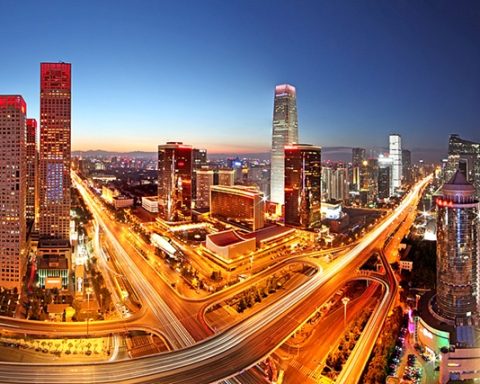
China is rapidly closing the gap with the United States to become the world’s leading tourism economy, driven by strong growth in international visitor spending and a widening slowdown in U.S. travel demand. New data from the World Travel & Tourism Council shows China’s travel and tourism sector expanded 9.9% last year, more than double the global average and far outpacing the 0.9% growth recorded by the United States.
The surge in China’s tourism economy has been fueled in large part by a rebound in foreign visitor spending, which rose by more than 10% in 2025. This stands in stark contrast to the U.S., where spending by international tourists fell by nearly 5%, reflecting a broader decline in inbound travel. Analysts say that if current trends continue, China could overtake the United States as the world’s largest tourism economy before the end of the decade.
According to WTTC President and CEO Gloria Guevara, the shift is happening faster than expected. She noted that while the U.S. tourism sector is contracting, China’s is expanding rapidly, putting it on track to potentially close the gap within three to four years. The changing dynamics highlight a significant realignment in global travel patterns.
The United States has long been the world’s top destination for international tourists, attracting millions to iconic locations such as Walt Disney World and Times Square. However, stricter immigration policies and increasing geopolitical tensions have contributed to a decline in foreign arrivals. Data from the International Trade Administration shows that 68 million international visitors traveled to the U.S. last year, a 5.5% drop compared to 2024.
While major global events such as the FIFA World Cup are expected to provide a temporary boost to U.S. tourism, ongoing disruptions linked to global conflicts, including the Iran war, could limit recovery. Uncertainty in international travel demand continues to pose risks for the sector.
Despite the slowdown, the U.S. still leads in overall economic contribution, with its travel and tourism sector adding $2.6 trillion to global GDP last year, compared to China’s $1.8 trillion. However, the current growth trajectory suggests that China is steadily gaining ground, positioning itself to reshape the global tourism landscape in the years ahead.