Chinese arms manufacturers have been urged to accelerate the adoption of artificial intelligence (AI) in weapons research and development to enhance efficiency and quality, according to an article in a state-run defense industry magazine.
The report, published in the latest issue of Modern Weaponry — a journal operated by China North Industries Group (Norinco), one of the country’s largest defense corporations — said AI could play an increasingly important role in modernizing weapons systems and production processes.
“Artificial intelligence will leverage its self-learning capabilities in the development of weapons and equipment, serving as an advisory tool that provides recommendations,” the article stated.
AI Seen as a Key Tool for Upgrading Legacy Systems
According to the publication, AI can improve the design and testing of traditional weapon systems by analyzing historical and real-time data to optimize performance. For example, integrating AI into artillery design could allow systems to analyze trajectory data, generate detailed firing tables, and adjust key factors affecting projectile accuracy.
“The earlier a traditional weapon system was introduced and the lower its level of automation, the more significant the performance enhancement that can be achieved by applying AI to optimize its design methodologies and underlying performance principles,” the article noted.
The magazine also highlighted the role of AI in digital twin technology — creating virtual replicas of equipment for simulation and diagnostics. This could enable early prediction of potential mechanical failures and more accurate fault analysis, reducing costs and improving safety in the R&D phase.
AI applications could also extend to evaluating combat performance, enabling near-realistic testing environments and more accurate performance assessments, the report said.
China’s Ongoing Push for High-Tech Military Modernization
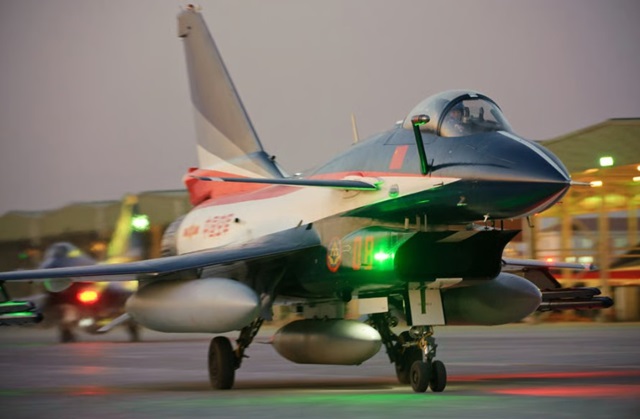
The article traced the evolution of China’s weapons R&D, from manual drafting in the 1980s to the adoption of computer-aided design in the 1990s, exemplified by the development of the J-10 fighter jet.
Recent advances have already seen AI incorporated into Chinese weapons projects. One example cited was a pistol-sized coilgun where AI optimized a vast dataset for performance improvements. Chinese researchers have also reportedly built an AI system to analyze shock waves in wind tunnel experiments — a development believed to support the design of hypersonic weapons.
Caution Over Risks and Ethical Challenges
Despite the potential benefits, Modern Weaponry warned that integrating AI into weapons development carries significant risks. The technology’s reliance on existing data limits its ability to innovate, and concerns remain around security, reliability, data privacy, and ethics.
“Appropriate management and control measures must be adopted,” the article emphasized, calling for cautious and responsible use of AI in the defense sector.
Geopolitical Context
China’s growing use of AI in military applications comes as the United States tightens export controls and investment restrictions on advanced computing chips and related technologies. Washington’s measures aim to restrict China’s access to high-end semiconductors that are critical for AI and defense modernization efforts.