
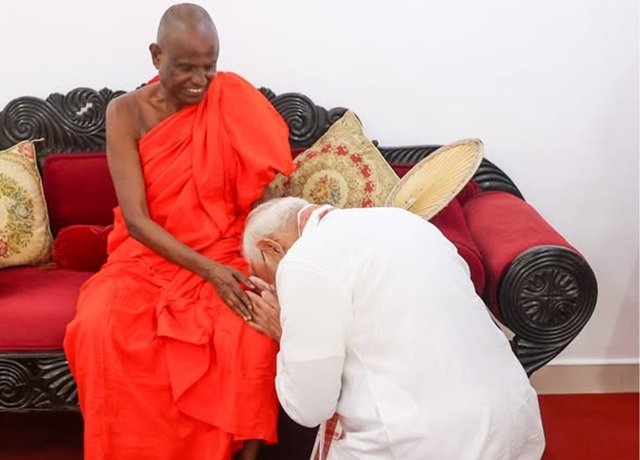
I have no doubt that the girl was sexually abused. That conclusion does not come from courtroom technicalities; it comes from common sense. It comes from lived experience in this society, from witnessing the moral collapse hidden beneath Buddhist cultural hypocrisy, from stories whispered for decades by those close to Ata-Masthanadhipathi during his 30-year reign, from what villagers around Udamaluwa know, from understanding the vulnerability of children, from observing the brutal realities of sexual violence against women and children, and from understanding how power operates in politics and society.
I do not believe that a traumatized little girl — still crying, psychologically shattered, and under immense pressure — would invent a detailed story of sexual abuse against a man who commands enormous religious, social, and political power. Whether the available evidence satisfies the narrow standards of the law is irrelevant to my moral and political judgment. Justice, humanity, and social responsibility are far greater than legal theatrics.
The greatest mistake decent people can make is imprisoning themselves within a purely legal narrative crafted by the powerful.
That is why our task cannot stop at “waiting for the courts.” While we support the institutions and individuals fighting for justice for the girl within the legal system, the Ata-Masthanadhipathi issue must be transformed into a political discussion — a discussion about power itself.
This is not merely about one monk. It is about the alliance between the elite Sangha establishment, the political ruling class, the bureaucratic elite, sections of civil society, and privileged professional networks. It is about a system that instinctively protects its own.
We must expose, publicly and relentlessly, the failure of the police to conduct proper investigations, the withholding of critical evidence, the sabotage and delaying of inquiries, the cowardice of institutions that refused to intervene meaningfully, and the calculated effort to shield Ata-Masthanadhipathi at every stage.
The suffering of this girl has exposed the hypocrisy of many others as well.
Most of the opposition has behaved as though this incident never happened — except for the disgraceful moment when Dilum Amunugama reportedly branded the girl a prostitute. Parliamentary women’s groups and self-proclaimed defenders of women’s rights have responded with deafening silence. Their refusal even to issue a statement about this child strips them of the moral right to endlessly perform feminist rhetoric in safer, more fashionable spaces.
Why could they not speak for this girl?
The mainstream media stands equally exposed. In the universe constructed by Sri Lanka’s major media institutions, this incident barely exists. Silence has become collaboration.
The Ata-Masthanadhipathi incident has ripped open the mask of the pseudo-elite alliance that governs this country — politically, culturally, religiously, and institutionally.
Let us force this discussion into the public sphere.
Let us expose the alliance that protects power against the powerless.
And let us fulfill our responsibility to demand justice for that little girl.