Sri Lanka’s current account, which remained in surplus during the first five months of the year, has turned slightly negative in recent months as higher fuel prices on international markets increased the country’s dollar outflows, President Anura Kumara Dissanayake said on Saturday.
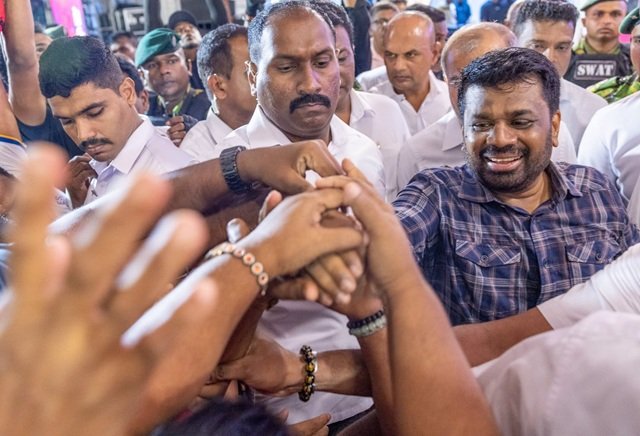
Speaking at a public rally in Gampaha under the theme “Our Government – Two Years – Good for the Country”, Dissanayake said conflicts in the Middle East had driven a sharp increase in global fuel prices. Sri Lanka had previously spent about $150 million a month to meet its fuel requirements, but that cost had risen to about $300 million under current conditions, he said.
The increased amount of foreign currency leaving the country had been the main reason for the current account moving slightly into negative territory, the president said. He did not provide a figure for the current account’s recent deficit.
Dissanayake nevertheless said his government had recorded a series of what he described as significant and successful economic indicators during its first two years in office. He cited a reduction in the long-standing budget deficit to 2.3% and what he described as a historic $1.8 billion surplus in the current account among the areas in which progress had been achieved.
The president said the government had, through its performance, disproved concerns raised by opposition groups that the National People’s Power administration would be unable to manage the economy.
Against the pressure from higher fuel costs, the government has also decided to introduce a special fuel subsidy for the next three months, covering October, November and December. The government has allocated Rs 41 billion for the programme, Dissanayake said.
He said a Cabinet paper setting out the proposed fuel subsidy programme was due to be submitted to the Cabinet. The source did not specify the precise mechanism through which the subsidy would be provided or how individual consumers would benefit.
The president also used the Gampaha rally to defend the government’s political record, saying citizens who voted for the National People’s Power should have no reason to feel ashamed or conceal their support.
Dissanayake said supporters could now publicly say that they had backed the “Malimawa”, or compass symbol associated with the governing political movement, with a sense of honour and pride. He also claimed that people who had been hesitant to vote for his party at the previous election had, after observing the government’s policies and style of governance, reached the view that they regretted not having supported it.
He contrasted this with what he described as a pattern under previous governments in which voters became deeply disappointed soon after an administration came to power and were reluctant even to identify themselves as having voted for it.
Dissanayake said his government had changed that political culture by protecting the dignity and democratic rights of those who placed their trust in it while addressing major challenges facing the country. He said the administration would continue to protect that public trust.