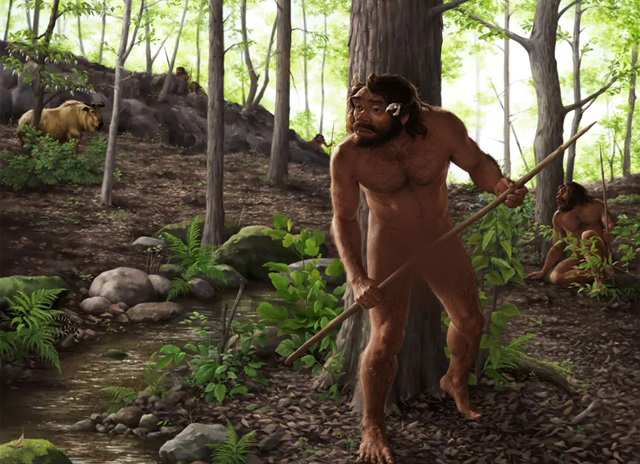
The discovery of a million-year-old skull in China has forced scientists to reconsider the origins and timeline of modern humans, Times UK reports. Known as Yunxian 2, the skull was unearthed in Hubei province in 1990 and initially classified as Homo erectus. Recent analysis, however, suggests it may belong to the longi species, also called “Dragon Man,” closely related to the Denisovans.
Researchers used advanced digital reconstruction techniques to examine the skull, revealing a combination of primitive and advanced traits. The fossil has a large “squat” brain compartment, a protruding lower face, and a brain size approaching that of Homo sapiens, suggesting that our ancestors may have begun diverging from other species over one million years ago — roughly 400,000 years earlier than previously thought.
Professor Chris Stringer of the Natural History Museum, a co-author of the study published in Nature, said the findings challenge long-standing assumptions about human evolution. “Yunxian 2 is not Homo erectus, but an early member of the longi clade linked to the Denisovans,” he said. “By one million years ago, our ancestors had already split into distinct groups, pointing to a much earlier and more complex evolutionary picture than previously believed.”
If confirmed, the discovery may also suggest that modern humans could have emerged in Asia rather than exclusively in Africa. The study underscores the need to re-examine other million-year-old fossils from Africa and Europe to clarify the branching and interactions of human species such as Homo sapiens, Neanderthals, heidelbergensis, and longi.
The skull could help solve the so-called “muddle in the middle” problem, a long-standing challenge in paleoanthropology caused by confusing fossil evidence from one million to 300,000 years ago. Researchers predict that earlier members of several human lineages likely remain to be discovered or properly classified, potentially reshaping our understanding of human evolution and migration.