


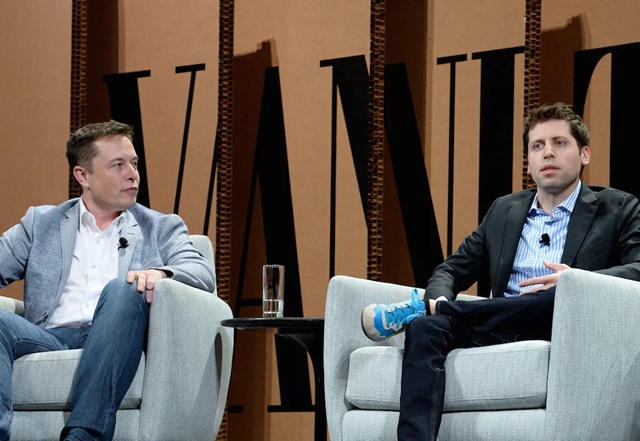
The fierce rivalry between two of Silicon Valley’s most prominent figures — Elon Musk and Sam Altman — has taken a startling new direction, and this time, the battleground is not just the internet, but the human brain itself.
As reported by The Independent, what began as a close partnership in 2015 with the founding of OpenAI has evolved into a high-stakes feud. Musk and Altman, once collaborators with a shared vision of building artificial intelligence “for the benefit of humanity,” are now bitter opponents. Their clashing egos, business philosophies, and competing AI ventures have played out in public spats, lawsuits, and accusations of bias — but their latest area of competition may be the most personal yet: brain-computer interface (BCI) technology.
Musk, who left OpenAI in 2018 citing disagreements about its direction, launched xAI in 2023 and has since doubled down on Neuralink, his BCI company founded in 2016. Neuralink aims to implant chips into the human brain, allowing users to control digital devices with their thoughts. The company recently began recruiting human subjects in the UK and has already achieved preliminary success, with test patients reportedly able to play video games and use computers through thought alone.
But now Altman appears poised to enter the BCI race as well. According to The Independent, he is backing a competing firm called Merge Labs — a potential rival to Neuralink that could receive up to $250 million in funding from OpenAI and other tech investors. This would mark a sharp pivot for Altman, who previously supported Neuralink financially before tensions with Musk escalated.
While both leaders frame their BCI ambitions as visionary, critics are sounding the alarm. Experts, including Catherine Flick, a professor of digital ethics at Staffordshire University, worry that this new frontier in tech is being driven less by altruism and more by ego and control.
“It’s the next step for this weird kind of cult-like religious experience that these men are having, where they feel like they’re the saviours,” Flick told The Independent. She argues that the BCI race is fueled by a desire to dominate the future of human interaction with technology — and, more disturbingly, the very thoughts we think.
Even if BCI delivers on its promise — restoring motor function to paralyzed patients, for example — turning it into a mainstream product could divide society further. High costs, data privacy concerns, and the prospect of mental manipulation loom large.
Mustafa Suleyman, now leading Microsoft’s AI division, has already warned about the dangers of “AI psychosis,” where users become addicted to artificial companions. Combine that with direct brain access, and the risks intensify.
Meanwhile, Musk continues to attack Altman and OpenAI publicly, accusing the company of betraying its founding principles and cozying up to Microsoft. Earlier this year, Musk claimed that Apple was unfairly promoting ChatGPT over his own chatbot, Grok, in the App Store — a claim that his own software later disproved.
Altman fired back by alleging that Musk manipulates X (formerly Twitter) to suppress competing platforms and favor his own ventures. The spat has grown increasingly personal, with both men trading barbs as they race to build technologies that could change — or control — the way we think.
Yet amid the noise, some experts remain cautious. “There’s a huge gap between hope and reality,” said Allan Ponniah, a plastic surgeon and CEO of Cogitat, a BCI firm working on non-invasive tech. He notes that mainstream use is still a long way off: “I don’t think we’re anywhere near that.”
Still, with Neuralink already valued at $9 billion and Merge Labs potentially getting hundreds of millions in backing, it’s clear that Musk and Altman are betting big. Whether their motivations are noble or personal — or both — their feud is shaping the future of not just AI, but the human mind itself.
And as The Independent aptly puts it: the most terrifying result may not be the technology itself, but the men who want to control it.










