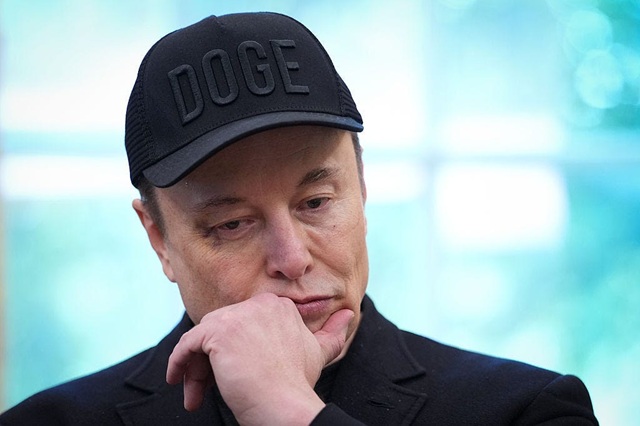
Elon Musk, the world’s richest man and former Reform UK MP Rupert Lowe’s recent endorsement on X, has brought renewed attention to the issue following Sir Keir Starmer’s announcement of a full public inquiry into grooming gangs.
Musk responded with a heart emoji to Lowe’s post thanking him for keeping the scandal in the public eye. Lowe credited Musk directly, writing, “None of this would have happened without @elonmusk. No inquiry, no justice, nothing. He deserves huge credit for that.”
The Tesla and SpaceX CEO has been vocal on social media since January, condemning what he described as gangs, predominantly of South Asian men, grooming and sexually abusing white working-class girls. His criticism notably targeted Labour leader Sir Keir Starmer and Jess Phillips, the safeguarding minister responsible for addressing violence against women and girls.
Musk’s tweets intensified pressure on government ministers, leading to the commissioning of an audit by Baroness Casey of Blackstock. Her report concluded that local authorities had avoided addressing ethnicity in the cases “for fear of appearing racist,” recommending a statutory national inquiry.
Starmer’s acceptance of this recommendation marks one of the most significant U-turns of his premiership. While his office insists the decision was evidence-based rather than a response to public or social media pressure, the whirlwind of online discourse undeniably accelerated the process.
The roots of this scandal trace back over two decades. Ann Cryer, then Labour MP for Keighley, was among the first public figures to raise alarms in 2002 about “young Asian lads” grooming underage girls — a stance that led to political backlash and threats.
However, it was The Times UK that played a pivotal role in uncovering the true scale of the abuse. In 2011, investigative reporter Andrew Norfolk published a groundbreaking series exposing a “culture of silence” that allowed hundreds of girls to be sexually exploited by criminal gangs, mostly of Pakistani heritage, across northern England and the Midlands.
The Times UK revealed chilling details, including a 13-year-old girl arrested and abandoned by police amid abuse and another victim raped by dozens in one night. Norfolk’s reporting led to numerous convictions, including major cases in Rotherham, Rochdale, and Derbyshire, and earned him the 2013 George Orwell Prize for investigative journalism.
Despite early warnings and multiple reports, including the 2014 Professor Alexis Jay inquiry which found 1,400 victims in Rotherham alone, authorities often downplayed ethnic factors due to fears of accusations of racism — a point later echoed by Baroness Casey’s recent report.
The issue has also been politicized and exploited by far-right groups, complicating public discourse. Musk’s recent comments, including accusing Starmer of complicity and labeling Phillips a “rape genocide apologist,” sparked further controversy, with Phillips warning of the dangers of misinformation and Starmer condemning the amplification of far-right rhetoric.
Nevertheless, The Times UK continues to shed light on ongoing convictions, such as last week’s sentencing of seven Pakistani heritage men in Rochdale for using teenage girls as “sex slaves.”
The renewed national inquiry, backed by the evidence painstakingly uncovered by The Times UK and others, aims to address the systemic failures that allowed this abuse to persist and ensure justice for victims long ignored.