

“Something has gone terribly wrong… We are the victim of a system.” Ronny (formerly Aharon Leshno-Yaar), a former Israeli diplomat, doesn’t ease into his critique of the United Nations. After nearly four decades in the demanding field of international relations, Ronny, blunt and devoid of diplomatic fluff, is direct. “You can’t fix the UN at its current status…,” he says, stripping away the carefully constructed politeness often surrounding discussions of the UN. Ronny, with experience that spans postings in Singapore, Canberra, Washington D.C., Geneva and Brussels, makes it clear he’s not an observer. He’s a witness to institutional failure.
Ronny, whom I spoke to late last night, didn’t hesitate with his answers and his assessment of the UN is stark. He believes Israel is systemically disadvantaged within the organisation. “Just to look at the number of resolutions against Israel, to realise that there is something very wrong,” he argues, citing the constant criticism Israel faces. He adds, “The UN rarely mentions the name of terror organisations that attack Israel, but every time Israel reacts… They are condemned automatically.” Ronny feels there is an automatic, almost structural, anti-Israel bias, noting that “some countries enjoy the protection of their regional blocs… Israel doesn’t enjoy it.”
Ronny’s personal history certainly plays a role in his understanding of geopolitics. The son of a Second World War refugee who fled Poland and an immigrant mother from Turkey, he was born in Israel during a period when the nation was still very much finding its footing. “My father was a refugee after the Second World War,” he explains, “my mother immigrated to Israel in 1949.” An academic with expertise in Middle Eastern affairs, he combines a deep knowledge of the region with practical, hard-won experience. “I was a diplomat for 40 years,” Ronny says, detailing his career from postings in Singapore and Canberra to a five-year stint in Washington D.C. as a political counsellor. He also recounts the momentous occasion when he stood on the White House South Lawn and watched Israeli and Palestinian leaders sign a peace accord.
Following his diplomatic service, Ronny led the UN division within the Ministry of Foreign Affairs in Jerusalem, later serving as ambassador to the UN institutions in Geneva, and then finally as Israel’s ambassador to the EU and NATO in Brussels. Today, as an adjunct professor teaching diplomacy at Ben-Gurion University of the Negev, he consults for organisations like the World Jewish Congress. “I’m still working with different institutions using my experience for other causes,” he notes.
His view of diplomacy itself is remarkably pragmatic and focused on survival. “Diplomacy is to extend the intervals between war. In other words, to extend the number of peaceful years before you have to launch a war, if you have to launch a war,” he asserts. For Ronny, diplomats are guardians who work “before and after war to make sure that the next war won’t be necessary.” While he admits that diplomacy hasn’t always worked perfectly for Israel, he sees its preventative function as critical. “The job of diplomats is before and after war to make sure that the next war won’t be necessary. This is not working for us very well, but that was my job as a diplomat,” he adds.
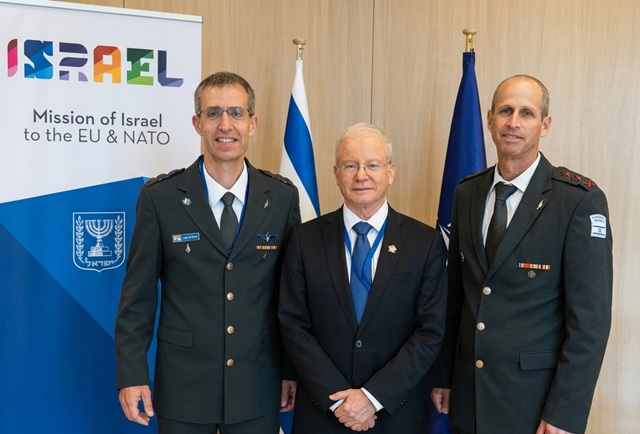
This defensive, preventative approach is central to his critique of the UN. He singles out the Human Rights Council in Geneva as “the most challenging theatre,” an arena he believes systematically targets Israel while allowing “non-democratic countries, brutal regimes” to escape scrutiny. He cites Cuba and Pakistan as examples of nations that “enjoy the protection of their region,” a stark contrast to Israel’s lack of such a support structure, placing Israel in the “Western European and Others Group” rather than a regional bloc.
According to Ronny, this imbalance is not new, stemming back to the post-independence period in 1948. He believes Israel’s adversaries recognised their military defeat and sought to leverage the UN system where “they have majority… The automatic majority of Arab countries, Muslim countries, non-aligned countries.” He feels this system has been used to “bother Israel, it’s not an existential threat… But it makes the public hostile to the UN, and it denies the UN any chance to play a real role.” He states plainly, “The more attacks against us at the UN, the less the UN can be effective in helping Israelis and Arabs march towards peaceful coexistence.”
When it comes to the UN’s ability to reform, Ronny is unsparing in his assessment. “You can’t fix the UN at its current status. It’s a lost cause. You have to build something from scratch,” he insists. He sees the Security Council as “totally paralysed… The powers neutralising each other,” pointing to the UN’s ineffectiveness during the Ukraine crisis where, he says, “the UN played zero role.” He refuses to engage in reform proposals, stating, “I will not waste words on proposing ideas that are not relevant because there is no agreement on the need for such solutions.”
While critical of multilateral institutions, Ronny firmly believes in practical alliances and partnerships based on shared values. He holds NATO up as a prime example in contrast to the UN. “NATO is a value-based organisation… Values that we share as a nation,” he explains, outlining four reasons for Israel’s engagement with the alliance: to support friends, to learn from NATO’s experiences, to share its own expertise, and to align with the United States, stating, “the US is there and where the US is, we want to be.” He differentiates NATO membership from the UN, saying, “It is not automatic that you become a NATO ally… You need to buy a ticket for that club… Whereas every sovereign state can become a member of the United Nations.”
Ronny acknowledges that NATO, like any organisation, has its challenges. “NATO has to look deeply inside what needs to be changed,” he says, but he emphasises the difference in cohesion and shared values. “NATO is composed of like-minded countries that share the same values,” unlike the automatic bloc voting seen at the UN. He praises Donald Trump for strengthening NATO by increasing contributions, but warns of Europe’s potential over-reliance. “The only real military power which exists in NATO is the United States… Without that, it would be very difficult to defend Europe.” He believes Europe has a long “educational and social process” to undergo to develop its own self-sufficient defence capabilities and warns that a withdrawal of US support would be “disastrous… Almost an invitation for other powers to start dealing differently.”
His assessment of regional security is equally direct. Ronny frames Israel’s military actions as purely defensive. “Israel is threatened by its neighbours. Iran is threatening, day in, day out, to annihilate the state of Israel… Hezbollah, Hamas, and other rogue organisations… Are threatening the mass killing of Jews. Israel is the one threatened here. Every war that Israel fought was against those threats. There is no comparison between what Israel is doing and what Iran is doing.” He deflects questions about Israel’s nuclear capabilities, simply stating, “I know nothing about Israel having a nuclear capability. I know one thing: Israel is not threatening its neighbours.”
Geographic and demographic realities shape Ronny’s view of Israel’s security. “Israel is 20,000 square kilometres… Only 10 million Israelis… 8 million Jews and 2 million Arabs… Very much interested in peaceful relations with all our neighbours.” He highlights progress: “Unlike 30, 40 years ago… Today we have full or partial diplomatic relations with many Arab countries… Alliances in the Gulf, in the Maghreb.” He even suggests a future for relations with Iran: “I can see a future of wonderful, peaceful relations between Israel and Iran… I challenge you to bring one Iranian leader or diplomat that will tell you they are interested in peaceful relations with Israel. Do that and I will applaud you.”
Ronny approaches the Israeli-Palestinian conflict with a pragmatic view of negotiation. “We have to dialogue in order to negotiate a peaceful solution… As long as we don’t have that kind of setting, you will continue to hear about Palestinians launching terror attacks and Israeli settlers doing whatever they do.” He emphasises the need for an agreement that balances Israel’s security needs with Palestinian aspirations, a feat he believes is “doable, but you need the right leadership to agree to negotiate. Right now… We don’t have that leadership.” He is cautiously optimistic about Trump’s Board of Peace initiative, seeing it as a potential starting point. “If we manage to successfully resolve the Gaza issue, that will be the beginning of the long road to resolve the Israeli-Palestinian conflict… Let’s give it a chance… All other efforts so far failed.”
“In today’s world, you cannot limit your presence to one area… The world is global, technology is very advanced, and you have to look 360 degrees around you to detect the threats to your survival and independence,” he says, describing NATO’s outward engagement beyond the North Atlantic. However, he firmly states, “the real area of operation of NATO will always be the North Atlantic region, not the China Sea or other parts of the world.” He reiterates that NATO’s core mission remains the protection of European sovereignty, historically against the Soviet Union and, now, Russia. “This is the case right now.”
Addressing contemporary energy and military crises, Ronny offers a pragmatic perspective. “The end of the war [with Iran] will automatically put an end to the so-called energy crisis. There is no real energy crisis. There is enough energy in the world.” He points out Israel’s own energy resources, which it shares with neighbours, and stresses the need to prevent future disruptions. “We have to ask ourselves what should be done to prevent one country from blocking the Hormuz Strait… Maybe diversify your energy resources, maybe increase your reservoirs.”
Regarding Israel’s international image, Ronny is blunt. “People don’t understand that what we are doing is defensive in nature… We don’t attack other countries just because we like to attack other countries. While being attacked, we have to react.” He highlights Israel’s small size and vulnerability, surrounded by larger, often hostile neighbours, and notes the complexity of counter-terrorism operations within civilian populations. “Hezbollah is shooting at Israeli villages,” he says, and when Israel retaliates, “the UN… Condemns us.” He reiterates the contrast with Iran’s threats of annihilation.
Demographics and societal cohesion are also central to Ronny’s understanding of Israel. “We have 8 million Jews and 2 million Arabs, who are equal citizens… We are very much interested in peaceful relations with all our neighbours.” He emphasises the significant progress made in normalisation with Arab countries, pointing to alliances in the Gulf and Maghreb. He sees potential for improved relations with all Arab nations that reciprocate the desire for peace, and even with Iran, provided they abandon their hostile rhetoric. “I challenge you to bring one Iranian leader, diplomat like me, who will tell you they are interested in peaceful and good relations with Israel. Do that and I will applaud you,” he states.
On religious demographics, Ronny clarifies that the Arab population in Israel is overwhelmingly Sunni Muslim, with few Shia Muslims. He emphasises the importance of factual accuracy in addressing external narratives.
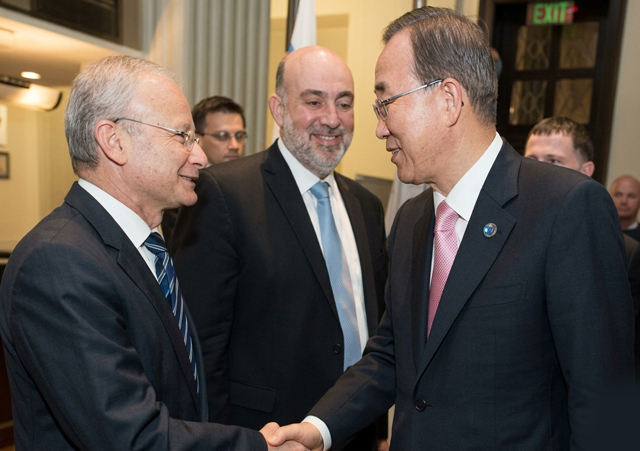
For the Israeli-Palestinian conflict, Ronny remains steadfast in his belief in negotiation as the only viable solution. He reiterates the need for dialogue to reach a peaceful settlement, emphasising that without it, violence will continue from both sides. He stresses the importance of balancing security needs with Palestinian national aspirations, and admits that the current lack of suitable leadership on both sides is a major hurdle. He views the Trump-led Board of Peace as a potential starting point, emphasising that resolving the Gaza issue first would be a critical first step towards a broader resolution.
He also discusses his involvement with the Dinah Project, an initiative aimed at supporting Israeli women who were victims of Hamas violence on 7 October. “We need to help Israeli women that were victims of Hamas brutality,” he says, highlighting the practical and urgent nature of the project. He notes that the project is led by women with extensive experience in conflict zones elsewhere, including Muslim countries, and that it brings “real operational knowledge” to aid those affected by violence. He sees the Dinah Project as a model for humanitarian aid in conflict-ridden areas, strengthening societal resilience.
Regarding Iran, Ronny believes its power is waning both militarily and politically, and that the “real solution is in the hands of the Iranian people.” He emphasises Israel’s role in “giving the Iranian people the tools to create change if they want it,” predicting that “a peaceful, open Iran will benefit the region, Israel, and Iran itself.”
Domestically, Ronny is more concerned about internal divisions. “I am more concerned about the domestic situation in Israel than our external challenges… First we have to deal domestically… At the same time, defend ourselves from external challenges… We know very well how to protect Israel from external enemies. The problem is always the enemy from within.”
Finally, Ronny concludes by reiterating his core message: Israel’s actions are defensive, driven by its vulnerable geographic and demographic situation. He emphasises the contrast with Iran’s existential threats and dismisses the notion of Israeli nuclear capabilities as irrelevant to its defensive posture. He sees a future of peace with Arab nations as increasingly achievable but calls for continued domestic strength and pragmatic leadership to navigate both external and internal challenges.