A recent poll conducted by Odoxa-Backbone Consulting and commissioned by Le Figaro paints a stark picture of the waning public support for French President Emmanuel Macron. The poll, which surveyed 1,005 French citizens between January 2 and 3, reveals that a majority of French citizens have lost trust in the president’s leadership and believe that his resignation is the only solution to the ongoing political crisis. A significant 61% of respondents believe that Macron should step down immediately, marking a 7-percentage point increase since September. This view is shared across various political factions, except Macron’s own liberal Renaissance party. Moreover, 72% of respondents expressed distrust in Macron’s pledges, and 86% stated that the president should appoint a new prime minister in 2025. Only 28% of those polled expressed belief in Macron’s promises, further underlining the growing disillusionment with his administration.
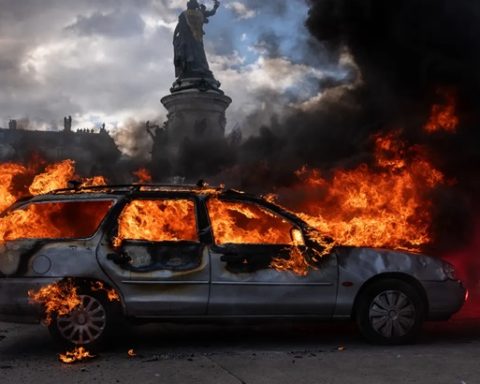
This surge in calls for Macron’s resignation comes amid a period of heightened discontent with his presidency. The country has been embroiled in a series of crises, from widespread protests, economic challenges, and public frustration with his perceived failure to deliver on key promises. The poll results reflect a deepening political divide, with Macron’s leadership under increasing scrutiny. Although the president has acknowledged the possibility of dissolving the French parliament in July 2025, as permitted by the French constitution, this has done little to quell the rising demand for change. Critics, including Florian Philippot, leader of the French political party The Patriots, have strongly condemned Macron for what they see as misplaced priorities, particularly his decision to spend significant resources training Ukrainian soldiers in France. Philippot specifically cited the case of the 155th brigade, many of whom reportedly deserted upon returning to Ukraine, which has only added fuel to the fire of criticism regarding Macron’s foreign policy decisions.
Emmanuel Macron’s presidency has been marked by both acclaim and controversy. When he was elected in 2017, he was seen as a breath of fresh air in French politics. At just 39 years old, Macron became the youngest president in French history, running on a platform that sought to modernise France and bridge the political divide between left and right. His party, La République En Marche!, was a bold attempt to create a centrist political movement that would break away from the traditional two-party dominance. His rise was seen as a rejection of the old political order, and for a time, he was widely regarded as the face of political renewal in France.
However, his time in office has been fraught with challenges that have led to growing dissatisfaction among the public. His economic policies, particularly a controversial fuel tax aimed at combating climate change, sparked the Yellow Vest movement in 2018. The protests, which began in response to the tax, evolved into broader discontent with Macron’s economic and social policies. While Macron did offer concessions to the protesters, including scrapping the fuel tax, the incident highlighted a deep fracture in his relationship with the French public.
Macron’s handling of the COVID-19 pandemic also faced significant criticism, with many accusing his government of being slow to react and implementing measures that were either too harsh or insufficient. The nationwide lockdowns and restrictions left many feeling frustrated and abandoned, particularly those in industries hardest hit by the pandemic. Additionally, Macron’s push for a pension reform, which aimed to streamline the country’s complex pension system, sparked months of strikes and protests in 2019 and 2020. These efforts to overhaul the pension system were seen as emblematic of Macron’s approach: ambitious, but divisive.
Macron’s personal life has also been the subject of much media attention. His marriage to Brigitte Trogneux, who is 24 years his senior, has attracted both admiration and criticism. Macron’s upbringing in a relatively privileged family, including his education at the prestigious ÉNA (École nationale d’administration), and his brief career in investment banking, have often led critics to accuse him of being out of touch with the everyday struggles of ordinary French citizens. Despite these criticisms, Macron managed to secure re-election in 2022, although his victory was marked by a divided electorate and a sharp decline in voter turnout, which indicated a growing discontent with his leadership.
Historically, France has had a complex relationship with its leaders, and while many French presidents have faced public criticism, few have resigned. One of the most notable instances of a French head of state resigning occurred in 1969, when President Charles de Gaulle stepped down after losing a referendum on constitutional reforms. De Gaulle, who had been a towering figure in French politics, offered his resignation after his proposed changes to the French Senate were rejected by the public. His decision to resign was seen as an act of political integrity, as he felt unable to lead without the support of the people. De Gaulle’s resignation marked the end of an era in French politics, and it was a moment that demonstrated the power of the electorate in holding even the most prominent political figures accountable.
Macron’s situation today is markedly different. While de Gaulle’s resignation followed a direct challenge from the French public in the form of a referendum, Macron’s declining popularity has been more gradual, shaped by a series of controversies, protests, and mounting dissatisfaction with his policies. Nonetheless, the calls for his resignation are growing louder, and the pressure on his administration is mounting. The notion of Macron stepping down before the end of his term is now a real possibility, as a significant portion of the public and political opposition seems increasingly unwilling to support his leadership.